Knowledge & Technical Center
Titanium Industry
Blog & Technical Insights
Discover technical guides, industry trends, and material innovation insights from Almerca Titanium Industry Co., Ltd.
Expert Analysis
Material Engineering &
Application Standards
Comprehensive updates on ASTM, ASME, and ISO standards for global titanium procurement.
Blog
What Is the Best Titanium Sputtering Target in 2026?
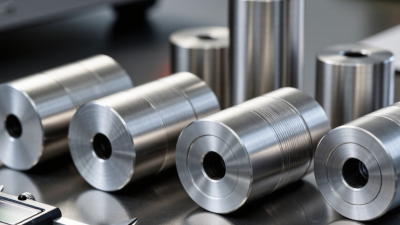
Choosing the best Titanium Sputtering Target in 2026 means matching target quality to the film, tool, and production process. Purity matters, but it is not the whole story. Density, grain structure, bonding, dimensions, and batch consistency can all affect arcing, deposition stability, and coating uniformity. A target that looks flawless may still perform poorly if its microstructure or fit is wrong. Details matter.
Supply conditions deserve attention, too. The USGS Mineral Commodity Summaries 2025 estimates global titanium sponge production at about 330,000 metric tons in 2024. That figure describes an upstream material, not sputtering-target output, but it helps frame the titanium supply chain behind target manufacturing. It cannot, on its own, confirm a supplier’s purity, traceability, or delivery reliability. Buyers should request current certificates of analysis and production-specific data.
For a useful technical lens, consider John A. Thornton, whose foundational research examined how sputtering conditions influence deposited-film structure. His work supports a practical takeaway: target selection and process conditions must be evaluated together. A “best” target is therefore application-specific, not a universal grade. Compare the supplier’s stated purity with your actual requirements, then examine density, machining tolerances, bonding method, and evidence of lot-to-lot consistency. For demanding coatings, ask for documented test results and discuss the intended power density and deposition setup with the manufacturer. The right choice should be supported by measurable specifications—not a broad “high purity” label alone.
Read more »
 By:Sophia
- November 2, 2026

2026 How to Choose a Titanium Bike Frame?
Choosing a titanium bike frame in 2026 requires more than admiring its silver finish. The market now offers road, gravel, touring, and mountain designs with very different priorities. Titanium Bike Framework decisions should begin with riding conditions, not material reputation. A frame for wet commuting needs practical mounts and corrosion-resistant hardware. A frame for fast gravel riding needs controlled stiffness, tire clearance, and accurate handling.
Recent industry reports provide useful context. The Bicycle Product Suppliers Association and Circana have reported changing bicycle demand after the pandemic surge, with consumers becoming more selective about value and long-term ownership. Cycling Industries Europe’s market profiles also describe a European market adjusting inventory and normalizing sales. These trends matter. A durable frame may cost more initially, but serviceability and lifespan can influence total ownership cost. The calculation is not always simple.
Titanium alloys such as 3Al/2.5V are widely used in bicycle construction. However, tubing quality, weld preparation, heat treatment, and alignment often matter more than the badge. ISO 4210 safety requirements offer a useful baseline, while reputable builders should explain testing, tolerances, warranty coverage, and repair procedures. Ask about frame weight only after checking load limits and intended use. Lightweight can feel impressive. It can also reduce practical versatility.
Look closely at the bottom bracket, dropout faces, head tube, and weld transitions. Poor finishing becomes visible there. No frame is perfect. Titanium resists corrosion, but it does not prevent fatigue, impact damage, or incorrect assembly. This guide compares geometry, alloy choices, manufacturing evidence, fit, accessories, and after-sales support, helping riders make a careful choice rather than an expensive guess.
Read more »
By:Sophia
- October 28, 2026

Top Titanium Anode Electrodes Manufacturers
Titanium Anode Electrodes support demanding electrochemical processes, including chlor-alkali production, metal recovery, wastewater treatment, and hydrogen generation. Their value depends on more than titanium content. Coating chemistry, current efficiency, dimensional stability, service life, and maintenance support can determine the real operating cost.
Industry reports show why this market deserves careful supplier research. The International Energy Agency’s Global Hydrogen Review 2024 identifies electrolysis as an expanding pathway, although deployment remains uneven across regions. Grand View Research also reports continued growth in the global electrolyzer market, driven by renewable-energy investment and industrial decarbonization. These trends increase demand for durable anode components. The U.S. Geological Survey’s Mineral Commodity Summaries 2025 further highlights titanium’s strategic role in modern industrial supply chains.
Performance matters most.
Leading manufacturers typically provide coated titanium substrates, custom dimensions, laboratory testing, and refurbishment services. Some specialize in ruthenium-iridium coatings for chlorine-related applications. Others focus on platinum-group-metal systems for oxygen evolution or specialized wastewater equipment. However, published claims are not always comparable. Test current density, electrolyte temperature, coating loading, and failure criteria may differ significantly.
This guide examines top Titanium Anode Electrodes manufacturers through practical and technical criteria. It considers production experience, coating expertise, quality systems, testing capability, customization, delivery reliability, and after-sales support. No ranking is perfect. A supplier that performs well in laboratory conditions may disappoint in a hot, abrasive plant environment. Buyers should verify independent test data, references, warranty terms, and total lifecycle cost before choosing a manufacturer.
Read more »
 By:Lila
- October 23, 2026
2026 Top Titanium CNC Machined Parts Suppliers?
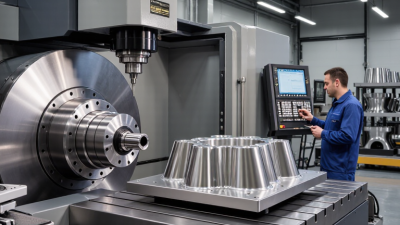
Choosing the right supplier for Titanium CNC Machined Parts requires more than comparing hourly machining rates. Titanium combines low density, high strength, corrosion resistance, and difficult cutting behavior. These qualities make supplier capability especially important for aerospace, medical, energy, and high-performance industrial applications.
Industry demand supports this focus. Grand View Research identifies aerospace, defense, medical, and chemical processing as major titanium-consuming sectors. Its titanium market analysis also indicates continued growth through the decade. MarketsandMarkets reports strong expansion in the CNC machine market, driven by automation, multi-axis machining, and connected production systems. These reports show opportunity. They do not prove that every listed supplier can deliver reliable parts.
That distinction matters.
This 2026 guide evaluates leading suppliers through practical manufacturing evidence. Key factors include titanium grade control, five-axis capacity, tooling strategy, surface-finish consistency, and inspection equipment. A capable supplier should provide material certificates, batch traceability, dimensional reports, and clear nonconformance procedures. Look for CMM inspection, first-article inspection experience, and documented process controls. ISO 9001 certification is useful. AS9100 or ISO 13485 may matter more for regulated applications.
Real production details reveal more than polished websites. Ask how a supplier manages heat during cutting, thin-wall distortion, burr removal, and chip evacuation. Request sample reports, tolerance examples, and references for similar components. A perfect ranking is impossible. Public information is often incomplete, and supplier performance can change after equipment, staff, or ownership changes. Treat this list as a qualified starting point, not a final purchasing decision. Verify capabilities directly before approving prototypes, production orders, or critical applications.
Read more »
By:Sophia
- October 18, 2026

China Top Medical Grade Titanium Manufacturers?
China’s position in the global implant supply chain deserves closer examination. Medical Grade Titanium is valued for its biocompatibility, corrosion resistance, strength, and relatively low density. These properties support orthopedic screws, dental implants, spinal systems, and surgical instruments.
According to Grand View Research, the global titanium market reached approximately USD 27.9 billion in 2022. The report also forecasts continued growth through 2030, supported partly by aerospace and healthcare demand. China Association for Medical Devices Industry data estimated China’s medical device market at about RMB 1.26 trillion in 2023. This scale creates a strong manufacturing base, but market size alone does not prove technical reliability.
Quality must be checked more closely. Serious manufacturers should demonstrate traceable titanium sponge, controlled melting, documented heat treatment, and consistent surface finishing. Their materials should align with standards such as ASTM F67, ASTM F136, ISO 5832-2, or relevant Chinese standards including GB/T 13810. Certificates matter. Production evidence matters more.
A polished website proves little.
The strongest Chinese manufacturers usually provide chemical analysis, mechanical testing, ultrasonic inspection, and batch-level documentation. They may also support CNC machining, forging, polishing, passivation, and sterilization-compatible packaging. However, supplier rankings are never permanent. Capacity, equipment, audit results, and regulatory records can change.
This guide examines China’s leading Medical Grade Titanium manufacturers through practical criteria, not advertising claims. It considers material quality, manufacturing experience, certification transparency, export capability, customization, and response discipline. Some suppliers may appear less impressive online yet perform reliably during audits. That possibility deserves attention. The right partner should fit the intended implant, risk profile, validation plan, and purchasing volume—not merely offer the lowest quotation.
Read more »
 By:Emily
- October 13, 2026

7 Tips for Buying Titanium Seamless Tubes Globally?
Buying Titanium Seamless Tubes across borders can look simple on a supplier’s website. The real work begins after the quotation arrives. Alloy grade, tube dimensions, wall tolerance, surface condition, and delivery terms can change the purchase decision quickly. A polished product photo proves very little.
This guide presents seven practical tips for global buyers. It focuses on supplier verification, material standards, inspection records, and shipment planning. Experienced purchasers usually request mill test certificates, heat numbers, chemical analysis, tensile results, and non-destructive testing records. They also compare the certificate details with the physical markings on each bundle. Small mismatches deserve attention.
Standards matter. Depending on the application, buyers may review ASTM B861, ASTM B338, ASTM B829, or relevant customer specifications. The correct reference depends on the tube’s service, alloy, and manufacturing route. A supplier should explain this clearly, not simply list certificates. Ask about ultrasonic testing, dimensional inspection, packaging, and traceability before placing an order.
Do not trust the lowest price automatically. Titanium prices reflect sponge costs, machining, inspection, packaging, freight, and currency changes. A cheaper quote may exclude testing or use a longer production schedule. I have seen buyers focus on price and overlook tolerance control. That mistake can create costly fitting problems later.
Global purchases also require careful communication. Confirm Incoterms, payment stages, export documents, insurance, and delivery responsibility in writing. A capable supplier answers technical questions with evidence and realistic limitations. No supplier is perfect. A checklist can still miss something. Buyers should review risks with engineers, inspectors, and logistics partners before committing to Titanium Seamless Tubes. Reliable decisions come from documented facts, not confident promises.
Read more »
By:Sophia
- October 8, 2026
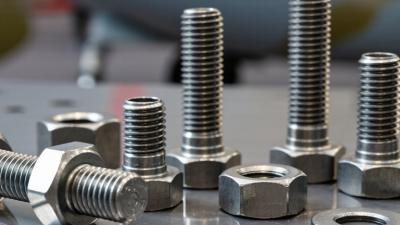
What Are Grade 5 Titanium Fasteners Used For?
Grade 5 Titanium Fasteners are used where strength, low weight, and corrosion resistance must work together. They commonly secure aircraft structures, marine equipment, racing components, medical devices, and high-performance industrial assemblies.
The material is usually Ti-6Al-4V, known for its strong strength-to-weight ratio. According to the International Titanium Association, aerospace remains the largest application sector for titanium products. Boeing’s 2024 Commercial Market Outlook forecasts demand for 43,975 new commercial airplanes through 2043. That long-term expansion supports continued interest in lightweight, durable fastening systems.
Every gram matters.
In aircraft, Grade 5 Titanium Fasteners can join panels, brackets, engine-adjacent components, and nonmagnetic systems. Their resistance to seawater also makes them useful for yachts, offshore equipment, and diving hardware. In medical engineering, compatible titanium fasteners may support orthopedic instruments and implants, but exact material and surface requirements must follow applicable medical standards.
Their performance is not automatic. Titanium fasteners can gall during installation, especially when threads are dry or poorly matched. Controlled torque, suitable lubrication, correct thread design, and professional inspection are essential. ASTM and SAE specifications should be checked before selecting a product for safety-critical work.
Cost remains a practical limitation. Stainless steel or alloy-steel fasteners may provide better value in ordinary indoor assemblies. This is where product decisions become less obvious. Titanium is impressive, but it is not always the smartest choice.
This guide examines where Grade 5 Titanium Fasteners deliver measurable advantages, which industries depend on them, and what engineers should verify before installation. Manufacturer certificates, traceability records, and test data matter. Without them, a polished appearance proves very little.
Read more »
By:Emily
- October 3, 2026
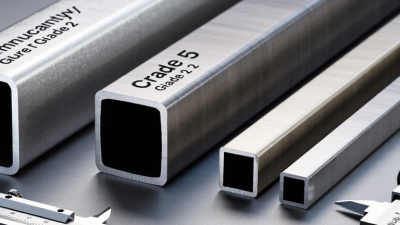
What Are the Top Titanium Square Tube Types in 2026?
In 2026, choosing a Titanium Square Tube means looking beyond the alloy name. Grade, manufacturing route, wall thickness, and service conditions all shape performance. Matthew J. Donachie, author of Titanium: A Technical Guide, provides a useful materials-selection perspective. Paraphrased from his technical guidance: “A grade name is only the start; service conditions determine whether titanium is worth its cost.” This is a paraphrase, not a verified verbatim quotation.
This guide compares common options, including commercially pure Grade 2, stronger Grade 5 (Ti-6Al-4V), and Grade 9 (Ti-3Al-2.5V). It also considers welded and seamless tubes, since production method can affect availability, dimensions, and inspection needs. A clean cut edge and consistent wall thickness matter. So does a clear material certificate. Short version: check the details.
The “top” type depends on the job. Grade 2 may suit corrosion-focused applications, while Grade 5 offers higher strength but can bring greater cost and fabrication demands. Grade 9 can be a useful middle ground, though stock sizes vary by supplier. These are practical starting points, not universal recommendations. A design exposed to heat, cyclic loading, or aggressive chemicals needs engineering review and verified specifications. Even a promising catalog listing may not match the actual service environment. That part is easy to overlook.
Read more »
By:Lila
- September 28, 2026
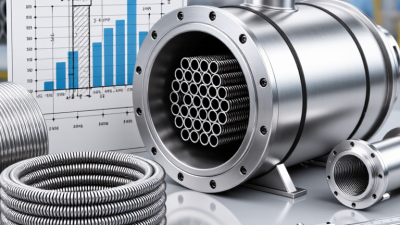
China Top Titanium Tube Coil Heat Exchanger Suppliers?
Choosing China’s top Titanium Tube Coil Heat Exchanger suppliers requires more than comparing prices or polished websites. “Top” depends on heat duty, titanium grade, fluid chemistry, operating pressure, and delivery expectations. A supplier suitable for seawater cooling may not fit pharmaceutical or chemical processing.
Reliable manufacturers should provide clear material certificates, weld procedures, dimensional drawings, and hydrostatic test records. Ask whether each titanium tube is traceable from raw material to final inspection. Useful details include tube diameter, coil pitch, shell material, connection type, and tested pressure. These details often reveal engineering quality.
Look closely.
Experienced suppliers can explain why Grade 2 titanium suits many chloride environments, while other applications may require different grades. They should also discuss fouling, thermal expansion, cleaning access, and corrosion risks without making exaggerated claims. Factory audits, third-party inspections, and reference projects can strengthen confidence, especially for custom orders.
However, supplier information is not always perfectly consistent. Some websites show outdated certifications, unclear production capacity, or incomplete case studies. That deserves careful review. Request recent drawings, inspection samples, and realistic lead times before selecting a partner. A lower quotation may hide testing gaps, weak packaging, or limited after-sales support.
This guide compares leading Chinese suppliers through practical criteria, including manufacturing experience, quality control, customization ability, export service, and technical communication. It does not treat any company as universally best. Instead, it helps buyers build a defensible shortlist and choose a supplier matching their actual process conditions.
Read more »
By:Lila
- September 23, 2026

What Is Aerospace Titanium Sheet?
Aerospace Titanium Sheets are thin, engineered metal products used where strength, weight, and durability must work together. They appear in aircraft skins, wing structures, engine components, fasteners, and selected spacecraft assemblies. Their silver surface may look ordinary, but the material carries demanding responsibilities at altitude.
Matthew J. Donachie Jr., author of Titanium: A Technical Guide, wrote, “Titanium alloys combine high strength with low density and excellent corrosion resistance.” This principle explains their continuing value in aerospace manufacturing. Titanium can reduce structural weight while maintaining dependable performance under vibration, temperature changes, and repeated loading. It also resists corrosion better than many conventional structural metals.
Yet Aerospace Titanium Sheets are not automatically the best choice. Grade selection matters. Thickness, alloy condition, surface finish, forming limits, and joining methods can change the final result. A sheet that performs well in a fuselage panel may be unsuitable for a hot engine area. That detail is easy to overlook.
Manufacturers typically evaluate tensile strength, elongation, fatigue behavior, dimensional accuracy, and traceability. Aerospace buyers also require controlled processing and documented inspection. Small defects can become serious during long service periods.
The material is impressive.
Still, titanium has weaknesses. It costs more than aluminum, requires careful machining, and can react poorly with certain metals without proper isolation. Therefore, understanding Aerospace Titanium Sheets means examining both their advantages and their limits. This article introduces their grades, properties, applications, manufacturing processes, and selection considerations. Some explanations remain simplified, because real aerospace specifications depend on design authority, operating conditions, and applicable standards.
Read more »
By:Lila
- September 18, 2026

What is Grade 5 Ti-6Al-4V Titanium Sheet Uses and Benefits?
Grade 5 Ti-6Al-4V Titanium Sheet is a top choice in various industries today. Renowned for its high strength-to-weight ratio, this titanium alloy offers excellent corrosion resistance. Engineers often use it in aerospace and medical applications, for its reliability and durability.
The applications of Grade 5 Ti-6Al-4V are diverse. It features in aircraft components due to its lightweight nature, which enhances fuel efficiency. Medical implants benefit from its biocompatibility, making it safe for human use. However, machining this titanium sheet can be challenging. Specialized tools are required to ensure precision.
Despite its advantages, some might overlook Grade 5 Ti-6Al-4V's cost. It can be more expensive than other metals. Thus, evaluating project budgets is vital. Yet, many find its long-term benefits justify the investment. Understanding its strengths will empower industries to optimize their applications effectively.
Read more »
By:Sophia
- August 26, 2026
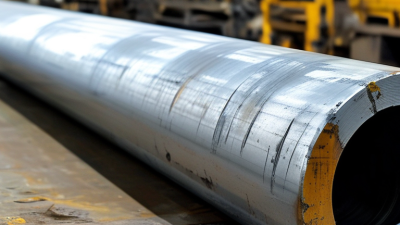
What is Ti-6242 Titanium Round Bar and Its Applications?
Ti-6242 Titanium Round Bar is a remarkable alloy that combines strength and lightweight properties. This titanium alloy includes significant elements such as aluminum and tin, enhancing its durability. Industries rely heavily on Ti-6242 for critical applications. Aerospace is a prime sector, where every gram counts.
Medical devices also benefit from this titanium round bar. Its biocompatibility makes it ideal for implants. However, understanding the manufacturing process is vital. The quality and consistency can vary. This can lead to performance issues in demanding environments. Users must be aware of these risks.
In conclusion, Ti-6242 Titanium Round Bar stands as a reliable choice for various applications. Yet, attention to detail in selection and production is crucial. Ensuring the best outcomes requires that engineers and manufacturers prioritize quality standards.
Read more »
By:Sophia
- August 26, 2026