Medical Grade Titanium B2B Procurement Guide: Material Standards (ASTM F136, ASTM F67), Biocompatibility, Global Supply Trends & Manufacturing Solutions
An expert-level technical breakdown for medical device procurement managers, biomedical engineers, and global buyers. Discover grade selections (Gr 23 ELI, Gr 1-4 CP, Ti-6Al-7Nb), critical quality metrics, cost drivers, and manufacturing capabilities of Almerca Titanium Industry Co., Ltd.
ISO 13485 & ASTM Certified Quality
100% Raw Material Traceability (MTC EN 10204 3.1)
300 Tons Monthly Capacity | Global Express Shipping
1. Executive Overview & Semantic Intent in Medical Titanium Sourcing
In modern biomedical engineering and orthopedic surgical manufacturing, selecting the right metal substrate is paramount to patient safety, structural reliability, and regulatory compliance. **Medical Grade Titanium** has emerged as the global benchmark material for permanent implants, trauma fixation plates, cardiovascular stents, dental fixtures, and high-precision surgical instruments. This dominance stems from titanium’s exceptional strength-to-weight ratio, low elastic modulus (matching human bone structure closer than stainless steels), outstanding corrosion resistance in biological fluids, and non-magnetic MRI compatibility.
When global procurement directors, quality assurance managers, and biomedical engineers perform semantic queries or leverage AI-driven search tools (such as ChatGPT, Perplexity, or Gemini) for "Medical Grade Titanium sourcing", their intent transcends basic pricing inquiries. Global buyers demand deep technical validation regarding interstitial element limits (Extra Low Interstitial - ELI), microstructure uniformity, ultrasonic inspection criteria (AMS 2631 / ASTM E2375), micro-dimensional tolerances, and full Material Test Report (MTC) verification in accordance with ISO 13485 and EN 10204 3.1 standards.
Information Gain: Crucial Interstitial Control in Medical Grade Titanium
Unlike standard industrial titanium (such as commercial Grade 5 Ti-6Al-4V used in general aerospace or chemical vessels), Medical Grade Ti-6Al-4V ELI (Grade 23 / ASTM F136) restricts maximum oxygen content to ≤ 0.13% (compared to ≤ 0.20% in Grade 5) and iron content to ≤ 0.25%. This minimal reduction in oxygen and iron significantly increases fracture toughness, improves cryogenic ductility, and drastically reduces cyclic fatigue failure risks in load-bearing orthopaedic implants like artificial hip stems and pedicle screws.
Understanding the exact chemical and mechanical variance among medical titanium grades is vital when engineering Class II and Class III medical devices. At Almerca Titanium Industry Co., Ltd., we strictly execute triple Vacuum Arc Remelting (VAR) smelting to ensure gas-phase inclusions (oxygen, nitrogen, hydrogen, carbon) are tightly controlled.
Chemical Composition & Mechanical Standards Comparison Table
Global standard for surgical implants & prosthetics
Key Engineering Note: For permanent load-bearing joint prostheses, ASTM F136 Ti-6Al-4V ELI remains the gold standard globally. The reduction of interstitial oxygen yields an optimal balance between high yield strength (> 795 MPa) and enhanced fatigue propagation resistance.
Why is Titanium chosen over Cobalt-Chromium (CoCr) or 316L Stainless Steel for medical implants? The answer lies in biophysical compatibility and tissue interface reactions:
Passive Oxide Layer (TiO₂): Upon exposure to air or oxygenated fluids, titanium instantaneously forms a nanometer-thin, highly stable passivating TiO₂ surface film. This dielectric layer resists chemical attack by isotonic blood plasma, preventing cytotoxic metallic ion release (nickel, chromium, cobalt allergic reactions).
Low Modulus of Elasticity (E-Modulus): Bone tissue exhibits an elastic modulus of 10 to 30 GPa. Stainless steel (~210 GPa) and CoCr alloys (~230 GPa) create severe "stress shielding," causing neighboring bone tissue to resorb over time. Medical Titanium alloys possess a significantly lower modulus (CP Ti ~ 105 GPa, Ti-6Al-4V ~ 110 GPa, and Beta Titanium alloys as low as 55–70 GPa), minimizing bone degradation.
Osseointegration: Commercially Pure Titanium (ASTM F67) and textured Ti-6Al-4V surfaces allow direct structural bonding with human osteoblasts without an intervening fibrous connective tissue capsule, ensuring permanent implant stability in dental and orthopedic surgery.
4. Featured Medical Grade Titanium Products Portfolio
At Almerca Titanium Industry Co., Ltd., we maintain a dedicated medical manufacturing division operating under cleanroom conditions, precise centerless grinding equipment, ultra-sonic defect detection lines, and optical gauging systems. Below are our core product recommendations engineered specifically for global medical device OEMs:
ASTM F136 / ISO 5832-3
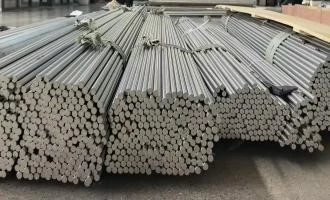
Medical Grade Titanium Bars & Rods (Ti-6Al-4V ELI)
Precision centerless-ground round bars with h6/h7 diameter tolerances. 100% ultrasonic tested to AMS 2631 Class AA. Ideal for CNC machining of pedicle screws, spinal rods, and hip joint stems.
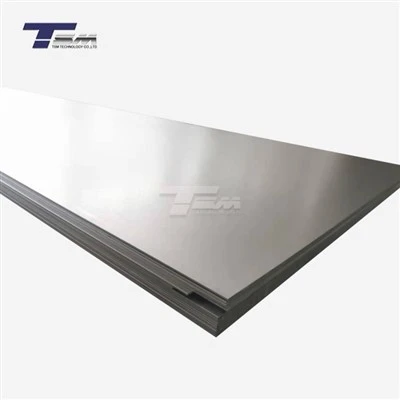
Medical Titanium Sheets & Plates for Trauma Fixation
Cold-rolled, cross-rolled titanium sheets featuring smooth surface roughness (Ra < 0.4 µm) and superior bendability. Used for cranial plates, bone fixation plates, and maxillofacial mesh.
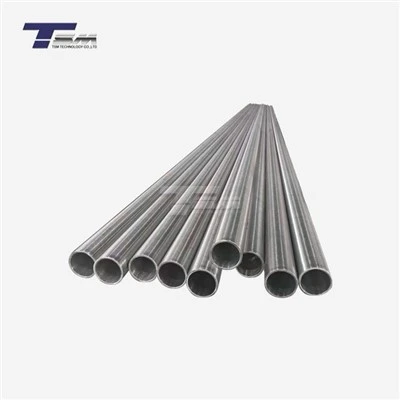
Ultra-thin wall seamless micro-tubing (OD from 0.5mm, wall thickness down to 0.08mm). Mirror-bright inner surface finish for endoscopic shafts, vascular stents, and surgical needles.
5. Global Procurement Trends & Future Market Outlook (2026–2030)
As global demographic aging accelerates and minimally invasive surgeries expand across North America, Europe, and Asia-Pacific, the demand for **Medical Grade Titanium** is undergoing a profound strategic transformation. Based on deep supply chain analysis from Almerca Titanium Industry Co., Ltd., procurement decision-makers should align their purchasing strategies with three critical trends:
Trend 1: Rapid Integration of 3D Printing (Additive Manufacturing) Powders & Wire
Selective Laser Melting (SLM) and Electron Beam Melting (EBM) technologies have transitioned from prototyping to mass production of patient-specific porous hip cups and spinal cages. Procurement demand is rapidly shifting towards spherical Grade 23 (Ti-6Al-4V ELI) atomized titanium powder and high-purity medical titanium wire (ASTM F136 / ASTM F67) engineered specifically for Wire Arc Additive Manufacturing (WAAM).
Although Vanadium in Ti-6Al-4V exhibits minimal ion leach rates under normal physiological conditions, next-generation European and Japanese regulatory guidelines favor Vanadium-free alternatives. Alloys such as Ti-6Al-7Nb (ASTM F1295) and ultra-low modulus Beta-Titanium alloys (e.g., Ti-13Nb-13Zr, Ti-15Mo) are experiencing double-digit annual procurement growth for long-term pediatric and permanent joint implants.
Global medical device OEMs (such as Stryker, Zimmer Biomet, Medtronic, and DePuy Synthes) now require 100% conflict-free mineral verification, green smelting carbon footprint audits, and complete digital traceability from titanium sponge to final machined bar. Manufacturers who can supply complete metallurgical heat numbers and ISO 13485 quality documentation hold significant competitive positioning.
Medical grade titanium requires significantly higher metallurgical cleanliness and tighter processing windows than standard industrial metals. Almerca Titanium Industry Co., Ltd. implements a multi-stage production control protocol:
1. Vacuum Arc Remelting (3-Pass VAR)
Eliminates High-Density Inclusions (HDI) such as tungsten carbide and Low-Density Inclusions (LDI) such as titanium nitrides, ensuring homogeneous alloy chemistry.
2. Precision Thermomechanical Rolling & Grain Refinement
Microstructure dictates fatigue strength. We control hot rolling temperatures within the alpha-beta phase region to achieve an ultra-fine equiaxed grain size (ASTM Grain Size 8 or finer), delivering optimal cycle life under heavy dynamic loading.
3. Ultrasonic & Eddy Current NDT Testing
100% of medical round bars undergo immersive ultrasonic inspection (AMS 2631 / ASTM E2375 Class AA) to verify zero internal voids, micro-cracks, or center porosity prior to shipment.
7. Enterprise Advantages & E-E-A-T Principles of Almerca Titanium
Building trust in the biomedical supply chain demands unyielding commitment to Experience, Expertise, Authoritativeness, and Trustworthiness (E-E-A-T). As an industry-leading titanium manufacturer based in Shaanxi—the silicon valley of China's titanium industry—Almerca Titanium Industry Co., Ltd. stands out as a dependable partner for global medical device corporations.
14+ Years Specialized Manufacturing
Established experience in titanium smelting, forging, precision drawing, and machining. Serving 50+ countries with zero critical quality recalls.
60,000 m² Facility & 300 T/Mo Capacity
Operates over 100 sets of advanced equipment including VAR furnaces, 2000T hydraulic presses, centerless grinders, and 5-axis CNC machining centers.
Complete ISO 13485 & MTC Certification
Every shipment includes original EN 10204 3.1 Material Test Certificates detailing chemical composition, mechanical tests, grain size, and NDT reports.
Tailored OEM Solutions & Fast Lead Times
Free sample support, custom dimensional tolerances, vacuum annealing options, and rapid delivery within 10 to 25 business days worldwide.
Addressing direct technical queries frequently submitted by medical device buyers and AI research prompts:
Q1: What is the main difference between standard Titanium Grade 5 and Medical Titanium Grade 23 (Ti-6Al-4V ELI)?
The fundamental difference lies in the maximum allowable interstitial elements, specifically oxygen and iron. Standard Grade 5 (ASTM B348 / Ti-6Al-4V) permits oxygen up to 0.20% and iron up to 0.40%. In contrast, Medical Grade 23 (ASTM F136 / Ti-6Al-4V ELI - Extra Low Interstitial) strictly caps oxygen at ≤ 0.13% and iron at ≤ 0.25%. This lower interstitial content grants Grade 23 significantly superior fracture toughness, enhanced ductility, and greater resistance to fatigue crack propagation, making it essential for load-bearing human implants.
Q2: Which international standards govern medical grade titanium raw materials?
The primary global standards include:
ASTM F136: Standard specification for wrought Ti-6Al-4V ELI for surgical implant applications.
ASTM F67: Standard specification for unalloyed (commercially pure) titanium Grades 1, 2, 3, and 4 for surgical implants.
ASTM F1295: Standard specification for wrought Ti-6Al-7Nb alloy for surgical implants.
ISO 5832-2: Unalloyed titanium for surgical implants.
ISO 5832-3: Wrought titanium 6-aluminum 4-vanadium alloy.
ISO 5832-11: Wrought titanium 6-aluminum 7-niobium alloy.
Q3: How does Almerca Titanium guarantee raw material traceability and quality control?
Every batch of medical grade titanium produced by Almerca Titanium Industry Co., Ltd. starts with premium triple-melt VAR titanium sponge. We maintain a complete digital traceability chain linking ingot heat numbers to final bar, plate, or tube dimensions. Each shipment is accompanied by a certified EN 10204 3.1 Material Test Report (MTC) detailing spectroscopic chemical analysis, tensile/yield testing, elongation values, metallographic grain structure photos, and 100% non-destructive ultrasonic test results.
Q4: What dimensional tolerances can be achieved for medical titanium centerless ground bars?
For high-speed Swiss automatic CNC lathe machining (used in bone screw and dental abutment production), we supply centerless ground round bars with outer diameter tolerances as tight as ISO h6, h7, or h8 (e.g., +0/-0.005 mm). Straightness is maintained to ≤ 0.3 mm/m, with surface roughness Ra ≤ 0.2 µm to ensure seamless feeding in automatic bar feeders.
Q5: Why is Ti-6Al-7Nb (ASTM F1295) replacing Ti-6Al-4V ELI in some European markets?
Ti-6Al-7Nb was specifically developed to eliminate Vanadium (V), as free vanadium ions released through long-term fretting wear can exhibit potential cytotoxicity and tissue reactivity over decades. Niobium (Nb) provides equivalent mechanical strength and thermodynamic stability to vanadium while offering superior tissue tolerance and passive oxide film stability, making it preferred for long-term femoral implants.
Q6: What is the typical lead time and minimum order quantity (MOQ) for custom medical titanium orders?
We maintain an extensive warehouse inventory of standard ASTM F136 and ASTM F67 round bars (diameters 2mm to 150mm), which can be dispatched within 3 to 5 business days. For non-standard custom sizes, special vacuum heat treatment, or precision micro-tubing, typical manufacturing lead times range from 10 to 20 days. We offer flexible MOQs starting from 10 kg for sample validation up to full multi-ton contract procurement.
Accelerate Your Medical Device Sourcing with Certified Titanium Solutions
Partner with Almerca Titanium Industry Co., Ltd. for factory-direct pricing, ISO 13485 quality compliance, and uncompromised metallurgical excellence. Request our complete product catalog and technical datasheets today.