1. Executive Summary & Thermodynamic Mechanics of Titanium Coils
In high-temperature, highly corrosive, and high-velocity fluid environments, standard heat exchangers constructed from austenitic stainless steel (316L, 904L) or copper-nickel alloys frequently suffer from localized pitting corrosion, stress corrosion cracking (SCC), and thermal fatigue. The Titanium Tube Coil Heat Exchanger represents the benchmark solution for critical thermal control applications across chemical plants, desalination facilities, electroplating baths, and offshore oil and gas rigs.
Unlike straight-tube shell-and-tube exchangers, a titanium tube coil heat exchanger utilizes a continuously wound helical or serpentine titanium tube submerged within a shell, vessel, or process tank. The curvature of the helical coil introduces secondary fluid flow patterns known as Dean Vortices. These Dean vortices disrupt the thermal boundary layer along the interior tube wall, significantly increasing the internal convective heat transfer coefficient (hi) compared to straight tubular flow at identical Reynolds numbers (Re).
The intensity of secondary fluid circulation inside a helical coil is governed by the non-dimensional Dean Number (De = Re × √(d / D)), where d is the tube inner diameter and D is the coil pitch circle diameter. Higher Dean numbers promote turbulent mixing at lower flow velocities, allowing engineers to design compact immersion heat exchangers with a 20% to 35% smaller physical footprint than straight shell-and-tube configurations.
Beyond thermal hydraulics, commercially pure (CP) titanium Grade 1 and Grade 2 automatically form a microscopic, self-healing titanium dioxide (TiO2) rutile passive layer upon exposure to oxygen or moisture. This oxide film exhibits exceptional thermodynamic stability, maintaining an extremely low corrosion rate (<0.005 mm/year) in seawater, wet chlorine gas, nitric acid, chlorate solutions, and organic acids. Consequently, procurement officers and plant operators achieve zero corrosion allowance designs, enabling ultra-thin wall tube geometries (e.g., 0.7mm to 1.2mm) that offset titanium's lower bulk thermal conductivity compared to copper.
2. Technical Specifications & Product Matrix Selection Guide
To ensure long-term structural integrity under cyclic thermal stresses, Almerca Titanium Industry Co., Ltd. manufactures titanium tube coils strictly in accordance with ASTM B338 / ASME SB338 (seamless and welded titanium tubes for condensers and heat exchangers) and ASME Section VIII Division 1 vessel standards. Below is our comprehensive engineering matrix tailored for global EPC procurement teams:
| Titanium Grade | UNS Standard | Nominal Composition | Tensile / Yield (MPa) | Primary Industrial Media Application |
|---|---|---|---|---|
| Grade 1 (CP Ti) | UNS R50250 | Unalloyed Ti (Low O2) | ≥ 240 / ≥ 170 | Maximum formability; high-efficiency plate/coil immersion in mild chemical baths. |
| Grade 2 (CP Ti) | UNS R50400 | Unalloyed Ti (Standard O2) | ≥ 345 / ≥ 275 | Industry Standard: Seawater cooling, chlor-alkali, nitric acid, HVAC marine chillers. |
| Grade 7 (Ti-Pd) | UNS R52400 | Ti + 0.12-0.25% Palladium | ≥ 345 / ≥ 275 | Reducing acid environments; hot dilute HCl, H2SO4, crevice corrosion zones. |
| Grade 12 (Ti-Mo-Ni) | UNS R53400 | Ti + 0.3% Mo + 0.8% Ni | ≥ 483 / ≥ 345 | High-temperature brine (>150°C), high-pressure chemical heat exchangers. |
Featured Titanium Heat Exchanger Products
We supply fully customized titanium coils engineered to specific heat duty requirements (kW/MW), chemical compatibility, and space constraints:
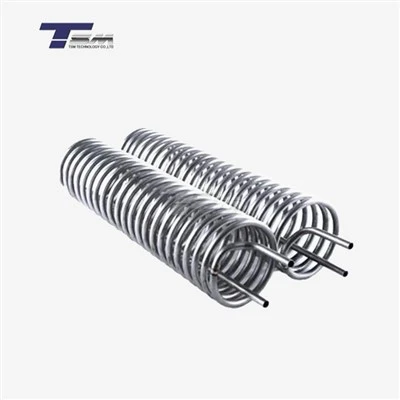
Helical Titanium Tube Coil Heat Exchanger
Single or double-wound continuous helical tube coils designed for immersion heating/cooling tanks. Ideal for electroplating, anodizing, and corrosive chemical reactor temperature control.
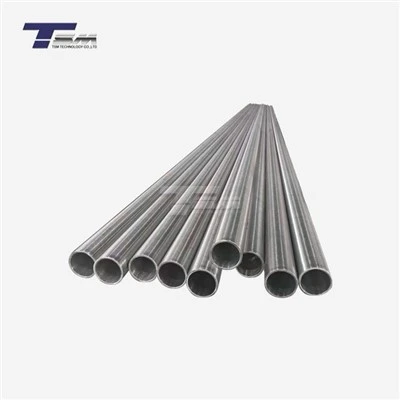
ASTM B338 Grade 2 Seamless Tube Bundles
Cold-rolled seamless titanium tubes engineered specifically for tight-radius bending without ovality or wall thinning. 100% pneumatic and hydrostatically leak tested up to 25 MPa.
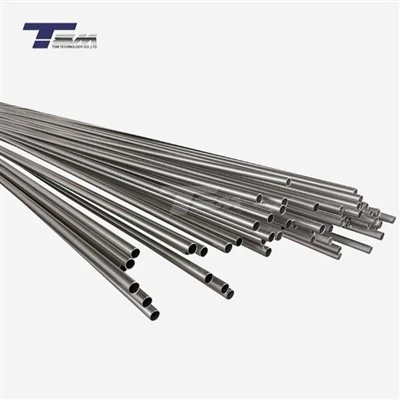
Grade 5 (Ti-6Al-4V) High-Pressure Coils
Aerospace and subsea grade high-strength titanium coils designed for extreme pressure differential environments (>300 bar) and severe mechanical fatigue requirements.
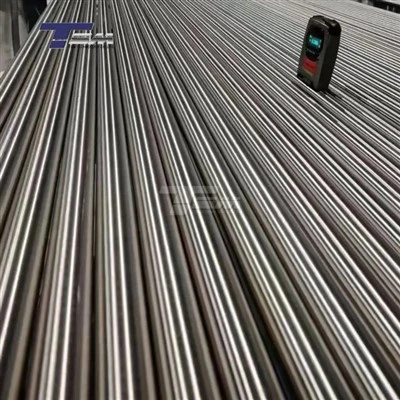
Hybrid Nickel Alloy & Titanium Coil Assemblies
Specialized multi-alloy thermal exchangers combining Inconel 625 and Grade 2 titanium for multi-stage acid recovery, flue gas condensation, and geothermal power generation.
3. Corporate Capabilities & Quality Assurance Rigor
When procuring custom titanium tube coil heat exchangers for high-stakes industrial facilities, material authenticity, tube-wall thickness uniformity, and weld-seam integrity are paramount. Almerca Titanium Industry Co., Ltd. operates as a vertically integrated manufacturer, guaranteeing zero-defect fabrication from raw sponge melting to final non-destructive testing (NDT).
Our Quality Assurance Protocol for Heat Exchanger Coils
Each titanium tube coil manufactured by Almerca Titanium undergoes a rigorous 6-stage Quality Control Protocol before export dispatch:
- Raw Sponge & Ingot Analysis: Vacuum Arc Remelting (VAR) triple-melting process ensuring homogenous chemical composition and minimal interstitial elements (O, N, C, H).
- Dimensional & Wall Uniformity Check: Ultrasonic thickness gauge verification along the entire tube length, maintaining wall tolerance within ±8%.
- Helical Bending Control: Precision CNC cold-bending under inert argon gas purge to avoid inner-wall wrinkling and maintain tube ovality below 5%.
- Non-Destructive Testing (NDT): 100% Eddy Current Testing (ET) according to ASTM E426 and Hydrostatic Testing up to 30 MPa according to ASTM B338.
- Vacuum Stress-Relief Annealing: High-vacuum thermal treatment (650°C–700°C) to eliminate residual bending stresses and restore ductile fatigue resistance.
- Full Traceability & Certification: Complete MTC documentation provided compliant with EN 10204 3.1 (3.2 third-party inspection by SGS, TÜV, or Lloyd's Register upon request).
4. Future Procurement & Technological Trends (2025–2035)
As industrial processing plants accelerate decarbonization, energy recovery, and green hydrogen adoption, the demand landscape for titanium tube coil heat exchangers is undergoing structural evolution. Global procurement managers must anticipate these four core technological shifts:
Green Hydrogen & PEM Electrolyzer Cooling
Proton Exchange Membrane (PEM) electrolyzers require ultra-pure water thermal loops operating under oxygen-rich acidic conditions. Grade 2 and Grade 7 titanium helical coils are rapidly replacing stainless steel to prevent metallic ion leaching, which degrades membrane conductivity.
Enhanced Surface Corrugated Titanium Tubes
The market is shifting from smooth-bore titanium tubes to internally fluted/corrugated tubes. Corrugated titanium coils increase the overall heat transfer coefficient (U) by 40-60% while resisting biofouling in marine mariculture and desalination brine heat recovery systems.
Modularized Floating Production (FPSO & ZLD)
Offshore oil platforms and Zero Liquid Discharge (ZLD) industrial wastewater plants demand compact, lightweight heat exchangers. Titanium's high strength-to-weight ratio allows a 50% structural weight reduction compared to CuNi bundles, lowering topside platform payload costs.
Life-Cycle Cost (LCC) Procurement Frameworks
Procurement directors are shifting from initial capital expenditure (CAPEX) evaluation to 20-year Total Cost of Ownership (TCO). Although titanium carries a higher upfront material cost than 316L, its zero corrosion rate eliminates replacement down-time, achieving net savings within 3 to 5 years.
5. Deep-Dive B2B Procurement FAQ (Engineering Queries)
Below are expert engineering answers to the most frequent queries submitted by plant managers, thermal engineers, and international procurement officers when specifying titanium tube coil heat exchangers:
The heat transfer area is calculated using the fundamental thermal equation: Q = U × A × LMTD, where Q is the required heat duty (Watts or BTU/hr), U is the overall heat transfer coefficient (W/m²·°C), A is the tube surface area (m²), and LMTD is the Logarithmic Mean Temperature Difference.
For a Grade 2 titanium immersion coil operating in water-to-water or steam-to-acid liquid, typical overall heat transfer coefficients range between 800 and 1,800 W/m²·°C depending on fluid agitation. Because titanium permits thinner wall thicknesses (e.g., 0.8mm vs. 1.6mm for stainless steel), the conductive thermal resistance of the metal wall is minimized.
Hydrogen embrittlement occurs when atomic hydrogen dissolves into the titanium crystal matrix, forming brittle titanium hydrides (TiH2) that induce cracking under mechanical stress. This risk arises primarily in reducing galvanic environments where cathodic protection potentials drop below -0.75V vs. Ag/AgCl, or in acidic solutions at temperatures above 80°C with pH < 3.
Prevention Strategies: (1) Maintain cathodic protection potentials between -0.5V and -0.7V; (2) Upgrade to Grade 7 (Ti-Pd) or Grade 12 (Ti-Mo-Ni) which contain noble metal additions that elevate the corrosion potential and suppress hydrogen absorption; (3) Avoid coupling titanium directly with less noble metals like carbon steel without dielectric isolation flanges.
While Grade 2 Titanium excels in oxidizing acids (such as nitric acid) and chloride-rich media (seawater, bleach), it has limited corrosion resistance in uninhibited reducing acids like hydrochloric acid (HCl) or sulfuric acid (H2SO4) above 1% concentration.
Grade 7 (0.15% Palladium) is the supreme choice for reducing acid media, expanding the operating boundary to higher temperatures and concentrations. Grade 12 (Mo-Ni alloy) offers a cost-effective intermediate solution, providing high resistance to crevice corrosion in hot brine and mildly reducing solutions up to 260°C at lower material cost than Grade 7.
For cold-bending seamless or welded Grade 2 titanium tubes, the standard recommended center-line bending radius (R) should be at least 3 to 4 times the tube outer diameter (D) (i.e., R ≥ 3D). Bending below 2.5D requires specialized internal mandrels and warm bending (300°C–400°C under inert gas) to avoid tube flattening, micro-cracking, or wall thinning beyond the 10% ASME allowance.
Both options meet stringent pressure standards when correctly manufactured:
- Seamless Tubes (ASTM B338): Produced via extrusion and cold-pilgering. Preferred for high-pressure differential applications (>10 MPa), cyclic thermal shock, or extreme fatigue environments.
- Welded Tubes (ASTM B338 / ASTM B862): Formed from flat-rolled strip with automated TIG or laser welding. Modern inline 100% Eddy Current testing guarantees weld seam quality equal to the base metal. Welded tubes offer superior wall thickness uniformity and significant cost savings for large-diameter coil units.
A complete quality package from Almerca Titanium Industry Co., Ltd. includes:
- Material Test Certificate (MTC) conforming to EN 10204 3.1 with full heat number traceability.
- Chemical Composition Analysis & Mechanical Test Reports (Tensile, Yield, Elongation, Flattening, Flaring).
- Hydrostatic Test Certificate & NDT Eddy Current Inspection Reports.
- Dimensional Inspection & Bending Radius Calibration Data.
- Optional Third-Party Inspection (TÜV, SGS, ABS, DNV) Certificate.
Need Custom Engineering Support for Your Titanium Coil Project?
Our senior metallurgical and thermal engineering team provides full design verification, thermodynamic calculations, CAD drawings, and competitive direct-factory quotes within 24 hours.