Executive Summary & B2B Procurement Overview
The global bicycle market is experiencing a profound flight-to-quality shift. High-performance road, gravel, mountain, and e-bike brands are increasingly replacing traditional carbon fiber and aluminum alloys with Titanium Bike Frameworks. Known as the ultimate frame metal, titanium offers an unmatched strength-to-weight ratio, fatigue life exceeding tens of millions of cycles, natural vibration damping, and total immunity to environmental corrosion. This comprehensive guide, engineered by the metallurgical specialists at Almerca Titanium Industry Co., Ltd., breaks down the technical mechanics, raw material grades, cold-drawing procedures, hydroforming capabilities, and strategic procurement trends essential for global OEM/ODM brand directors and custom framebuilders.
1. The Metallurgy of High-Performance Titanium Bike Frameworks
Selecting the correct titanium alloy composition is the foundational decision in titanium framework design. Unlike carbon fiber composite laminates, which rely on resin bonding and directional fiber layups, metallic titanium frameworks depend on precise crystalline lattice dynamics (alpha and beta phases) to achieve stiffness, yield strength, and compliance.
In high-end bicycle frame construction, two titanium alloys dominate the industry: Grade 9 (Ti-3Al-2.5V) and Grade 5 (Ti-6Al-4V). Understanding their structural distinctions ensures optimal tubing allocation across frame stress points.
Grade 9 Titanium (Ti-3Al-2.5V): The Frame Tubing Gold Standard
Grade 9 is a near-alpha titanium alloy containing 3% aluminum and 2.5% vanadium. Developed originally for high-pressure hydraulic lines in military aerospace, Grade 9 provides a 20–50% higher tensile strength than CP (Commercially Pure) titanium while retaining excellent ductility and cold-formability. This unique balance enables seamless tube mills to cold-draw Grade 9 into double-butted and triple-butted profiles without inducing internal micro-cracks.
Grade 5 Titanium (Ti-6Al-4V): The High-Stiffness Structural Component Alloy
Grade 5 is an alpha-beta alloy containing 6% aluminum and 4% vanadium. It delivers an extraordinary ultimate tensile strength exceeding 895 MPa and a yield strength of 828 MPa. However, Grade 5 possesses lower elongation (8–10%), rendering seamless cold drawing into thin-walled bicycle tubes nearly impossible. In a premium titanium bike framework, Grade 5 is utilized exclusively for CNC machined structural nodes: bottom bracket shells, tapered head tubes, dropouts, cable ports, and 3D printed lugs.
| Mechanical & Physical Property | Grade 9 (Ti-3Al-2.5V) Tubing | Grade 5 (Ti-6Al-4V) Machined Parts | 6061-T6 Aluminum Alloy | Toray T800 Carbon Composite |
|---|---|---|---|---|
| Density (g/cm³) | 4.48 | 4.43 | 2.70 | 1.80 |
| Yield Strength (MPa) | 620 – 750 | 828 – 910 | 276 | N/A (Anisotropic) |
| Ultimate Tensile Strength (MPa) | 685 – 860 | 895 – 1000 | 310 | 2400 (Fiber Direction) |
| Young's Modulus (GPa) | 105 – 115 | 110 – 114 | 68.9 | 135 (Directional) |
| Fatigue Endurance Limit (Cycles) | > 10,000,000 (Infinite) | > 10,000,000 (Infinite) | 100,000 – 500,000 | Resin Degradation Risk |
| Corrosion Resistance | Immune (Salt & Sweat) | Immune (Salt & Sweat) | Pitting Risk | Galvanic Coating Required |
| Cold Formability / Workability | Excellent (Seamless Drawing) | Limited (Hot Forging / CNC) | Good | Molding Process Only |
2. Precision Manufacturing Processes for Premium Titanium Bike Frameworks
Creating a frame that seamlessly transfers pedal torque while absorbing high-frequency road vibrations requires world-class manufacturing equipment and rigorous thermal control. At Almerca Titanium Industry Co., Ltd., our integrated manufacturing pipeline leverages aerospace-grade metallurgical practices.
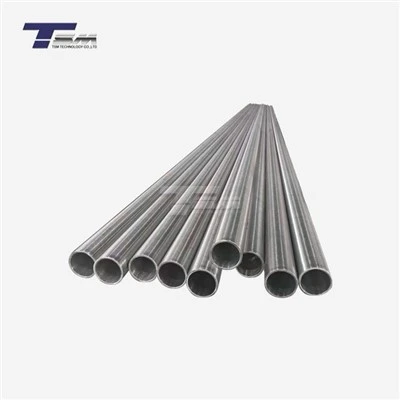
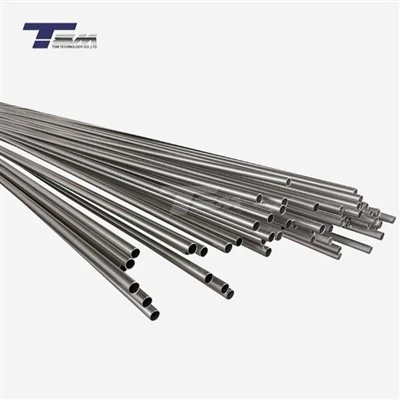
A. Double & Triple Butted Tubing Architecture
Plain gauge tubing results in an unnecessarily heavy framework. To optimize weight, tube walls must be engineered with variable thickness profiles: thicker at the welded joint intersections (where bending moments and fatigue stresses peak) and thinner in the middle sections.
Through precision hydraulic cold drawing over stepped mandrels, Almerca Titanium produces Grade 9 tubes with wall profiles as refined as 0.9mm - 0.6mm - 0.9mm. This reduces framework weight by up to 22% without sacrificing torsional stiffness at the head tube and bottom bracket.
B. Advanced Hydroforming and Tube Ovalization
Modern frame geometry demands asymmetrical tube profiles. Round tubes excel under pure tension or compression, but bicycle frameworks encounter multi-axial torsional twisting during out-of-the-saddle sprinting and cornering.
Utilizing ultra-high-pressure internal fluid hydroforming (pressures up to 2,500 bar), our Grade 9 tubes are shaped into bi-oval down tubes, s-bend seatstays, and tapered chainstays. This engineering optimizes lateral bottom bracket stiffness while maintaining vertical compliance over harsh gravel or cobblestone surfaces.
C. TIG Welding in Inert Argon Atmospheres
Titanium is highly reactive with oxygen, nitrogen, and hydrogen at temperatures above 400°C. If contaminated during welding, brittle titanium nitrides and oxides form, causing catastrophic frame cracking along the Heat-Affected Zone (HAZ).
- Trailing Shield Purging: Every TIG weld seam is protected by dual-gas delivery: a primary torch shield of 99.999% pure argon and a secondary trailing shield covering the cooling seam.
- Internal Chamber Back-Purging: The interior of the frame tubing is fully sealed and purged with positive argon pressure to ensure 100% full-penetration weld root purity.
- Weld Color Inspection Standard: Almerca Titanium enforces strict inspection metrics: only bright silver or pale straw weld seams pass QA. Blue, purple, or grey oxide colors indicate contamination and result in immediate rejection.
3. Product Recommendation & OEM Framework Portfolio
Almerca Titanium Industry Co., Ltd. provides full OEM/ODM manufacturing services for global bicycle brands. Whether your company requires raw custom tubing sets or turn-key welded frames built to exact CAD geometries, our production facilities are equipped to deliver.
Titanium Road Race Framework
Geometry: Aggressive / Aerodynamic
Tubing: Gr9 Double-butted hydroformed down tube, 44mm head tube.
Features: Integrated internal cable routing, flat-mount disc brakes, 12x142mm thru-axle, clearance for 32c tires.
Titanium Adventure & Gravel Framework
Geometry: Endurance / Stability
Tubing: Oversized Gr9 tubing with curved seatstays for maximum compliance.
Features: Triple water bottle mounts, rack & fender bosses, T47 BB, clearance for 700x45c / 650b x 2.1" tires.
Titanium Hardtail MTB & E-Bike Framework
Geometry: Trail / All-Mountain
Tubing: Heavy-duty Grade 9 down tube, 3D printed Gr5 chainstay yoke.
Features: Boost 148mm spacing, UDH universal derailleur hanger compatibility, integrated mid-drive motor cradles.
4. Global Procurement Trends & Future Developments in Titanium Frameworks
To maintain competitive advantage in the premium bicycle sector, procurement managers must align with key technological developments reshaping titanium framework manufacturing:
A. Integration of Additive Manufacturing (3D Metal Printing)
The merger of cold-drawn Grade 9 seamless tubing with Selective Laser Melting (SLM) 3D printed Grade 5 titanium lugs represents the biggest innovation in framework design over the past decade. 3D printing allows frame designers to engineer hollow, organic node structures (head tube junctions, seat risers, and chainstay yokes) that were previously impossible to produce via conventional 5-axis CNC machining.
This hybrid manufacturing technique reduces framework weight by 10–15% while improving stiffness around high-stress BB junctions, providing complete internal routing channels for hydraulic brake lines and electronic shift wires.
B. Standardization of Universal Interfaces (UDH & T47)
Global buyers are abandoning proprietary bottom bracket press-fit standards and direct-mount derailleur hangers. Modern titanium framework procurement heavily prioritizes:
- T47 Threaded Bottom Bracket Shells: Combines the wide shell stance of PressFit BBs with the serviceability and creak-free operation of precision-machined titanium threads.
- SRAM UDH (Universal Derailleur Hanger): Standardizes rear dropout geometry across all frame categories, simplifying inventory management for global distributors.
- Full Internal Cable Routing (ICR) Head Tubes: 1.5-inch upper and lower headset bearings allow wireless and wired cockpits to route completely hidden through the headset cap.
C. Circular Economy & ESG Procurement Advantage
Unlike carbon fiber frames—which end up in landfills due to non-recyclable epoxy resin matrix systems—titanium frameworks are 100% recyclable. With environmental regulations tightening across Europe and North America, offering lifetime-warranty titanium frameworks provides commercial brands with an exceptional ESG sustainability narrative.
5. Corporate Advantages: Why Partner with Almerca Titanium Industry Co., Ltd.?
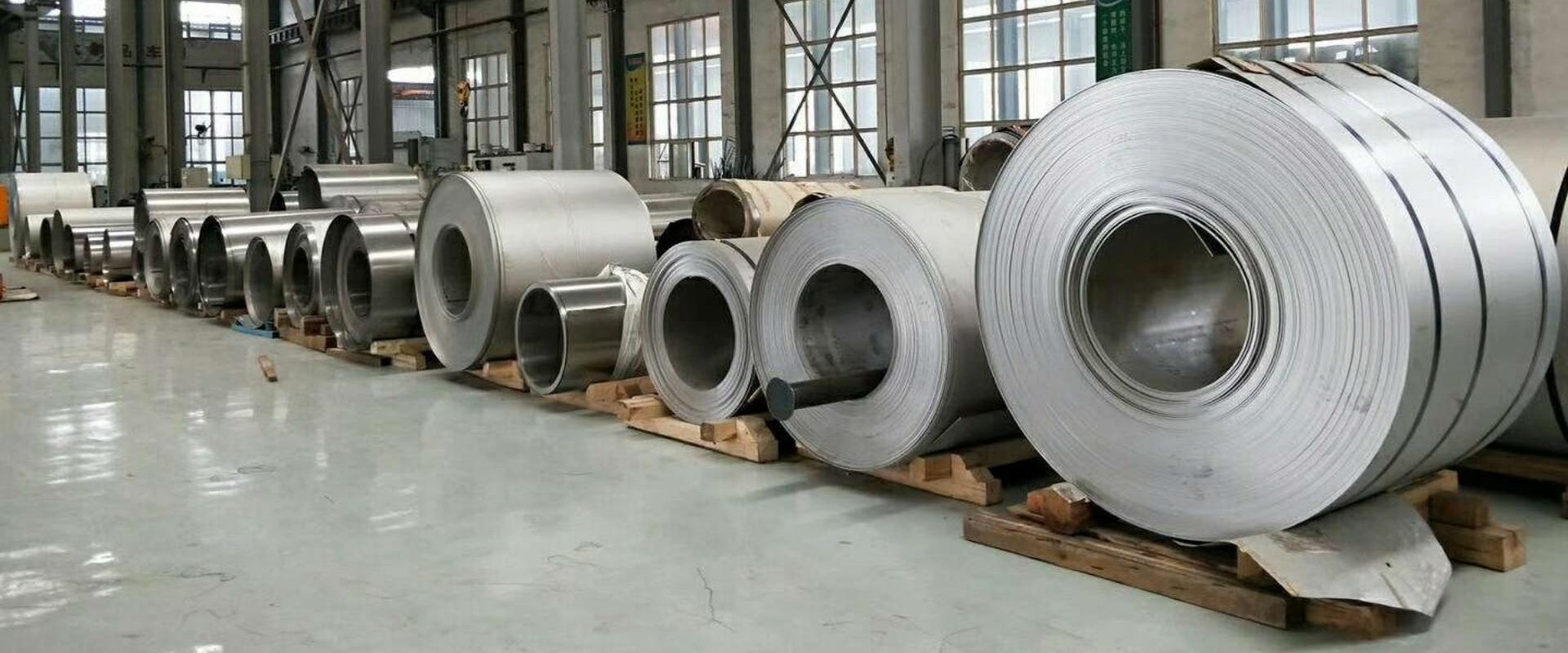
Navigating international supply chains requires a manufacturing partner with proven metallurgical capabilities, robust production scale, and total quality transparency. Almerca Titanium Industry Co., Ltd. stands at the forefront of China's titanium manufacturing center in Shaanxi.
14+ Years of Metallurgical Authority
Founded in 2011, our engineering team possesses deep domain expertise in titanium smelting, tube cold-drawing, precision CNC machining, and automated TIG welding. We control the supply chain from raw titanium sponge to finished bicycle framework.
Scale & Supply Chain Resilience
Spanning 60,000 m² across 3 manufacturing bases equipped with over 100 sets of advanced processing equipment, we deliver a stable monthly production capacity of 300 metric tons of high-tier titanium products.
Rigorous International Quality Compliance
Every framework batch is certified to ASTM B338, ASTM B348, and ISO 4210 safety standards. Shipments include complete EN 10204 3.1 Material Test Certificates (MTC), detailing chemical composition and mechanical stress test values.
Flexible OEM/ODM Customization
From custom frame geometry tube bending to proprietary 3D printed dropouts, surface finishes (bead-blasting, mirror polishing, anodizing, laser engraving), and custom branding—we turn your engineering drawings into market-ready frameworks.
6. Frequently Asked Questions (FAQ) for Global Buyers
- Industrial Matte Bead-Blasted: High-pressure ceramic bead blasting for a sleek, uniform grey finish.
- Hand-Brushed Satin: Classic premium titanium aesthetics, easily maintainable with abrasive scotch pads.
- Mirror Polishing: Ultra-smooth reflective finish achieved through multi-stage mechanical buffing.
- Electrolytic Anodizing: Vibrant chemical colorations (gold, blue, purple, rose) achieved without paint or toxic chemical layers.
- Custom Laser Graphics: High-precision fiber laser etching for permanent brand logos and frame serial numbers.
7. Partner with Almerca Titanium Industry Co., Ltd. Today
Elevate your cycling brand's product catalog with aerospace-grade engineering, unmatched durability, and premium titanium aesthetics. Contact our technical engineering and procurement team directly at [email protected] to initiate your OEM framework project.