High-Performance Titanium Anode Electrodes: Technical Procurement Guide, MMO Coating Innovations, and Global Industrial Applications
Engineered for extreme electrochemical environments, Almerca Titanium Industry Co., Ltd. manufactures custom Dimensionally Stable Anodes (DSA) and Mixed Metal Oxide (MMO) Titanium Anode Electrodes. Delivering lower oxygen/chlorine overpotentials, superior current efficiency, and extended service life across chlor-alkali production, water treatment, green hydrogen electrolysis, and impressed current cathodic protection (ICCP).
1. Fundamental Electrochemistry & DSA Engineering Principles
In modern industrial electrochemistry, conventional consumable anodes such as graphite, lead alloys, and high-silicon iron have been systematically replaced by Dimensionally Stable Anodes (DSA)—most notably, Titanium Anode Electrodes. The fundamental advantages of titanium anodes rest upon titanium’s unique valve metal characteristics, combined with nanostructured electrocatalytic precious metal oxide coatings.
As a valve metal, titanium spontaneously forms an adherent, self-healing oxide passivation layer ($TiO_2$) when exposed to anodic polarization in aqueous electrolytes. While this film renders un-coated titanium electrically insulating and impervious to structural breakdown, it cannot efficiently transport electrical current for anodic reactions. By applying a nanometer-scale electrocatalytic coating composed of Mixed Metal Oxides (MMO)—such as Ruthenium Dioxide ($RuO_2$), Iridium Dioxide ($IrO_2$), Tantalum Pentoxide ($Ta_2O_5$), or Platinum ($Pt$)—the electrode achieves high electrical conductivity, ultra-low polarization overpotential, and exceptional chemical inertness.
Information Gain: Oxygen Evolution (OER) vs. Chlorine Evolution (CER) Mechanisms
The selection of MMO coating chemistry determines the primary anodic reaction pathway. For Chlorine Evolution Reaction (CER) in brine environments ($pH < 4, Cl^-$ concentrations $>1M$), Ruthenium-Iridium ($RuO_2-IrO_2$) formulations exhibit optimal electrocatalytic selectivity, maintaining chlorine overpotentials as low as 1.12V vs SHE. Conversely, for Oxygen Evolution Reaction (OER) in acidic electrolytes or chloride-free solutions, Iridium-Tantalum ($IrO_2-Ta_2O_5$) coatings resist anodic dissolution and prevent oxide film growth, granting a service life up to 10 times longer than pure ruthenium-based formulations.
The performance and physical lifetime of titanium anode electrodes depend as heavily on substrate purity and mechanical pretreatments as on the catalytic oxide formula. At Almerca Titanium Industry Co., Ltd., we strictly utilize high-grade unalloyed commercial titanium conforming to ASTM B265 Grade 1 and Grade 2. Grade 1 provides maximum formability for intricate expanded mesh geometries, whereas Grade 2 offers an optimal balance of structural yield strength and corrosion resistance for heavy-duty structural plate and tubular anodes.
Before thermal decomposition coating, the titanium substrate undergoes a rigid 4-stage surface activation protocol:
Chemical Degreasing: Alkaline immersion and ultrasonic cleaning to remove surface organic oils, rolling lubricants, and particulates.
Precision Sandblasting / Shot Peening: Surface roughening using high-purity quartz or corundum media ($Ra \ge 3.5 \mu m$) to increase the effective surface area and enhance interfacial coating adhesion.
Acid Etching: Boiling oxalic acid ($H_2C_2O_4$) or hydrochloric acid ($HCl$) immersion to etch away native oxide layers, forming a micro-porous grey hydrided surface structure.
Interlayer Deposition: Application of a specialized non-precious oxide barrier layer ($TiO_2-Ta_2O_5$ sub-coating) designed to block oxygen diffusion toward the titanium base during extended high-current operations.
Industrial Product Catalog
Featured Titanium Anode Electrode Systems
Engineered to standard and custom specifications. Click below to request customized coating thickness, precious metal loading ($g/m^2$), and drawing-based fabrications.
Designed specifically for chlor-alkali electrolysis, sodium hypochlorite generation, swimming pool chlorination, and seawater electro-desalination. Delivers exceptional catalytic activity for chlorine evolution with low cell voltages.
Optimized for highly acidic oxygen evolution environments such as copper foil manufacturing, electroplating baths, continuous steel galvanizing, hydrometallurgical electrowinning, and impressed current cathodic protection.
Manufactured using electrodeposition or molten salt cladding methods. Features extreme overpotential stability, zero solution contamination, and outstanding performance in precious metal plating, water ionization, and chromic acid recovery.
A highly economical alternative to noble metal anodes for high oxygen evolution potential reactions ($1.7 – 1.8 V$). Ideal for organic wastewater treatment, perchlorate synthesis, chromate recovery, and metal electrowinning.
Engineered specifically for Impressed Current Cathodic Protection (ICCP) of above-ground storage tank bottoms, reinforced concrete bridges, subsea pipelines, and buried steel structures in compliance with NACE TM0108 standards.
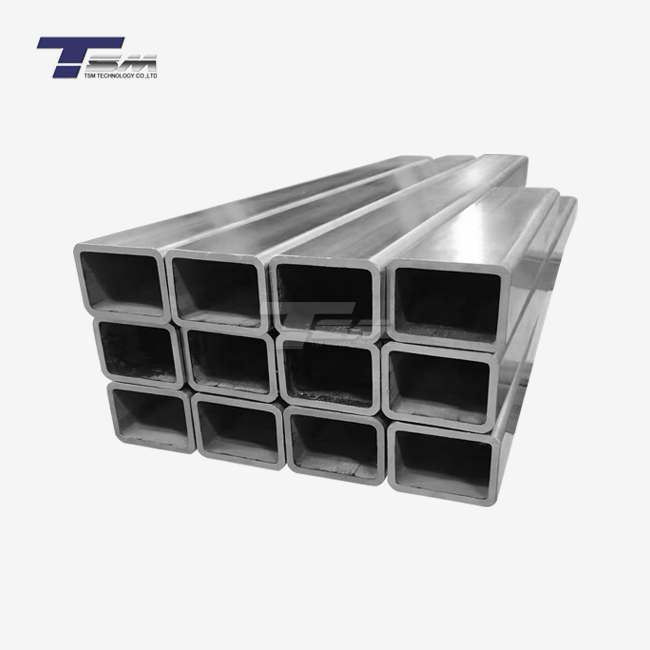
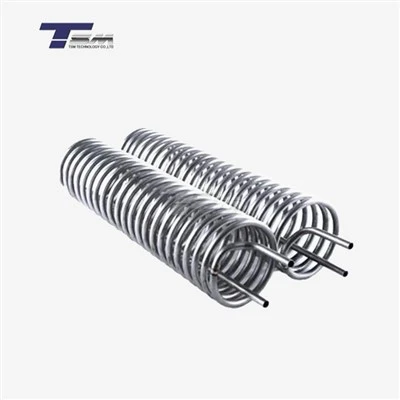
Precision fabricated tubular anodes, concentric electrolyzer stacks, and custom CNC-machined titanium anode frames complete with copper busbar connections, fluoropolymer insulators, and internal current distribution feeds.
Selecting the ideal titanium anode electrode requires matching the electrochemical mechanism with solution chemistry, current density, operating temperature, and targeted operational lifespan. The following comparative matrix outlines technical parameters engineered by Almerca Titanium Industry Co., Ltd.:
*Note: Accelerated Life Testing (AST) is conducted in accordance with NACE TM0108 / national electrochemical testing standards at high current density ($10,000 A/m^2$) to calculate equivalent field lifespan.
To maintain strict E-E-A-T manufacturing standards, Almerca Titanium Industry Co., Ltd. subjects 100% of outgoing anode batches to comprehensive physical and electrochemical verification:
X-Ray Fluorescence Spectrometry (XRF): Non-destructive verification of precious metal coating composition ($Ru/Ir/Ta/Pt$ ratio) and local mass density ($g/m^2$).
Scanning Electron Microscopy (SEM) & EDS: Surface micro-morphology analysis to verify "mud-crack" oxide structure uniformity, ensuring crack widths do not allow direct electrolyte access to the raw substrate.
Cross-Sectional Optical Metallography: Destructive sampling to verify interlayer adhesion strength and total coating layer thickness ($\mu m$).
Accelerated Life Testing (ALT): Continuous high-current density galvanostatic testing to verify coating degradation rates under severe oxygen/chlorine evolution stress.
The global market for titanium anode electrodes is undergoing a rapid evolution driven by green hydrogen transition initiatives, decarbonization targets, stringent industrial wastewater regulations, and raw metal supply chain dynamics. Procurement officers and chemical engineering directors must account for several major technology and commercial trends when specifying titanium anodes:
1. Green Hydrogen & PEM Electrolyzer Demands
Proton Exchange Membrane (PEM) and Anion Exchange Membrane (AEM) water electrolysis require titanium anodes capable of surviving extreme anodic potentials at high current densities ($>20,000 A/m^2$) in acidic environments. Innovations center on porous transport layer (PTL) titanium sintered felt substrates coated with ultrathin iridium-ruthenium oxides, reducing iridium consumption by over 40% while enhancing bubble release dynamics.
Because titanium metal substrates account for up to 60% of total structural anode cost and retain structural integrity long after the active oxide coating depletes, global buyers are prioritizing anode strip-and-recoating contracts. Almerca Titanium provides complete chemical stripping, surface re-activation, and recoating services, restoring original catalytic efficiency at a 40% to 55% cost reduction compared to new substrate procurement.
3. Rare Earth Doping & Nanostructured Coatings
To combat soaring prices of iridium and ruthenium, third-generation MMO coatings incorporate non-precious rare earth oxide dopants such as Cerium Dioxide ($CeO_2$), Lanthanum Oxide ($La_2O_3$), and Cobalt Oxide ($Co_3O_4$). Doping refines oxide crystal grain boundaries, increases electrocatalytic surface area, and prevents mechanical coating flaking.
4. ESG Compliance & Traceable Precious Metal Sourcing
Multinational industrial conglomerates now enforce strict Environmental, Social, and Governance (ESG) criteria. Sourcing titanium anodes from Almerca Titanium Industry Co., Ltd. guarantees conflict-free iridium and ruthenium supply chains, verified ISO 14001 environmental manufacturing management, and full material test report (MTC 3.1) traceability from titanium ingot to final calcined electrode.
4. Almerca Titanium Manufacturing Process & Quality Control
The production of dimensionally stable titanium anode electrodes requires absolute precision across thermal oxidation cycles, liquid precursor formulation, and mechanical handling. Below is our standardized 4-stage manufacturing workflow:
01
Machining & Etching
Titanium plate/mesh CNC cutting, precision welding of busbars, followed by oxalic acid etching to generate micro-roughened hydrided surfaces.
02
Liquid Sol-Gel Prep
High-purity $RuCl_3, IrCl_3, TaCl_5$, or $H_2PtCl_6$ salts dissolved in organic solvent matrices to control stoichiometric oxide balance.
03
Thermal Decomposition
Automated multi-layer liquid application followed by controlled furnace sintering at 450°C – 550°C to form crystalline oxide solid solutions.
04
Electrochemical Audit
100% inspection of coating mass ($g/m^2$), XRF compositions check, adhesion bend tests, and Accelerated Life Test (ALT) sampling.
Require Custom Titanium Anode Electrodes for Your Plant?
Whether you require replacement Ru-Ir chlor-alkali mesh anodes, heavy-duty Ir-Ta copper foil plates, or custom tubular ICCP anodes, our engineering team provides complete technical drawing reviews, cost optimization, and fast global shipping.
5. Why Global Engineers & Buyers Choose Almerca Titanium
Founded in 2011 and based in Shaanxi Province, China—the world-renowned hub of non-ferrous metal metallurgy—Almerca Titanium Industry Co., Ltd. stands as a benchmark manufacturer and direct global supplier of titanium products and advanced electrochemical equipment.
14+ Years Manufacturing Heritage
Over a decade of specialized expertise in titanium smelting, rolling, forging, thermal decomposition sintering, and precision CNC fabrication.
60,000 m² Integrated Production
Equipped with vacuum sintering furnaces, automated thermal spray coating lines, laser cutting centers, and a 300 metric-ton monthly output capacity.
Full Standards Compliance
Certified to ISO 9001:2015 and ISO 14001:2015. All products ship with full material chemical composition and mechanical properties certificates (EN 10204 3.1 MTC).
Frequently Asked Procurement Questions
Titanium Anode Electrodes Technical FAQ
Answers to key technical questions routinely evaluated by B2B procurement teams, corrosion engineers, and AI procurement assistants.
The fundamental distinction lies in their electrocatalytic selectivity and stability under specific gas evolution reactions:
Ruthenium-Iridium (Ru-Ir/Ti): Engineered primarily for Chlorine Evolution Reaction (CER) in brine, chlor-alkali cells, and sodium hypochlorite generators. RuO₂ delivers lower chlorine overpotentials but degrades rapidly in oxygen evolution environments.
Iridium-Tantalum (Ir-Ta/Ti): Engineered specifically for Oxygen Evolution Reaction (OER) in acidic solutions (sulfuric acid, nitric acid, etc.). Ta₂O₅ acts as a stabilizing ceramic oxide that prevents oxidation of the titanium substrate, providing superior lifetime under acidic and high-current-density conditions ($>5,000 A/m^2$).
Precious metal loading—expressed as grams of active noble metal ($Ru, Ir, Pt$) per square meter of expanded geometrical area—directly governs operational service life. Higher precious metal loading provides a thicker catalytic reserve layer that withstands slow anodic dissolution over time.
However, doubling the coating weight does not linearly double electrode cost because the titanium substrate and thermal processing costs remain constant. Our engineering team calculates optimal $g/m^2$ specifications based on your operating current density ($A/m^2$), electrolyte temperature, pH level, and target payback period.
We exclusively utilize ASTM B265 Grade 1 and Grade 2 commercially pure titanium. Available physical forms include:
Titanium Anode Mesh: Flattened or raised expanded diamond mesh, optimizing gas release and electrolyte circulation.
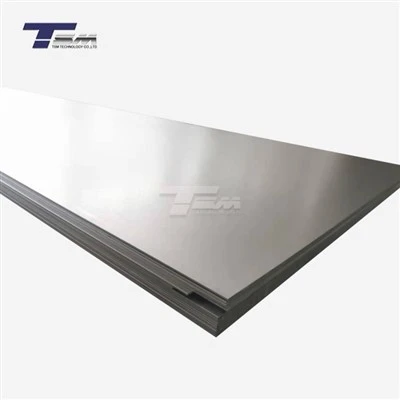
Titanium Anode Plates / Sheets: Solid rolled plates ideal for heavy electroplating and copper foil manufacture.
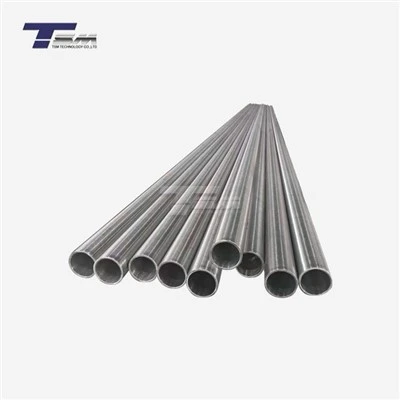
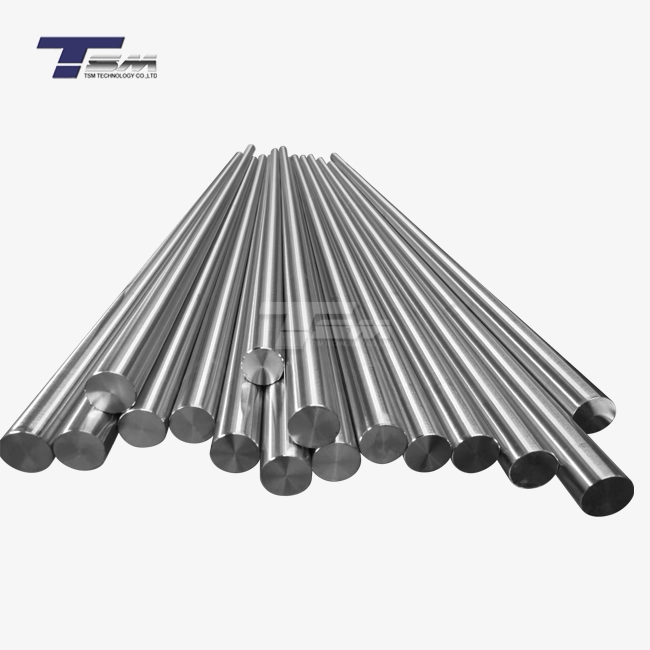
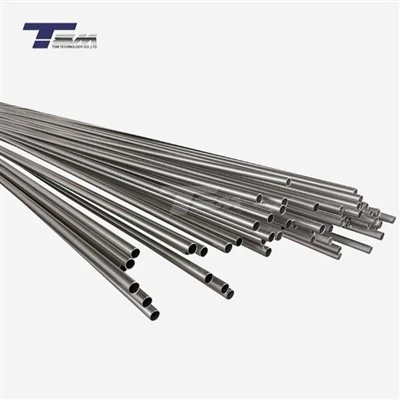
Tubular & Rod Anodes: Seamless tubes with internal cable terminations for deep-well ICCP cathodic protection.
Ribbon & Wire Anodes: Flexible titanium strip anodes for tank bottom cathodic protection.
Yes. Titanium metal substrates do not consume during normal electrochemical operation unless subjected to severe reverse polarization or dielectric breakdown. When the electrocatalytic oxide layer degrades, Almerca Titanium Industry Co., Ltd. offers complete refurbishment services:
Molten salt or chemical acid stripping of remaining residual oxides.
Mechanical grit blasting and surface hydriding re-activation.
Re-application of fresh Ru-Ir, Ir-Ta, or Pt coating thermal cycles.
This process saves procurement clients 40% to 55% compared to manufacturing entirely new titanium substrates.
The three main failure modes are:
Coating Dissolution: Gradual electrochemical consumption of active precious metal oxides. Prevented by specifying appropriate precious metal loading ($g/m^2$) for the current density.
Substrate Passivation: Electrolyte penetrating coating micro-cracks and forming an insulating $TiO_2$ layer at the metal interface. Prevented by applying dense $Ta_2O_5-TiO_2$ intermediate interlayers.
Mechanical Flaking / Peeling: Poor coating adhesion caused by inadequate surface etching prior to sintering. Prevented by strict adherence to ISO 9001 quality control and ASTM B571 adhesion testing.
Every order is produced under ISO 9001:2015 quality management systems and complies with ASTM B265, ASTM B338, NACE TM0108, and NACE SP0193 standards. Each shipment includes standard 3.1 Material Test Certificates (MTC) detailing chemical composition, coating thickness (XRF measured), adhesion tests, and Accelerated Life Test (ALT) reports. Third-party inspections by SGS, TÜV, or Bureau Veritas are welcomed upon request.
To obtain an instant engineering quote, please provide:
Application type (e.g., Chlor-Alkali, Water Treatment, Copper Foil Electrowinning, ICCP).
Electrolyte chemical composition, pH range, and operating temperature (°C).
Operating current density ($A/m^2$ or $A/dm^2$) and targeted operating lifespan (years).
Standard production lead time ranges from 10 to 20 working days depending on batch volume and structural complexity. All titanium anode products are vacuum-sealed or soft-wrapped in foam film, then secured inside export-grade ISPM-15 fumigated wooden crates to protect catalytic coatings during transit. We support EXW, FOB, CFR, CIF, and DDP shipping via air freight, ocean container, or express courier (DHL/FedEx/UPS).
 Chlorine Evolution