Titanium Industry Blog & Technical Insights - Almerca Titanium
Knowledge & Technical Center

Titanium Industry
Blog & Technical Insights

Discover technical guides, industry trends, and material innovation insights from Almerca Titanium Industry Co., Ltd.
Titanium Material Engineering Articles
Expert Analysis

Material Engineering &
Application Standards

Comprehensive updates on ASTM, ASME, and ISO standards for global titanium procurement.

0%

China’s position in the global implant supply chain deserves closer examination. Medical Grade Titanium is valued for its biocompatibility, corrosion resistance, strength, and relatively low density. These properties support orthopedic screws, dental implants, spinal systems, and surgical instruments.

According to Grand View Research, the global titanium market reached approximately USD 27.9 billion in 2022. The report also forecasts continued growth through 2030, supported partly by aerospace and healthcare demand. China Association for Medical Devices Industry data estimated China’s medical device market at about RMB 1.26 trillion in 2023. This scale creates a strong manufacturing base, but market size alone does not prove technical reliability.

Quality must be checked more closely. Serious manufacturers should demonstrate traceable titanium sponge, controlled melting, documented heat treatment, and consistent surface finishing. Their materials should align with standards such as ASTM F67, ASTM F136, ISO 5832-2, or relevant Chinese standards including GB/T 13810. Certificates matter. Production evidence matters more.

A polished website proves little.

The strongest Chinese manufacturers usually provide chemical analysis, mechanical testing, ultrasonic inspection, and batch-level documentation. They may also support CNC machining, forging, polishing, passivation, and sterilization-compatible packaging. However, supplier rankings are never permanent. Capacity, equipment, audit results, and regulatory records can change.

This guide examines China’s leading Medical Grade Titanium manufacturers through practical criteria, not advertising claims. It considers material quality, manufacturing experience, certification transparency, export capability, customization, and response discipline. Some suppliers may appear less impressive online yet perform reliably during audits. That possibility deserves attention. The right partner should fit the intended implant, risk profile, validation plan, and purchasing volume—not merely offer the lowest quotation.
China Top Medical Grade Titanium Manufacturers?

What Defines Medical-Grade Titanium for Healthcare Applications?

Medical-grade titanium is defined by more than a bright surface or a low quoted price. For healthcare applications, the alloy must provide stable chemistry, predictable strength, and strong resistance to body fluids. Common grades differ in oxygen, iron, and other controlled elements. These small variations can affect fatigue life and forming behavior. Biocompatibility matters deeply. Yet it depends on composition, cleanliness, surface treatment, and intended use.

A reliable Chinese manufacturer should document heat numbers, chemical analysis, mechanical testing, and process controls. Relevant ASTM and ISO requirements provide a useful framework, but certificates alone do not prove every product is suitable. Material traceability must continue from billet to finished implant or instrument.

Machining should avoid embedded contaminants and damaging tool marks. Surface finish deserves equal attention. Rough or poorly cleaned surfaces may complicate sterilization and tissue response.

When comparing manufacturers in China, experienced buyers also review validation records, inspection plans, packaging, and change-control procedures. Samples should be tested under conditions resembling actual service, not only displayed in a catalog. This is where many evaluations become too optimistic. No audit is perfect. A supplier may meet a grade designation while missing a customer’s fatigue or dimensional needs. Careful communication with engineers, clinicians, and quality specialists reduces that risk. Audit questions can expose gaps between documented procedures and daily production.

China’s Leading Medical-Grade Titanium Manufacturers and Their Expertise

China’s leading medical-grade titanium manufacturers combine metallurgy, precision machining, and strict quality control. Their expertise usually covers commercially pure titanium and titanium alloys for implants, surgical instruments, and orthopedic components. Experienced teams understand how oxygen content, surface finish, and heat treatment affect strength and biocompatibility.

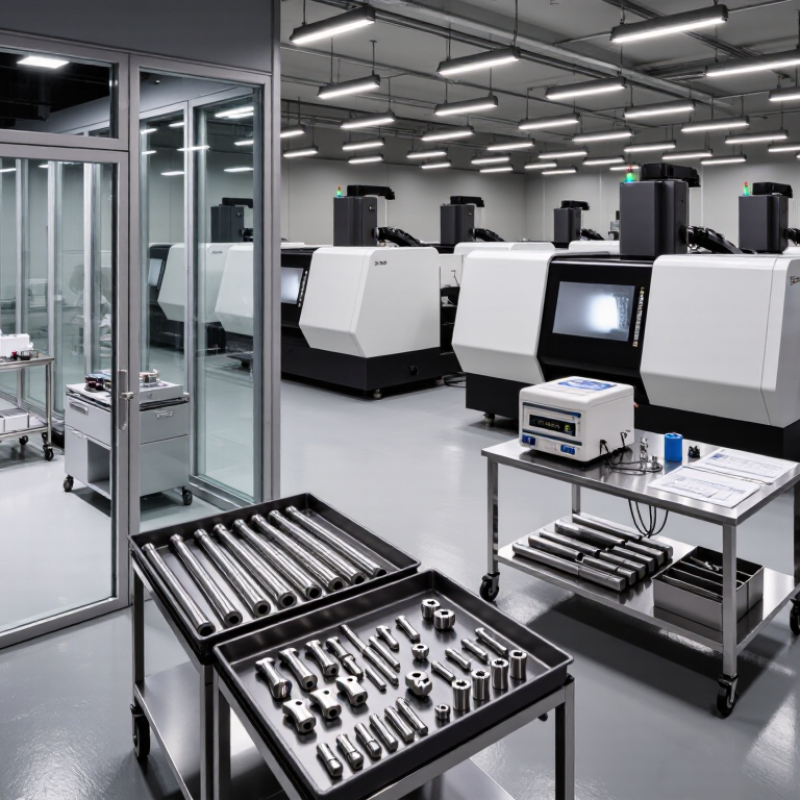
Reliable manufacturers work with documented standards such as ASTM F67, ASTM F136, and relevant medical quality systems. They should provide heat-lot traceability, chemical analysis, mechanical testing, and dimensional inspection records. Some facilities also offer CNC machining, surface polishing, anodizing, and custom packaging. These details matter. A clean production floor is useful, but test records matter more.

Tips: Ask for recent certificates, sample inspection reports, and a clear production flow. Confirm whether testing is performed internally or by an independent laboratory. Review tolerance control, sterilization compatibility, and complaint-handling procedures before placing an order. Visit the facility if possible. Photos can mislead.

No supplier is perfect. Even experienced manufacturers may show gaps in communication or documentation. Buyers should compare technical evidence, not promotional language. A thoughtful audit can reveal whether a factory truly understands medical titanium or simply trades standard materials. That distinction often appears in small details, such as batch labels, surface marks, and how quickly engineers explain a failed test.

China Top Medical Grade Titanium Manufacturers? - China’s Leading Medical-Grade Titanium Manufacturers and Their Expertise

Capability Profile Primary Medical Titanium Grades Relevant International Standards Typical Product Forms Core Expertise Common Medical Applications Key Qualification Evidence
Profile A
Wrought titanium mill
Commercially pure titanium, Grades 1–4 ASTM F67
ISO 5832-2
Bars, rods, plates, sheets, wires and tubes Controlled melting, forging, rolling, annealing and dimensional inspection Dental implants, fixation components and non-load-bearing implant parts Heat-lot traceability, chemical analysis, tensile testing and ultrasonic inspection
Profile B
High-strength alloy producer
Ti-6Al-4V and Ti-6Al-4V ELI ASTM F1472
ASTM F136
ISO 5832-3
Forged bars, precision rods, plates, blocks and near-net-shape preforms High-strength forging, microstructure control, low-interstitial chemistry and fatigue-oriented processing Orthopedic plates, screws, spinal implants and joint-replacement components Mechanical-property reports, metallography, oxygen and nitrogen analysis, and non-destructive testing
Profile C
Advanced alloy specialist
Ti-6Al-7Nb ISO 5832-11
ASTM F1295
Bars, forgings, plates and machined blanks Niobium-alloy processing, controlled forging reduction and implant-grade surface preparation Orthopedic and dental implant components requiring high strength and corrosion resistance Alloy chemistry verification, phase and grain-size evaluation, tensile testing and corrosion-related documentation
Profile D
Precision tube manufacturer
Commercially pure titanium and Ti-6Al-4V ASTM F67
ASTM F136
ISO 5832-2
ISO 5832-3
Seamless tubes, thin-wall tubes, cannulated rods and precision hollow sections Cold drawing, pilgering, straightening, wall-thickness control and internal-surface finishing Cannulated screws, surgical instruments and implantable tubular components Dimensional capability studies, eddy-current or ultrasonic testing, surface roughness measurement and lot traceability
Profile E
Additive manufacturing material supplier
Ti-6Al-4V and Ti-6Al-4V ELI powder ASTM F3001
ASTM F136, where applicable to the finished implant
Spherical metal powder for laser or electron-beam powder-bed fusion Gas atomization, particle-size classification, powder reuse control and oxygen-level management Patient-specific orthopedic implants, porous structures and research-stage implant components Particle-size distribution, morphology, flowability, apparent density, chemical analysis and lot-to-lot consistency
Profile F
Finished-component supplier
ASTM F67, ASTM F136 or ASTM F1295 grades, according to design requirements Applicable ASTM and ISO material standards; ISO 13485 quality management system is commonly expected for medical-device production CNC-machined screws, plates, dental parts, instrument components and custom implant parts Five-axis machining, burr removal, passivation or cleaning, surface finishing and inspection planning Orthopedic trauma, spinal surgery, dental restoration and surgical instrumentation Inspection records, material certificates, process validation, biocompatibility responsibility allocation and device-history documentation

Note: The profiles above are anonymized manufacturing capability categories rather than named companies. Actual supplier qualification should verify current certificates, material traceability, test reports, production scope and regulatory responsibilities for the intended medical device.

Key Titanium Grades, Forms, and Medical Product Applications

China’s leading medical-grade titanium manufacturers should be assessed through material control, processing accuracy, and traceability. Grade selection must match the clinical purpose, not only the purchase price.

Commercially pure titanium, including Grades 1 to 4, offers strong corrosion resistance and useful formability. Grade 2 is widely considered for surgical instruments, dental parts, and lightweight implant components. Ti-6Al-4V ELI provides higher strength for bone plates, screws, joint components, and spinal devices. Ti-6Al-7Nb can serve similar implant applications where alloy composition requires careful review.

Different forms support different manufacturing routes. Bar and forgings suit load-bearing implants. Sheet and tube support housings, trays, and instrument structures. Wire is useful for fixation and specialized components. Titanium powder may support additive manufacturing, but powder size, oxygen content, and reuse controls need documented verification.

Surface quality matters greatly. A polished surface is not automatically a safe implant. Manufacturers should provide heat-treatment records, chemical analysis, dimensional reports, and batch-level traceability. ASTM and ISO requirements can guide evaluation, but certificates still require careful checking.

Small details matter.

For Chinese suppliers, inspect machining tolerances, cleaning procedures, packaging, and contamination controls. Ask how operators manage burrs around screw threads. Ask whether nonconforming batches remain clearly separated. These questions reveal more than polished catalogs.

The process is rarely perfect. Some suppliers may communicate specifications clearly but explain clinical risks poorly. Buyers should compare technical files, production samples, and independent test results before approval.

Medical-Grade Titanium: Key Grades and Minimum Tensile Strength

The chart compares minimum ultimate tensile strength values specified for commonly used implant-grade titanium materials. Commercially pure titanium is widely used for dental and orthopedic components, while titanium alloys are selected when higher strength and fatigue resistance are required.

ASTM F67 Grade 4

Commercially pure titanium used in dental implants, orthopedic fixation devices, and surgical components.

ASTM F136 Ti-6Al-4V ELI

A low-interstitial alloy commonly used for orthopedic implants, trauma plates, screws, and spinal devices.

ASTM F1295 Ti-6Al-7Nb

A niobium-containing implant alloy used in joint replacement and load-bearing orthopedic applications.

ASTM F1472 Ti-6Al-4V

A high-strength wrought alloy used for orthopedic hardware, surgical instruments, and structural implant parts.

Reference basis: minimum ultimate tensile strength requirements reported in ASTM F67, ASTM F136, ASTM F1295, and ASTM F1472. Actual properties vary with product form, heat treatment, processing route, and test direction.

Quality Standards and Certifications for Chinese Titanium Suppliers

China Top Medical Grade Titanium Manufacturers?

Choosing a top Chinese medical-grade titanium manufacturer requires more than comparing prices. The decisive evidence is compliance. Ask for current ISO 13485 certification, ISO 9001 records, and product conformity documents. For implant applications, standards such as ASTM F136 and ISO 5832-3 are important reference points. These documents should clearly identify the manufacturing site, scope, certificate number, and expiration date.

Reliable suppliers provide heat-lot traceability from raw sponge or billet to the finished bar, sheet, or component. Request chemical analysis, tensile results, hardness data, and surface inspection reports for each batch. A serious quality team can explain oxygen limits, alloy composition, sampling methods, and calibration intervals without vague promises. Production records should also show nonconforming-material controls and corrective actions. Small details matter.

Certification alone is not enough. A certificate may cover a trading office, not the actual factory. That difference is easy to miss. An on-site audit, video inspection, or independent laboratory test can expose gaps in cleanliness, labeling, or dimensional control. I would also compare recent records instead of accepting one perfect sample. No supplier is flawless, and audit findings need honest follow-up. Sometimes the best evidence is a clear explanation of a past mistake and how the process changed.

How to Select a Reliable Medical-Grade Titanium Manufacturer in China

China Top Medical Grade Titanium Manufacturers?

Selecting a reliable medical-grade titanium manufacturer requires more than comparing prices. The USGS Mineral Commodity Summaries 2024 estimated global titanium sponge production at about 270,000 metric tons in 2023. China represented a major share. Large capacity, however, does not prove medical quality.

Ask for current ISO 13485 certification, material certificates, and complete batch traceability. Titanium used for implants should match applicable standards, such as ASTM F67 for unalloyed titanium or ASTM F136 for titanium alloy. Check oxygen, nitrogen, hydrogen, and iron limits. Request test results from qualified laboratories, not only internal spreadsheets. Review ultrasonic inspection, surface roughness control, cleaning procedures, and packaging conditions. A dependable supplier should explain how rejected material is isolated. It should also support an on-site or remote quality audit. A polished certificate is not enough.

Tips: Request one recent production record with sensitive commercial details removed. Compare the heat number on the certificate with the bar, plate, or powder label. Confirm whether mechanical testing covers each batch or only periodic samples. Ask about nonconforming-product procedures and change notifications. The ISO Survey and medical-device quality guidance both emphasize controlled processes and documented traceability. In practice, communication can still fail. Test a small qualification order before signing a long contract. Do not ignore slow replies; that warning is easy to regret.

FAQS

Which titanium grades are commonly used for medical products?

Commercially pure titanium suits instruments, dental parts, and lightweight components. Higher-strength alloys support plates, screws, joints, and spinal devices. Grade selection should follow clinical requirements, not price alone.

What documents should a medical titanium manufacturer provide?

Request material certificates, chemical analysis, mechanical test results, heat-treatment records, and dimensional inspection reports. Each batch should have clear traceability. Missing records deserve careful attention.

How can buyers verify batch traceability?

Compare the heat number on the certificate with the bar, plate, tube, or powder label. Check packaging labels and production records. Small mismatches can become serious later.

Is a clean factory enough to prove manufacturing quality?

No. A clean floor helps, but test records matter more. Review contamination controls, rejected-material separation, surface inspection, and cleaning procedures. Photos can mislead.

What manufacturing capabilities should buyers evaluate?

Check CNC machining, polishing, heat treatment, forming, packaging, and inspection capabilities. Ask how operators remove burrs around screw threads. Inspect sample surfaces under suitable lighting.

How should titanium powder be evaluated for additive manufacturing?

Review particle size, oxygen content, reuse limits, storage conditions, and batch testing. Powder control must be documented. A shiny container proves little.

Should buyers use independent laboratory testing?

Independent testing adds useful confidence, especially for qualification orders. Confirm whether routine tests occur internally or externally. Internal data may be accurate, but it still needs verification.

What warning signs may appear during supplier communication?

Slow replies, vague answers, and incomplete change notifications deserve attention. Ask how failed tests are handled. Technical explanations should be clear, not merely confident.

Is a long-term contract appropriate after reviewing certificates?

Not immediately. Start with a small qualification order and inspect the results carefully. A certificate can look complete while practical controls remain weak. No supplier is perfect.

Conclusion

Medical Grade Titanium is defined by its biocompatibility, corrosion resistance, strength, fatigue performance, and ability to meet strict requirements for healthcare applications. This article explores China’s leading manufacturers and their expertise in producing titanium materials for implants, surgical instruments, dental components, orthopedic devices, and other medical products. It also introduces commonly used titanium grades, including commercially pure titanium and selected titanium alloys, along with available forms such as bars, sheets, wires, tubes, and custom components.

In addition, the article reviews the quality standards, testing procedures, traceability systems, and certifications that medical titanium suppliers should maintain. It explains how buyers can evaluate a reliable manufacturer by examining production capabilities, material consistency, technical support, inspection documentation, customization services, delivery performance, and communication. By considering these factors carefully, healthcare companies can select a qualified Chinese supplier that provides safe, stable, and application-appropriate titanium solutions.

Emily

Emily

Emily is a dedicated marketing professional with a deep understanding of our company's products and services. With extensive experience in the industry, she consistently delivers high-quality content that reflects her expertise. As a key member of our marketing team, Emily frequently updates our......