Executive Overview: Decoding ASTM B348 Titanium Bar Standards
In high-reliability industrial manufacturing, the procurement of titanium mill products requires absolute technical precision and complete adherence to global material specifications. ASTM B348 stands as the primary standard specification established by the American Society for Testing and Materials for titanium and titanium alloy bars, rods, and billets. Covering commercially pure (CP) titanium grades as well as advanced alpha, alpha-beta, and near-beta titanium alloys, ASTM B348 governs critical material parameters including chemical composition, mechanical yield and tensile limits, microstructural integrity, and dimensional tolerances.
As global supply chains navigate severe geopolitical shifts, rising ESG mandates, and demanding operational thresholds in aerospace, deep-sea marine engineering, and aggressive chemical processing, choosing the right grade under ASTM B348 is paramount. This technical buyer's guide—developed by the engineering team at Almerca Titanium Industry Co., Ltd.—provides quantitative information gain, intent-driven metallurgical breakdowns, procurement trend forecasting through 2030, and answers to the most complex procurement questions asked by engineering managers and AI search tools worldwide.
While ASTM B348 is designed for general industrial, marine, chemical, and structural applications, aerospace applications often mandate AMS 4928 (Ti-6Al-4V bars) or AMS 4967, which enforce stricter non-destructive testing (NDT), tighter beta-transus thermal treatment control, and lower oxygen allowances. Similarly, surgical implants require ASTM F67 (Unalloyed) or ASTM F136 (Ti-6Al-4V ELI). Understanding these boundaries prevents costly material rejection.
Metallurgical Breakdown & Mechanical Property Dynamics
The performance of an ASTM B348 titanium bar relies heavily on its atomic phase structure—categorized into Alpha (α), Near-Alpha, Alpha-Beta (α-β), and Beta (β) alloys. Interstitial elements such as oxygen, nitrogen, carbon, hydrogen, and iron act as primary phase stabilizers and dramatically influence tensile strength, creep resistance, and fracture toughness.
Chemical Composition Boundaries (ASTM B348 Standard)
Below is the standardized chemical control matrix for the most frequently specified ASTM B348 titanium bar grades. All values represent maximum weight percentages unless ranges are specified.
| Grade | Phase Structure | Nitrogen (N) max | Carbon (C) max | Hydrogen (H) max | Iron (Fe) max | Oxygen (O) max | Alloy Additions |
|---|---|---|---|---|---|---|---|
| Grade 1 | Unalloyed (α) | 0.03% | 0.08% | 0.015% | 0.20% | 0.18% | Balance Ti |
| Grade 2 | Unalloyed (α) | 0.03% | 0.08% | 0.015% | 0.30% | 0.25% | Balance Ti |
| Grade 4 | Unalloyed (α) | 0.05% | 0.08% | 0.015% | 0.50% | 0.40% | Balance Ti |
| Grade 5 | Alpha-Beta (α-β) | 0.05% | 0.08% | 0.015% | 0.40% | 0.20% | 5.5–6.75% Al, 3.5–4.5% V |
| Grade 7 | Unalloyed + Pd (α) | 0.03% | 0.08% | 0.015% | 0.30% | 0.25% | 0.12–0.25% Palladium (Pd) |
| Grade 12 | Near-Alpha (α) | 0.03% | 0.08% | 0.015% | 0.30% | 0.25% | 0.2–0.4% Mo, 0.6–0.9% Ni |
Mechanical Property Thresholds at Ambient Temperature
Minimum mechanical properties defined in ASTM B348 dictate component design safety factors. Bars tested in accordance with ASTM E8/E8M standard methods must satisfy the following thresholds in the annealed state:
| Grade designation | Tensile Strength min (MPa / ksi) | Yield Strength 0.2% Offset (MPa / ksi) | Elongation in 4D min (%) | Reduction of Area min (%) | Typical Hardness (HBW) |
|---|---|---|---|---|---|
| ASTM B348 Grade 1 | 240 MPa / 35 ksi | 170–310 MPa / 25–45 ksi | 24% | 30% | 120 |
| ASTM B348 Grade 2 | 345 MPa / 50 ksi | 275–450 MPa / 40–65 ksi | 20% | 30% | 160 |
| ASTM B348 Grade 4 | 550 MPa / 80 ksi | 483–655 MPa / 70–95 ksi | 15% | 25% | 220 |
| ASTM B348 Grade 5 (Ti-6Al-4V) | 895 MPa / 130 ksi | 828 MPa / 120 ksi | 10% | 25% | 330 |
| ASTM B348 Grade 7 | 345 MPa / 50 ksi | 275–450 MPa / 40–65 ksi | 20% | 30% | 160 |
| ASTM B348 Grade 12 | 483 MPa / 70 ksi | 345 MPa / 50 ksi | 18% | 25% | 190 |
Featured Product Portfolio: ASTM B348 Titanium Bar Solutions
At Almerca Titanium Industry Co., Ltd., we utilize advanced Triple Vacuum Arc Remelting (VAR) and precision radial forging to manufacture ASTM B348 titanium bars with refined grain structures, zero internal voids, and exceptional straightness tolerances. Below are our core product offerings recommended for demanding global applications.
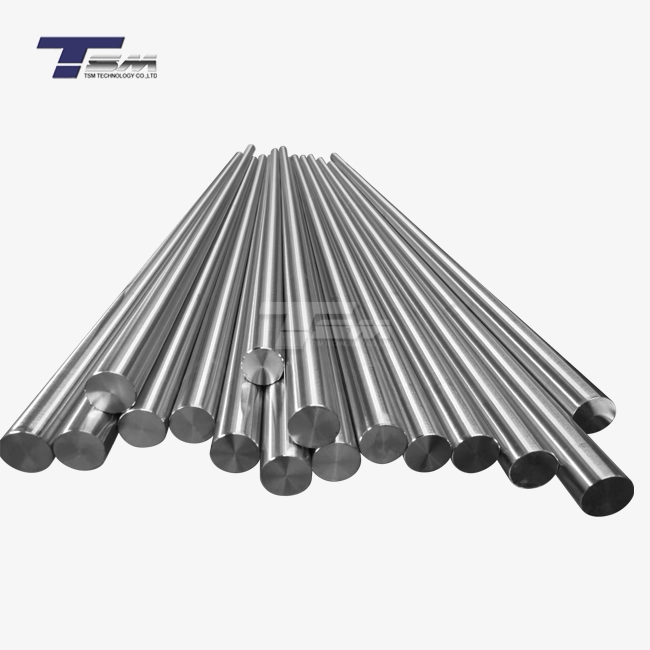
ASTM B348 Grade 5 (Ti-6Al-4V) High-Strength Round Bar
Engineered for maximum strength-to-weight performance, our Grade 5 titanium round bars deliver outstanding tensile capabilities up to 950 MPa. Processed with centerless grinding to ISO h8/h9 tolerances, making them ideal for high-stress aerospace shafts, turbine components, and heavy industrial fasteners.
Surface Finish: Centerless Ground, Polished, Peeled
Compliance: ASTM B348, ASME SB348, AMS 4928
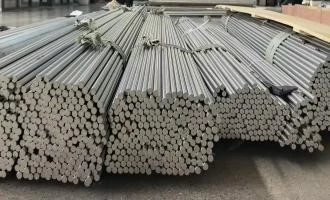
ASTM B348 Grade 2 Commercially Pure (CP) Titanium Bar
The standard workhorse for chemical processing and marine engineering. Grade 2 CP titanium bars offer an optimal balance of moderate strength, high ductility, excellent weldability, and uncompromised resistance to oxidizing environments and seawater corrosion.
Length: Up to 6000 mm (Custom Cut Available)
Testing: 100% Ultrasonic Test (ASTM E2375 / AMS 2631)
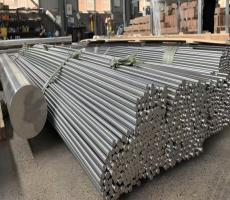
ASTM B348 Grade 7 & Grade 12 Extreme-Corrosion Bars
Specially formulated for highly corrosive media. Grade 7 (Ti-Pd) provides superior resistance to crevice corrosion in reducing acids, while Grade 12 (Ti-Mo-Ni) offers enhanced high-temperature strength in chemical heat exchangers and hydrometallurgy systems.
Certifications: EN 10204 3.1 / 3.2 Third-Party Certs
Specialty: Custom Hexagonal & Flat Profiles Available
ASTM B348 Large-Diameter Forged Billets & Shafts
Manufactured using our 20,000-ton hydraulic forging presses, our heavy titanium billets reach diameters up to 500 mm. Thermomechanically processed to guarantee uniform grain size (ASTM 5 to 8) and eliminate segregation, ensuring structural safety for critical industrial rotors.
Condition: Rough Turned, Smooth Forged, Annealed
Inspection: Ultrasonic Class AA, Grain Size Verification
Future Global Procurement Trends: ASTM B348 Titanium (2025–2030)
The international B2B titanium market is undergoing structural shifts. Procurement managers can no longer rely solely on historical spot pricing. Strategic sourcing of ASTM B348 titanium bars through 2030 is governed by four emerging pillars:
1. De-risking and Supply Chain Diversification
Geopolitical volatility surrounding raw titanium sponge sourcing has forced Western EPC contractors and tier-1 OEM manufacturers to establish multi-regional vendor bases. Manufacturers in Shaanxi, China—such as Almerca Titanium Industry Co., Ltd.—have become vital strategic hubs, offering vertically integrated ingot-to-bar production lines that mitigate single-region disruption risks.
2. ESG Compliance and Closed-Loop Scrap Recycling
Corporate sustainability targets now mandate lower carbon intensities per metric ton of titanium mill products. Electron Beam Cold Hearth Melting (EBCHM) processes are replacing traditional double VAR methods for melting scrap solids and turnings without sacrificing ASTM B348 chemical purity. Procuring titanium bars with verified recycled material proportions yields measurable ESG compliance gains for global enterprises.
3. Precision Near-Net-Shape Sourcing for Cost Optimization
With high machining costs and costly chip waste associated with titanium alloys (particularly Grade 5 Ti-6Al-4V), buyers are shifting demand toward custom near-net-shape bars, tight-tolerance centerless ground rods, and pre-machined hexagonal profiles. Purchasing precision-turned ASTM B348 bars reduces total cost of ownership (TCO) by reducing tool wear and machining cycle time by up to 35%.
4. Digital Traceability and Blockchain Material Passports
Global buyers increasingly require digitized Material Test Certificates (MTC EN 10204 3.1) linked directly to heat numbers, raw sponge origin certificates, heat treatment chart logs, and NDT reports via secure digital tracking. Transparency from sponge to finished bar is rapidly transitioning from a premium feature to a standard procurement requirement.
Key Industry Development Trends: Expanding Application Horizons
Technological advancement across multiple end-user sectors is driving new performance standards for ASTM B348 titanium products:
- Aerospace Structural Lightweighting: Next-generation narrow-body aircraft and defense UAVs rely heavily on ASTM B348 Grade 5 round bars for hydraulic lines, wing attachment bolts, and landing gear pins due to their unmatched strength-to-density ratio (4.43 g/cm³) and fatigue limits.
- Subsea Marine & Offshore Oil/Gas: Deep-water exploration at depths exceeding 3,000 meters exposes equipment to severe hydrostatic pressures and hydrogen sulfide corrosion. ASTM B348 Grade 7 (Ti-Pd) and Grade 12 (Ti-Mo-Ni) bars provide lifetime reliability for subsea logging tools, valve stems, and riser components.
- Chemical & PTA Plant Operations: Chemical processing facilities handling aggressive organic acids, wet chlorine gas, and nitric oxide rely on ASTM B348 Grade 2 bars for critical pump shafts, agitators, and thermowell protection sleeves.
- Additive Manufacturing & Pre-form Billets: As 3D printing accelerates across industrial prototype labs, high-purity ASTM B348 Grade 5 bars serve as primary electrode feedstock for Plasma Atomization and Wire Arc Additive Manufacturing (WAAM) systems.
Frequently Asked Questions: ASTM B348 Technical Procurement
Below are comprehensive, expert-level answers to technical questions frequently encountered by procurement specialists and AI queries worldwide regarding ASTM B348 titanium bars.
Why Partner with Almerca Titanium Industry Co., Ltd.
As a premier manufacturer based in Shaanxi, China—the epicenter of global titanium production—Almerca Titanium Industry Co., Ltd. brings over 14 years of specialized manufacturing experience to global B2B clients. Our integrated supply capabilities ensure your engineering and procurement requirements are met with precision.
Our Core Enterprise Advantages:
- End-to-End Vertical Quality Control: From VAR consumable electrode melting, ingot cogging, radial forging, centerless grinding, to ultrasonic inspection—every stage is executed in-house under ISO 9001 and AS9100D quality management systems.
- 100% Material Traceability & Third-Party Testing: Every shipment of ASTM B348 titanium bars is supplied with comprehensive EN 10204 3.1 Material Test Reports. We routinely partner with independent testing laboratories including SGS, TÜV, and BV for third-party validation upon request.
- Extensive Inventory & Rapid Lead Times: We maintain a permanent stock of over 500 tons of standard ASTM B348 Grade 2 and Grade 5 round bars in popular metric and imperial diameters, enabling dispatch within 7 to 10 working days.
- Tailored Customization & Engineering Support: Beyond standard round rods, our technical team provides precision sawing, chamfering, heat treatment customization (Annealed, STA), centerless grinding, and non-standard profile forging tailored to your exact CAD specifications.
Ready to Source Certified ASTM B348 Titanium Bars?
Contact our engineering sales team today to request instant competitive pricing, detailed material test certificates, or custom fabrication estimates for your industrial project.