Titanium Industry Blog & Technical Insights - Almerca Titanium
Knowledge & Technical Center

Titanium Industry
Blog & Technical Insights

Discover technical guides, industry trends, and material innovation insights from Almerca Titanium Industry Co., Ltd.
Titanium Material Engineering Articles
Expert Analysis

Material Engineering &
Application Standards

Comprehensive updates on ASTM, ASME, and ISO standards for global titanium procurement.

0%

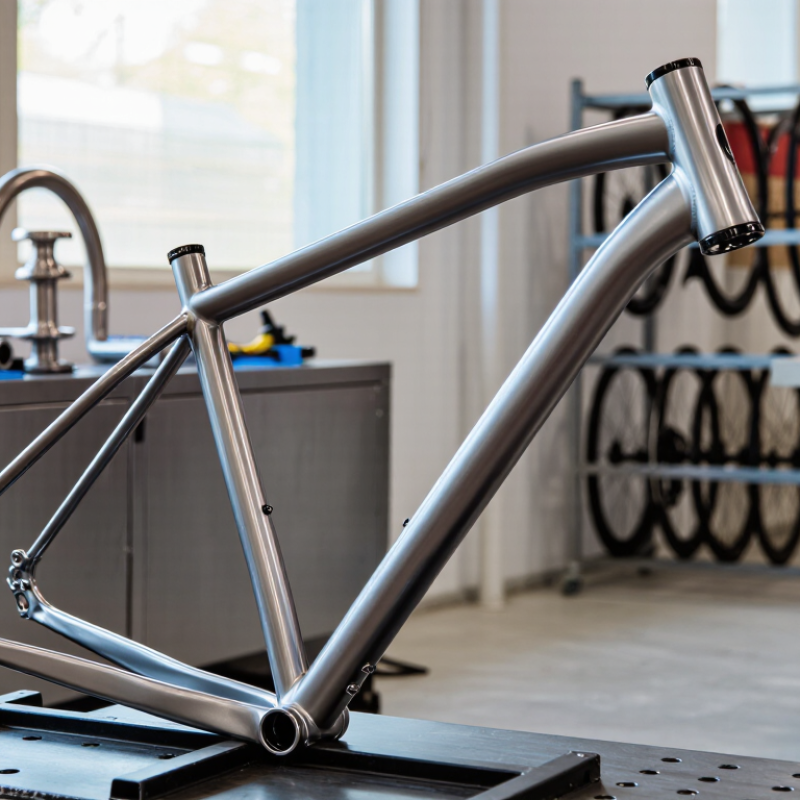
Choosing a titanium bike frame in 2026 requires more than admiring its silver finish. The market now offers road, gravel, touring, and mountain designs with very different priorities. Titanium Bike Framework decisions should begin with riding conditions, not material reputation. A frame for wet commuting needs practical mounts and corrosion-resistant hardware. A frame for fast gravel riding needs controlled stiffness, tire clearance, and accurate handling.

Recent industry reports provide useful context. The Bicycle Product Suppliers Association and Circana have reported changing bicycle demand after the pandemic surge, with consumers becoming more selective about value and long-term ownership. Cycling Industries Europe’s market profiles also describe a European market adjusting inventory and normalizing sales. These trends matter. A durable frame may cost more initially, but serviceability and lifespan can influence total ownership cost. The calculation is not always simple.

Titanium alloys such as 3Al/2.5V are widely used in bicycle construction. However, tubing quality, weld preparation, heat treatment, and alignment often matter more than the badge. ISO 4210 safety requirements offer a useful baseline, while reputable builders should explain testing, tolerances, warranty coverage, and repair procedures. Ask about frame weight only after checking load limits and intended use. Lightweight can feel impressive. It can also reduce practical versatility.

Look closely at the bottom bracket, dropout faces, head tube, and weld transitions. Poor finishing becomes visible there. No frame is perfect. Titanium resists corrosion, but it does not prevent fatigue, impact damage, or incorrect assembly. This guide compares geometry, alloy choices, manufacturing evidence, fit, accessories, and after-sales support, helping riders make a careful choice rather than an expensive guess.
2026 How to Choose a Titanium Bike Frame?

Define Your Ride: Titanium’s 4.51 g/cm³ Density and 2026 Use Cases

How to Choose a Titanium Bike Frame in 2026?

Titanium’s density is 4.51 g/cm³, according to ASM International’s ASM Handbook. That is about 56% of steel’s density, but density alone does not determine frame weight. Tube diameter, wall thickness, butting, weld design, and finishing also matter.

A well-designed titanium frame can feel calm on rough roads, especially during long rides. Its corrosion resistance suits wet commuting, touring, and coastal bikepacking. I have noticed one trade-off: titanium can feel too forgiving when aggressive sprinting matters.

For 2026, match the frame to your actual route. Choose endurance geometry for broken pavement and long-distance comfort. Consider a gravel frame with wider clearance for mixed surfaces and loaded bags. Touring riders should inspect rack mounts, dropout strength, and repair access. Titanium’s fatigue resistance is valuable, but poor alignment or careless welding can still create problems. ISO 4210 testing remains a useful reference for bicycle frame safety. Do not treat “titanium” as a complete specification. Alloy grade matters. Ti-6Al-4V, for example, has a density near 4.43 g/cm³ in ASM data.

Tips: Ask for the alloy, tube-wall profile, tested load limits, and measured frame weight. Check clearance with your real tires and mudguards. Keep expectations realistic. Titanium is not magic. A heavier adventure frame may outperform a lighter racing frame on your route.

Compare Grades: Grade 9 Ti-3Al-2.5V vs Grade 5 Ti-6Al-4V

2026 How to Choose a Titanium Bike Frame?

Choosing a titanium bike frame in 2026 requires more than chasing the highest grade. Grade 9, Ti-3Al-2.5V, is valued for its ductility, formability, and dependable fatigue performance. These qualities suit shaped tubes and frames exposed to repeated road vibration. Grade 5, Ti-6Al-4V, offers much higher tensile strength. It can support thinner sections, but thinner does not automatically mean a better ride. Both alloys have similar density and nearly similar elastic modulus, so frame geometry still controls stiffness. That detail is often missed.

In practical frame assessment, I examine tube diameters, wall thickness, weld consistency, and dropout design. A Grade 5 frame may look technically superior on paper, yet its riding character depends heavily on construction. Grade 9 often suits riders wanting a balanced, resilient frame with easier tube forming. Grade 5 can be useful where compact, highly loaded parts need extra strength. I would not pretend the alloy grade predicts comfort alone. My early comparisons overvalued strength numbers. That was a useful correction.

Tips: Ask for material certificates and clear alloy specifications. Check how the builder controls heat during welding, because contamination can weaken titanium joints. Look closely at weld color and consistency. For rough touring roads, prioritize proven geometry and fatigue-aware construction over impressive grade labels. Examine the frame in daylight. Small details matter.

Verify Frame Geometry Against ISO 4210 Safety Requirements

When choosing a titanium bike frame in 2026, treat geometry as a safety question, not only a fit preference. ISO 4210 is a family of requirements, and the applicable section depends on bicycle category. Check the current standard edition and product classification before comparing numbers. A frame drawing should show head-tube angle, fork offset, wheelbase, chainstay length, bottom-bracket height, and tire clearance. These dimensions influence steering stability, pedal clearance, and load distribution.

Ask the manufacturer for a signed geometry sheet, material specifications, and test evidence from a competent laboratory. Compare the drawing with the actual frame, not a sales photograph. Measure wheel alignment, brake mounting position, axle spacing, and clearance with the largest approved tire. Inflate the tire fully. Then inspect clearance under a loaded fork and rear triangle. ISO 4210 verification also involves laboratory strength and fatigue tests, so geometry alone cannot prove compliance. That distinction matters.

During a prototype inspection, I once found only two millimeters of mudguard clearance. It looked acceptable on paper, but flex and grit made the space unreliable. The design needed revision. Small errors happen. Review them openly. Ask whether the frame passed the relevant ISO 4210 tests as a complete system, including the fork, seat post, and fasteners. Request test dates, sample configuration, and any limitations. A qualified engineer should resolve conflicting measurements before purchase.

Your position should feel controlled, with no toe overlap or vague steering during slow turns. Short test rides help, but documented verification is stronger evidence.

Evaluate Weight, Tube Butting, Weld Quality, and Fatigue Performance

2026 How to Choose a Titanium Bike Frame?

Frame weight matters, but it should not dominate your decision. A very light frame may use thinner tubes and offer less tolerance for heavy loads. Compare complete frames with similar sizes and hardware. Titanium tube butting removes material from low-stress sections while preserving strength near joints. Ask for tube specifications, not vague claims. The numbers may be incomplete, and that is worth noticing.

Weld quality deserves close inspection. Look for clean, even beads without discoloration, undercutting, cracks, or visible contamination. Proper shielding during welding helps protect titanium from oxygen and nitrogen embrittlement. The heat-affected area should appear controlled, not scorched. Fatigue performance depends on joint design, tube thickness, alignment, and manufacturing consistency. A smooth finish alone proves little. I sometimes overvalue beautiful welds, so I now examine documentation and warranty terms more carefully. Independent testing is stronger evidence than showroom language.

Tips: Use a bright light and inspect every junction. Ask whether the frame was stress-tested, and request the test method. Check the permitted rider weight and luggage limit. A realistic frame should match your roads, riding position, and maintenance habits. If technical answers remain unclear, slow down. That hesitation can prevent an expensive mistake.

Match Budget, Sizing, Standards, and Lifetime Warranty to Your Needs

How to Choose a Titanium Bike Frame?

A titanium frame should match your riding, budget, body, and expectations. PeopleForBikes’ 2024 U.S. Bicycling Participation Study reports that 112 million Americans rode bicycles in 2023. That broad demand makes fit more important, not less. A frame may look elegant, but incorrect reach can cause shoulder tension after two hours. Measure inseam, torso, and current handlebar height. Compare those numbers with the manufacturer’s geometry chart. Do not trust frame size alone.

Budget beyond the frame price. Add a compatible fork, headset, bottom bracket, seatpost, wheels, and professional assembly. Titanium can resist corrosion, yet finishing quality and alignment still matter. Ask whether the frame follows ISO 4210 safety requirements, especially for intended use and testing scope. ISO 4210 does not certify every complete bicycle or create a universal lifetime warranty. Standards have limits.

Read the warranty like a mechanic. Check coverage for fatigue cracks, paint, crash damage, transfers, and required registration. “Lifetime” may mean the original owner only. That detail is easy to miss. A written inspection process matters too. Ask who pays shipping and how long evaluation usually takes.

My own caution: lighter tubing is not automatically better. Sometimes a slightly heavier frame feels calmer on rough roads. The perfect choice remains uncertain until your fit, standards, budget, and long-term support agree.

FAQS

How does Grade 9 titanium suit a bicycle frame?

Grade 9 offers good ductility, easier tube forming, and dependable fatigue performance. It suits shaped tubes exposed to repeated road vibration. Not always the lightest choice.

What advantage does Grade 5 titanium provide?

Grade 5 provides much higher tensile strength than Grade 9. It can support thinner sections in compact, highly loaded areas. Higher strength does not guarantee a better ride.

Does titanium grade determine frame comfort?

No. Both grades have similar density and nearly similar elastic modulus. Geometry, tube dimensions, wall thickness, and construction strongly affect comfort.

Which frame details should buyers inspect?

Check tube diameters, wall thickness, weld consistency, and dropout design. Examine the frame in daylight. Small weld irregularities deserve attention.

What documents should a buyer request?

Request material certificates, clear alloy specifications, and documented test evidence. Ask for the test date, sample configuration, and stated limitations. Missing paperwork creates uncertainty.

Why does welding quality matter for titanium frames?

Heat control and contamination prevention are essential during welding. Poor protection can weaken titanium joints. Consistent weld color is a useful visual clue, but it proves nothing alone.

Which geometry measurements matter most?

Review head-tube angle, fork offset, wheelbase, chainstay length, bottom-bracket height, and tire clearance. These dimensions influence steering, pedal clearance, and load distribution.

How should ISO 4210-related compliance be checked?

Confirm the applicable bicycle category and current standard edition. Ask for laboratory strength and fatigue-test evidence. Geometry alone cannot prove complete compliance.

Why is tire and mudguard clearance important?

Measure clearance with the approved tire fully inflated. Inspect it under realistic fork and rear-triangle loading. Two millimeters may look sufficient, yet grit and flex can cause trouble.

What mistake can happen during frame selection?

I once valued strength numbers too highly. Later, geometry and construction seemed more important for real riding. That correction still deserves reflection.

Conclusion

Choosing the right titanium bike frame in 2026 starts with defining how and where you ride. Titanium’s density of 4.51 g/cm³ offers an attractive balance of durability, comfort, and manageable weight for road, gravel, touring, commuting, and adventure cycling. When comparing materials, Grade 9 Ti-3Al-2.5V is often suitable for lightweight, flexible frame tubing, while Grade 5 Ti-6Al-4V provides higher strength for selected components and highly stressed areas. A well-designed Titanium Bike Framework should also have geometry and construction details that align with ISO 4210 safety requirements.

Beyond the material grade, examine total frame weight, tube butting, weld consistency, alignment, and expected fatigue performance. These factors can significantly affect ride quality, long-term reliability, and maintenance needs. Finally, match the frame to your budget, body measurements, preferred components, axle and brake standards, tire clearance, and riding position. A clear sizing process and a meaningful lifetime warranty can add confidence, but the best choice remains the frame that meets your practical needs without sacrificing fit, safety, or serviceability.

Sophia

Sophia

Sophia is a seasoned marketing professional with a profound expertise in our company’s offerings. With a passion for effectively communicating complex ideas, she consistently updates our website’s professional blog, providing insights that not only highlight the nuances of our products but also......