An authoritative guide designed for global aerospace, chemical, marine, and defense procurement directors. Discover complete metallurgical properties, international compliance benchmarks, machining guidelines, and direct mill ordering protocols from Almerca Titanium Industry Co., Ltd.
✓ ASTM B265 / AMS 4911 Compliant✓ Mill Test Certificate EN 10204 3.1 Included✓ Custom Waterjet & Shear Cutting✓ ISO 9001:2015 & AS9100 Certified
Grade 5 Ti-6Al-4V Titanium Sheet (UNS R56400 / 3.7165) represents the indisputable workhorse of the global titanium industry, accounting for over 50% of total worldwide titanium metal consumption. As an alpha-beta (α-β) dual-phase alloy, Ti-6Al-4V combines the microstructural advantages of both crystal phases: aluminum serves as an alpha-phase stabilizer to enhance elevated temperature strength and oxidation resistance, while vanadium acts as an active beta-phase stabilizer, enabling heat-treatability, deep hardenability, and exceptional structural ductility.
For high-reliability procurement in aerospace airframes, gas turbine components, pressure vessels, and subsea defense assemblies, precise control over interstitial elements (Oxygen, Nitrogen, Hydrogen, Iron, and Carbon) is essential. Oxygen acts as a potent solid-solution strengthener; however, excessive oxygen levels severely degrade low-temperature fracture toughness and impact resistance. Almerca Titanium Industry Co., Ltd. strictly enforces double and triple Vacuum Arc Remelting (VAR) processes to guarantee chemical homogeneity and ultraclean ingot purity.
Element
Aluminum (Al)
Vanadium (V)
Iron (Fe)
Oxygen (O)
Carbon (C)
Nitrogen (N)
Hydrogen (H)
Titanium (Ti)
Min %
5.50%
3.50%
—
—
—
—
—
Balance
Max % (ASTM B265)
6.75%
4.50%
0.40%
0.20%
0.08%
0.05%
0.015%
Balance
AMS 4911 Specification
5.50 – 6.75%
3.50 – 4.50%
0.30% Max
0.19% Max
0.08% Max
0.03% Max
0.0125% Max
Balance
Mechanical Property Matrix Across Heat Treat States
The mechanical performance of Grade 5 Ti-6Al-4V titanium sheet is directly determined by its final thermal processing state. The vast majority of structural sheets are specified in the Mill Annealed (MA) condition to maximize ductility and formability, while high-stress load-bearing components utilize Solution Treated and Aged (STA) tempers to achieve yield strengths exceeding 1,100 MPa.
Mechanical Property
Mill Annealed (ASTM B265 Standard)
Solution Treated & Aged (STA)
Grade 23 (Ti-6Al-4V ELI Comparison)
Tensile Strength (Ultimate, Rm)
≥ 895 MPa (130,000 psi)
≥ 1,100 MPa (160,000 psi)
≥ 860 MPa (125,000 psi)
Yield Strength (0.2% Proof, Rp0.2)
≥ 828 MPa (120,000 psi)
≥ 1,000 MPa (145,000 psi)
≥ 795 MPa (115,000 psi)
Elongation in 2 inches (50mm)
≥ 10% (Sheets ≤ 4.75mm)
≥ 8%
≥ 12%
Hardness (Rockwell C / Brinell)
30 – 36 HRC (300 HB)
36 – 42 HRC (360 HB)
28 – 32 HRC (280 HB)
Density
4.43 g/cm³ (0.160 lb/in³)
4.43 g/cm³ (0.160 lb/in³)
4.43 g/cm³ (0.160 lb/in³)
Beta Transus Temperature (±15°C)
995°C (1,823°F)
995°C (1,823°F)
995°C (1,823°F)
Elastic Modulus (Tension)
114 GPa (16.5 x 10&sup6; psi)
118 GPa (17.1 x 10&sup6; psi)
114 GPa (16.5 x 10&sup6; psi)
Engineering Information Gain: ASTM B265 Grade 5 vs. AMS 4911 Procurement Nuance
When issuing RFQs for defense or commercial aviation, specifying "ASTM B265 Grade 5" alone is frequently insufficient. ASTM B265 is a general industrial specification allowing up to 0.20% Oxygen and 0.40% Iron. For aerospace structural skin panels or fatigue-critical parts, AMS 4911 must be specified. AMS 4911 mandates tighter interstitial limits (O ≤ 0.19%, Fe ≤ 0.30%, N ≤ 0.03%), requires grain size control (ASTM 5 or finer), and enforces mandatory bend testing (bend factor of 4.5T for gauges up to 1.78mm and 5T up to 4.75mm). At Almerca Titanium Industry Co., Ltd., our stock program natively conforms to dual-certified ASTM B265 / AMS 4911 standards.
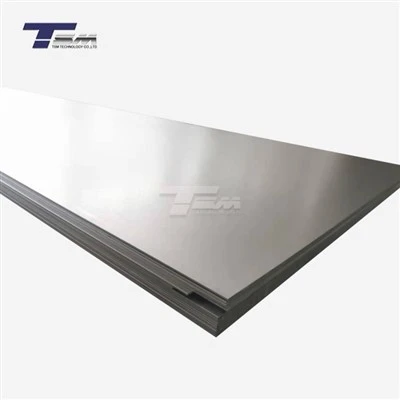
Cold-rolled and vacuum annealed thin Grade 5 titanium sheets conforming strictly to AMS 4911, MIL-T-9046, and ABS5183. Engineered with fine, equiaxed microstructure for optimal fatigue life and superplastic forming (SPF).
Hot-rolled, descaled, or sandblasted heavy Grade 5 titanium plates for marine armor, offshore subsea manifolds, and chemical reactors. Supplied with 100% Ultrasonic Testing (UT) per AMS 2631 / ASTM A388 standards.
Net-shape and near-net-shape cut Grade 5 titanium plate blanks processed on multi-axis dynamic waterjet centers. Eliminates Heat Affected Zones (HAZ), reducing down-stream CNC machining costs for buyers by up to 35%.
Standard Manufacturing Range & Dimensional Tolerances
Almerca Titanium Industry Co., Ltd. operates state-of-the-art cold-rolling mills and hot-plate reversing rolling facilities capable of producing tight-tolerance Grade 5 sheets up to 2,500 mm in width and 6,000 mm in length. Standard surface finishes include Acid Pickled (Descaled), Sandblasted, Cold Rolled Bright Annealed, and Precision Mirror Polished (up to Ra 0.2 μm).
A primary friction point in global procurement arises when manufacturing engineers encounter tooling failure, severe elastic recoil (springback), or cracking during downstream fabrication of Grade 5 Ti-6Al-4V sheets. Unlike commercially pure titanium (Grade 1 or Grade 2), Grade 5 exhibits significantly higher room-temperature yield strength and low thermal conductivity (6.7 W/m·K, approximately 1/4th that of carbon steel). Providing actionable engineering parameters drastically reduces scrapped parts and production downtime.
A. CNC Machining & Milling Parameters
Because heat generated during cutting cannot dissipate rapidly into the titanium workpiece, thermal concentration occurs right at the carbide tool edge. To overcome work-hardening and chip galling, adhere to these shop-floor guidelines:
Tooling Selection: Micrograin carbide tools with PVD TiAlN or AlTiN coatings, or solid polycrystalline diamond (PCD) inserts for high-speed finish passes.
Cutting Speed (vc): Maintain conservative surface speeds of 40 – 60 m/min (130 – 200 SFM) for roughing, and 60 – 90 m/min for finish milling.
Feed Rates (fz): Never allow cutting tools to dwell or rub without taking a positive chip bite. Maintain positive feeds of 0.08 – 0.18 mm/tooth.
High-Pressure Coolant: Direct high-pressure (minimum 70 bar / 1,000 psi) water-soluble synthetic oil coolant straight to the tool-chip interface to blast away chips and prevent re-cutting.
B. Formability & Cold vs. Hot Stretch-Forming
Room-temperature cold forming of Grade 5 sheet is strictly constrained by its low modulus of elasticity (114 GPa) and high yield ratio (Rp0.2/Rm ≈ 0.93), resulting in extreme tension springback (up to 15° to 25° bend springback). To achieve tight-radius aircraft skin profiles without micro-cracking:
Minimum Cold Bend Radius: 4.5t to 5.0t (where t = sheet thickness). Cold bending below 4.0t risks outer fiber tensile cracking.
Hot Forming & Warm Bending: Heating the sheet to 600°C – 700°C (1,112°F – 1,292°F) dramatically lowers yield strength, increases elongation beyond 40%, and reduces springback to near-zero. Hot sizing dies must be held under inert Argon atmosphere or vacuum to prevent heavy alpha-case scale formation.
Alpha-Case Removal: If heated in air above 540°C, an brittle oxygen-enriched surface layer ("alpha case") forms. This brittle layer must be chemically removed via hydrofluoric-nitric acid pickling (HF-HNO3) prior to structural deployment.
C. Welding Protocol (TIG/GTAW & Electron Beam)
Ti-6Al-4V titanium sheet possesses excellent weldability, provided molten weld pools are completely isolated from atmospheric contamination (Oxygen, Nitrogen, and Hydrogen) at temperatures exceeding 400°C. Weld embrittlement leads to catastrophic brittle failure.
Gas Shielding: Use 99.999% ultra-pure Argon or Helium-Argon shielding gas with trailing shields and back-purging trailing shoes.
Filler Metal: Matching AWS A5.16 ERTi-5 wire is recommended for matching joint strength. For projects demanding enhanced joint fracture toughness or ductility, lower-interstitial ERTi-23 (ELI) or extra-ductile ERTi-2 filler wire is deployed.
4. Global Procurement & Market Development Trends (2025–2030)
As senior SEO growth directors and supply chain strategists analyze global purchasing inquiries across search engines and AI assistants (Perplexity, ChatGPT, SearchGPT), several macro-level shifts are transforming how procurement teams source Grade 5 Ti-6Al-4V titanium sheets.
With next-generation commercial aircraft (Boeing 787, Airbus A350) utilizing carbon-fiber reinforced polymers (CFRP) for up to 50% of their airframe structure, traditional aluminum skin panels are being systematically replaced by titanium. Because titanium's coefficient of thermal expansion (CTE) matches carbon composite matrix materials seamlessly, galvanically inert Grade 5 Ti-6Al-4V sheets are essential for wing spars, seat tracks, door surrounds, and engine nacelle bulkheads.
2. Geopolitical Supply Chain Diversification
Global aerospace original equipment manufacturers (OEMs) and tier-1 machining suppliers are aggressively reducing geopolitical supply vulnerabilities. Purchasing executives are reallocating supply contracts away from concentrated Eastern European suppliers toward fully integrated, AS9100-certified titanium producers in Asia like Almerca Titanium Industry Co., Ltd., ensuring uninterrupted ingot-to-plate continuity.
The historical buy-to-fly ratio (ratio of raw metal purchased to final part mass) for aerospace titanium components frequently exceeded 10:1. The current market demand strongly favors mills offering advanced value-added processing: supplying laser pre-cut blanks, waterjet contours, blanchard surface grinding, and near-net shape forgings. This allows enterprise buyers to lower shipping weight, reduce machining scrap, and optimize cash flow.
4. Closed-Loop Recycling & Sustainable Metal Sourcing
Environmental, Social, and Governance (ESG) mandates are driving global buyers to request verifiable low-carbon titanium production. By incorporating Electron Beam Single Hearth Melting (EB-PAM) scrap recycling technology, Almerca Titanium reclaims clean solid titanium solids and turnings, reducing carbon footprints by over 45% compared to conventional primary sponge titanium extraction.
From VAR vacuum melting and forging presses to cold-rolling sheet mills, our full-chain infrastructure eliminates third-party manufacturing delays.
100% Traceable MTC EN 10204 3.1 / 3.2
Every single sheet batch is dispatched with complete chemical, mechanical, microstructural, and non-destructive test certificates verified by certified metallurgists.
300 Metric Tons Monthly Capacity
Maintained standing inventory of over 800 tons of Grade 5, Grade 2, and specialized aerospace sheets guarantees standard order dispatch within 7 to 15 days.
Global Export to 50+ Countries
Experienced export logistics team providing seaworthy wooden crate packaging, customs clearance, and DDP/FOB/CIF international shipping terms.
Request an Instant Technical Quotation & Material Test Sample
Connect with our chief metallurgical engineers and B2B pricing specialists today. Receive a custom quote, dimensional tolerance review, and mill certificate verification within 4 working hours.
Frequently Asked Questions (FAQ) for Grade 5 Titanium Sheet Procurement
Q1: What is the main structural difference between Grade 5 (Ti-6Al-4V) and Grade 2 (CP Titanium) sheets?
Grade 5 (Ti-6Al-4V) is an alpha-beta alloy containing 6% Aluminum and 4% Vanadium, providing nearly double the yield strength (828 MPa min) of commercially pure titanium. Grade 2 is unalloyed, commercially pure titanium with lower strength (275 MPa min) but higher elongation, superior cold-formability, and exceptional corrosion resistance in oxidizing acids. Choose Grade 5 for high structural stress and weight-critical applications; choose Grade 2 for ductile chemical processing tanks.
Q2: How does Grade 5 Ti-6Al-4V differ from Grade 23 (Ti-6Al-4V ELI)?
Grade 23 is the "Extra Low Interstitial" (ELI) variant of Grade 5. In Grade 23, maximum Oxygen content is restricted to 0.13% (compared to 0.20% in Grade 5), and Iron is kept below 0.25%. Lower interstitial oxygen significantly improves fracture toughness (KIC), cryogenic ductility, and fatigue resistance, making Grade 23 preferred for medical orthopedic implants and deep-sea subsea oil tools.
Q3: What Mill Test Certificates (MTC) accompany Almerca Titanium's Grade 5 sheets?
All shipments from Almerca Titanium Industry Co., Ltd. are dispatched with official MTCs compliant with EN 10204 Type 3.1 (or Type 3.2 third-party inspection by SGS, TÜV, or Lloyd's upon request). The MTC details full heat chemical analysis, room-temperature tensile/yield/elongation data, bend test results, ultrasonic testing (UT) validation per AMS 2631, heat treatment logs, and country of origin ingot melt traceability.
Q4: Can Grade 5 Titanium Sheets be cut to size without inducing thermal distortion?
Yes. While plasma or laser cutting introduces a thermal Heat Affected Zone (HAZ) requiring post-cut machining, our facility utilizes multi-axis CNC abrasive waterjet cutting. Waterjet cutting operates cold, preventing phase transformation, thermal warping, or edge hardening, delivering +/- 0.2 mm dimensional accuracy ready for immediate machining or welding.
Q5: What are the minimum order quantity (MOQ) and lead times for custom sizes?
For standard stocked sheet sizes (e.g., 1000x2000mm or 1220x2440mm in gauges 1.0mm to 20mm), there is no minimum order quantity (MOQ = 1 sheet), with dispatch within 3–5 business days. For non-standard custom melt thickness, specific AMS 4911 tight tolerances, or custom sheared blanks, our mill MOQ typically starts at 100 kg, with standard lead times of 15 to 25 calendar days.
Q6: How do you prevent surface oxidation and transit damage during international ocean freight?
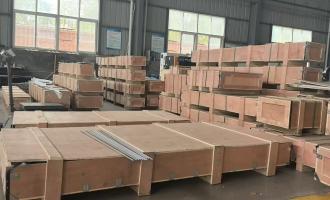
Each Grade 5 titanium sheet is interleaved with moisture-resistant protective paper or plastic film, bound with steel banding, wrapped in heavy-duty waterproof poly-tarps, and enclosed within custom ISPM-15 compliant fumigated wooden cases with internal shock padding.
Ready to Upgrade Your Titanium Supply Chain?
Join leading global aerospace contractors, marine equipment builders, and chemical plant fabricators. Contact Almerca Titanium Industry Co., Ltd. for direct mill pricing and expert engineering consultation.