Global Procurement Guide to Titanium Pipe Fittings: ASTM B363 Specifications, Metallurgical Insights & Market Trends

An authoritative engineering handbook for global EPC contractors, chemical plant managers, and aerospace buyers. Discover material selection criteria, pressure ratings, seamless vs. welded comparison, and future procurement dynamics.

Published by Technical Director ASTM B363 / ASME B16.9 Compliant ISO 9001:2015 Certified
Inquire Now

1. Information Gain: Technical Engineering & Metallurgical Foundations of Titanium Pipe Fittings

In high-stakes industrial environments such as offshore oil and gas platforms, seawater desalination plants, chlor-alkali chemical synthesis, and aerospace propulsion systems, fluid handling infrastructure is subjected to hostile chemical media, extreme thermal cycling, and high operational pressures. Standard austenitic stainless steels (such as 316L) and even nickel-based alloys often reach their physical and chemical limits under chloric stress corrosion cracking (SCC) or localized pitting. This is where Titanium Pipe Fittings establish an unassailable engineering advantage.

Titanium pipe fittings—engineered in accordance with ASTM B363, ASME B16.9, and MSS SP-43—utilize the inherent self-passivating oxide film ($\text{TiO}_2$, Rutile/Anatase phase) that instantly repairs itself in oxygenated or aqueous environments. However, successful procurement requires deep metallurgical comprehension of grades, thermal treatments, and manufacturing processes.

Key Metallurgical Takeaway for Engineers

The corrosion rate of Grade 2 Titanium in room-temperature wet chlorine gas is virtually zero (<0.008 mm/year). However, under anhydrous (dry) chlorine conditions, rapid exothermic oxidation can occur. Knowing exact fluid composition, pH, temperature, and flow velocity is mandatory before finalizing alloy specifications.

Metallurgical Grade Breakdown for Piping Engineers

Selection of the correct titanium grade balances mechanical yield strength, weldability, and localized crevice corrosion resistance:

  • Commercially Pure Grade 1 Titanium (UNS R50250): Maximum ductility and cold formability. Ideal for low-pressure, intricate hydraulic lines where complex bending is required. Yield strength: $\approx 170\text{ MPa}$.
  • Commercially Pure Grade 2 Titanium (UNS R50400): The global workhorse for industrial chemical piping. Offers an optimal synergy of tensile strength ($345\text{ MPa}$ min yield), excellent weldability, and superior resistance to oxidizing acids, organic chlorides, and sea water.
  • Grade 5 Titanium (Ti-6Al-4V / UNS R56400): Alpha-beta alloy delivering ultra-high yield strength ($\ge 828\text{ MPa}$). Widely utilized in subsea deepwater hydraulic systems, aerospace high-pressure manifolds, and military marine applications where weight reduction and high yield thresholds are non-negotiable.
  • Grade 7 (Ti-0.15Pd / UNS R52400) & Grade 11: Palladium-alloyed titanium specifically formulated to resist localized crevice corrosion in reducing acid media (such as dilute hydrochloric or sulfuric acid at elevated temperatures exceeding $100^\circ\text{C}$).
  • Grade 12 Titanium (Ti-0.3Mo-0.8Ni / UNS R53400): A cost-effective alternative to Grade 7, offering enhanced high-temperature strength and superior crevice corrosion resistance up to $260^\circ\text{C}$.
Titanium Grade Standard Specification Tensile Strength (Min. MPa) Yield Strength (Min. MPa) Primary Industrial Application
Grade 1 (CP) ASTM B363 / ASTM B861 240 170 – 310 Low-pressure chemical tubing, heat exchanger elbows
Grade 2 (CP) ASTM B363 WPT2 / ASME B16.9 345 275 – 450 General chemical processing, seawater piping, chlor-alkali
Grade 5 (Ti-6Al-4V) ASTM B363 WPT5 / AMS 4928 895 828 Subsea hydraulic manifolds, aerospace pressure systems
Grade 7 (Ti-Pd) ASTM B363 WPT7 345 275 – 450 Severe crevice corrosion environments, hot reducing acids
Grade 12 (Ti-Mo-Ni) ASTM B363 WPT12 485 345 High-temperature brine processing, geothermal energy

Manufacturing Methodologies: Seamless vs. Welded vs. Forged Butt-Weld Fittings

Procurement professionals must specify the manufacturing process based on the system's ASME B31.3 piping code requirements:

  1. Seamless WPT Fittings: Formed directly from seamless titanium pipe (ASTM B861) using hot mandrel pushing or cold hydraulic bulge forming. Free of longitudinal weld seams, offering an absolute pressure joint efficiency factor ($E = 1.0$) for critical high-pressure pipelines.
  2. Welded WPTW Fittings: Fabricated from plate (ASTM B265) or welded pipe (ASTM B862). Requires 100% full-length Radiographic Testing (RT) or Ultrasonic Testing (UT) to guarantee a joint factor of $E = 1.0$. Highly cost-effective for large diameters ($\ge \text{NPS } 6$).
  3. Forged Socket Weld & Threaded Fittings: Manufactured in accordance with ASME B16.11 via closed-die precision forging from titanium bars (ASTM B348). Essential for high-pressure instrument lines and hydraulic manifold connections (Class 3000, 6000, 9000).
Engineered Precision

Recommended Titanium Pipe Fitting Products

ASTM B363 Grade 2 Titanium Elbow 90 Degree and 45 Degree

ASTM B363 Titanium Elbows (90° / 45° LR & SR)

Seamless and welded butt-weld elbows designed for smooth fluid dynamics with minimal pressure drop. Available in Long Radius (1.5D) and Short Radius (1.0D) configurations from NPS 1/2" to 48". Fully compliant with ASME B16.9.

Inquire Now
Titanium Seamless Pipe Fittings Equal and Reducing Tees

Titanium Equal & Reducing Tees

Forged and hydraulic-formed titanium tees engineered to absorb severe hydraulic shock and thermal contraction. Essential for chemical reactor manifold integration and offshore firewater loop branches.

Inquire Now
Grade 5 Ti-6Al-4V Concentric and Eccentric Reducers

Titanium Concentric & Eccentric Reducers

Precision-machined transition fittings preventing pump cavitation and turbulence. Offered in Grade 2, Grade 5, and Grade 12 titanium for seamless pipe-diameter step-downs in aggressive slurry piping systems.

Inquire Now
Titanium Lap Joint Stub Ends ASTM B363 WPT2

Titanium Lap Joint Stub Ends (Type A / B)

Seamless titanium stub ends paired with backing flanges to dramatically reduce overall material costs while retaining 100% titanium wetted surfaces. Manufactured according to MSS SP-43 standards.

Inquire Now
Forged Titanium Flanged Pipe Assemblies and Custom Caps

Custom Forged Titanium Caps & Pipe Adapters

Deep-drawn and CNC-turned titanium end caps and custom branch outlets (Weldolets, Thredolets, Elbolets). Built to withstand test pressure loads up to 1.5x design pressure rating under hydrostatic testing.

Inquire Now
Specialty Titanium Pipe Fittings for Severe Chemical Processing

Titanium Grade 7 & Grade 12 Severe-Service Fittings

Palladium- and Molybdenum-enhanced titanium fittings engineered specifically for aggressive acid-handling pipelines, chloric evaporation towers, and geothermal brine extraction circuits.

Inquire Now

2. Future Sourcing & Procurement Trends in the Global Titanium Piping Market

As global supply chains navigate green energy transitions, geopolitical realignments, and stricter ESG compliance, procurement managers must adapt to structural changes in titanium pipe fitting sourcing:

A. Exponential Demand Growth in Green Hydrogen & Desalination

The rapid scaling of Polymer Electrolyte Membrane (PEM) electrolyzers for green hydrogen production has created unprecedented demand for titanium piping components. Titanium’s immunity to hydrogen embrittlement at elevated anodic potentials makes titanium elbows, tees, and manifolds essential for electrolyzer balance-of-plant (BOP) systems. Concurrently, the Middle East and North Africa (MENA) region’s massive expansion of reverse osmosis (RO) and multi-stage flash (MSF) seawater desalination facilities requires thousands of metric tons of ASTM B363 Grade 2 fittings annually.

B. Shift Toward Additive Manufacturing & Hybrid Net-Shape Forging

Traditional subtractive machining of titanium fittings can result in material buy-to-fly ratios as high as 5:1 or 8:1. Next-generation procurement is leaning toward Electron Beam Powder Bed Fusion (EB-PBF) and 3D Laser Cladding for rapid prototyping of non-standard titanium reducers and complex junction blocks. Combined with isothermal closed-die forging, these technologies reduce lead times from 16 weeks to less than 21 days while optimizing microstructural grain refinement.

C. Digital Quality Assurance & Full Traceability (EN 10204 3.1 / 3.2)

Modern EPC buyers no longer accept unverified paper certificates. Future procurement protocols demand digital blockchain traceability linking raw sponge titanium melting heats (VAR/PAM methods) directly to the finished fitting’s non-destructive test (NDT) logs. Almerca Titanium Industry Co., Ltd. leads this transition by providing full MTC EN 10204 3.1 certification accompanied by third-party inspection reports (SGS, TÜV, BV, DNV) for every commercial batch.

3. Global Technological & Industry Development Trends (2025–2030)

Technological advancement in titanium pipe fitting manufacturing centers around three strategic pillars:

Technology Trend Engineering Mechanism Commercial Impact for Procurement
Orbital Titanium Welding Automated GTAW/TIG welding under high-purity argon trailing shield gas (>99.999% purity). Eliminates alpha-case formation, ensuring 100% joint efficiency and zero weld seam embrittlement.
Micro-Arc Oxidation (MAO) Electrochemical plasma growth of thick ceramic oxide coatings on titanium fitting interiors. Multiplies erosion-corrosion resistance by 400% in high-velocity particulate slurry lines.
Global Standards Harmonization Unified cross-referencing between ASTM, ASME, EN ISO 9001, DIN, and GOST specifications. Streamlines international cross-border compliance for global engineering EPC consortiums.

Need Engineering Specifications or Instant Factory Pricing?

Talk directly to our senior titanium metallurgical engineers. We provide technical drawing verification, custom pressure drop calculations, and competitive factory-direct quotations within 24 hours.

Inquire Now
Frequently Asked Questions

Titanium Pipe Fitting Sourcing & Engineering FAQ

Q1: Why should I specify Titanium Pipe Fittings over Super Duplex Stainless Steel (2507) or Inconel 625?

While Super Duplex Stainless Steel (UNS S32750) and Inconel 625 provide high mechanical strength, titanium fittings offer two superior advantages: unmatched corrosion immunity in high-chloride environments and a 45% weight reduction (Density of Titanium: 4.51 g/cm³ vs. Stainless Steel: 7.93 g/cm³). In seawater applications containing high levels of dissolved sulfides or chlorination, titanium exhibits zero pitting rate ($PREN > 40$ is irrelevant because titanium forms a stable oxide layer regardless of Pitting Resistance Equivalent Number). Over a 30-year plant lifecycle, titanium fittings eliminate replacement downtime, yielding a significantly lower Total Cost of Ownership (TCO).

Q2: What is the crucial difference between ASTM B363 Grade 2 and ASTM B363 Grade 5 fittings?

ASTM B363 Grade 2 is Commercially Pure (CP) titanium, offering outstanding ductility, excellent cold formability, and superior resistance to general chemical oxidation. It is the global standard for ASME B31.3 chemical plant piping. ASTM B363 Grade 5 (Ti-6Al-4V) is an alpha-beta titanium alloy containing 6% Aluminum and 4% Vanadium. Grade 5 delivers more than double the yield strength ($828\text{ MPa}$) of Grade 2, making it the preferred choice for extreme high-pressure aerospace lines, subsea oil manifolds, and military marine applications where structural strength under high pressure is paramount.

Q3: How do you prevent contamination and oxidation during titanium pipe fitting welding?

Titanium is extremely reactive to oxygen, nitrogen, and hydrogen at temperatures above $400^\circ\text{C}$. During gas tungsten arc welding (GTAW/TIG), Almerca Titanium Industry Co., Ltd. utilizes specialized purging trailing shields and internal purge gas chambers supplied with High-Purity Argon (≥ 99.999%). Weld coloration is rigorously evaluated according to AWS D10.6: a bright silver or light straw color is acceptable, whereas dark blue, purple, or grey indicates atmospheric contamination (alpha case embrittlement), requiring complete joint rejection.

Q4: What non-destructive testing (NDT) procedures are conducted on titanium butt-weld fittings?

Every titanium fitting manufactured by Almerca Titanium Industry Co., Ltd. undergoes multi-tier quality inspection:

  • 100% Radiographic Testing (RT) / Ultrasonic Testing (UT): For all welded seams to verify full penetration and internal soundness.
  • Liquid Penetrant Testing (PT): Performed on 100% of bevel ends and body surfaces to ensure zero surface micro-cracks.
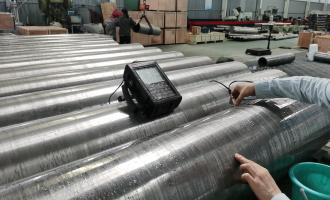
  • Hydrostatic Testing: Conducted at 1.5x design pressure to verify structural integrity under ASME B16.9 standards.
  • Positive Material Identification (PMI): X-ray Fluorescence (XRF) spectroscopy to guarantee exact elemental composition before shipment.

Q5: What are the primary standards governing dimensions and pressure ratings of titanium fittings?

Titanium pipe fittings are governed by several key international standards:

  • ASTM B363: Standard Specification for Seamless and Welded Unalloyed Titanium and Titanium Alloy Welding Fittings.
  • ASME B16.9: Factory-Made Wrought Buttwelding Fittings (dimensions, tolerances, and rating basis).
  • MSS SP-43: Standard Practice for Light-Weight Stainless Steel and High-Alloy Butt-Welded Fittings (popular for Schedule 5S and 10S titanium lines).
  • ASME B16.11: Forged Fittings, Socket-Welding and Threaded (Class 3000, 6000).

Q6: Can titanium pipe fittings be directly welded to stainless steel or carbon steel pipes?

No. Titanium cannot be directly fusion-welded to steel or copper alloys. Direct fusion welding results in the formation of brittle intermetallic compounds ($\text{FeTi}, \text{Fe}_2\text{Ti}$) that shatter instantly under mechanical stress. To join titanium fittings to steel piping systems, engineers must use Titanium-Steel Explosive Clad Transition Joints, loose lap-joint flanges with titanium stub ends, or mechanical threaded/swagelok adapters.

Q7: What is the typical lead time and minimum order quantity (MOQ) for custom titanium fittings?

At Almerca Titanium Industry Co., Ltd., standard ASTM B363 Grade 2 fittings (NPS 1/2" to 8" Schedule 10S/40S) are maintained in inventory for express dispatch within 3–7 business days. Custom engineered fittings, non-standard wall thicknesses, or Grade 5 / Grade 7 forged items typically carry a lead time of 15 to 25 calendar days. We support flexible procurement with low or zero MOQ requirements for prototype and maintenance-repair-overhaul (MRO) projects.

Why Partner With Us

Manufacturing Capabilities of Almerca Titanium Industry Co., Ltd.

When procuring high-value titanium pipe fittings for critical infrastructure, selecting a reliable manufacturer is just as important as choosing the right metal grade. Almerca Titanium Industry Co., Ltd. stands as a premier global enterprise, combining metallurgic expertise, advanced manufacturing hardware, and rigid quality assurance frameworks.

14+ Years Vertical Integration

Operating from the industrial hub of Shaanxi Province, China, our manufacturing facilities span over 60,000 square meters. From raw titanium sponge VAR smelting and billet forging to precision CNC turning and automatic orbital welding, every step is controlled under one ISO 9001:2015 certified roof.

300 Metric Tons Monthly Output

Equipped with over 100 sets of advanced processing equipment—including hydraulic cold-bulge forming presses, 3000-ton forging presses, and 5-axis CNC machining centers—we maintain a stable monthly capacity of 300+ tons, guaranteeing rapid delivery for large-scale EPC projects worldwide.

Rigorous E-E-A-T Quality Assurance

All products ship with original EN 10204 3.1 Material Test Certificates detailing chemical heat analysis and mechanical test data. We partner with international third-party inspection agencies (SGS, TÜV, Bureau Veritas, DNV-GL) to ensure 100% compliance with your project specifications.

Global Supply Chain Excellence

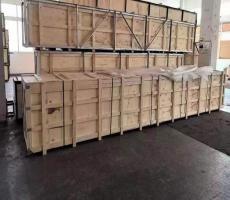
Exporting to over 50 countries across North America, Europe, the Middle East, and Southeast Asia. We offer customized packaging (fumigated wooden cases, protective end-caps), flexible incoterms (FOB, CFR, CIF, DDP), and 24/7 dedicated engineering support.

Almerca Titanium High-Pressure Piping System Fabrication Almerca Titanium Offshore Marine Piping Quality Inspection

Ready to Elevate Your Piping System Reliability?

Contact Almerca Titanium Industry Co., Ltd. today for direct technical support, custom drawing evaluations, and rapid B2B pricing for all your Titanium Pipe Fitting requirements.

Inquire Now