Titanium Industry Blog & Technical Insights - Almerca Titanium
Knowledge & Technical Center

Titanium Industry
Blog & Technical Insights

Discover technical guides, industry trends, and material innovation insights from Almerca Titanium Industry Co., Ltd.
Titanium Material Engineering Articles
Expert Analysis

Material Engineering &
Application Standards

Comprehensive updates on ASTM, ASME, and ISO standards for global titanium procurement.

0%

Titanium Anode Electrodes support demanding electrochemical processes, including chlor-alkali production, metal recovery, wastewater treatment, and hydrogen generation. Their value depends on more than titanium content. Coating chemistry, current efficiency, dimensional stability, service life, and maintenance support can determine the real operating cost.

Industry reports show why this market deserves careful supplier research. The International Energy Agency’s Global Hydrogen Review 2024 identifies electrolysis as an expanding pathway, although deployment remains uneven across regions. Grand View Research also reports continued growth in the global electrolyzer market, driven by renewable-energy investment and industrial decarbonization. These trends increase demand for durable anode components. The U.S. Geological Survey’s Mineral Commodity Summaries 2025 further highlights titanium’s strategic role in modern industrial supply chains.

Performance matters most.

Leading manufacturers typically provide coated titanium substrates, custom dimensions, laboratory testing, and refurbishment services. Some specialize in ruthenium-iridium coatings for chlorine-related applications. Others focus on platinum-group-metal systems for oxygen evolution or specialized wastewater equipment. However, published claims are not always comparable. Test current density, electrolyte temperature, coating loading, and failure criteria may differ significantly.

This guide examines top Titanium Anode Electrodes manufacturers through practical and technical criteria. It considers production experience, coating expertise, quality systems, testing capability, customization, delivery reliability, and after-sales support. No ranking is perfect. A supplier that performs well in laboratory conditions may disappoint in a hot, abrasive plant environment. Buyers should verify independent test data, references, warranty terms, and total lifecycle cost before choosing a manufacturer.
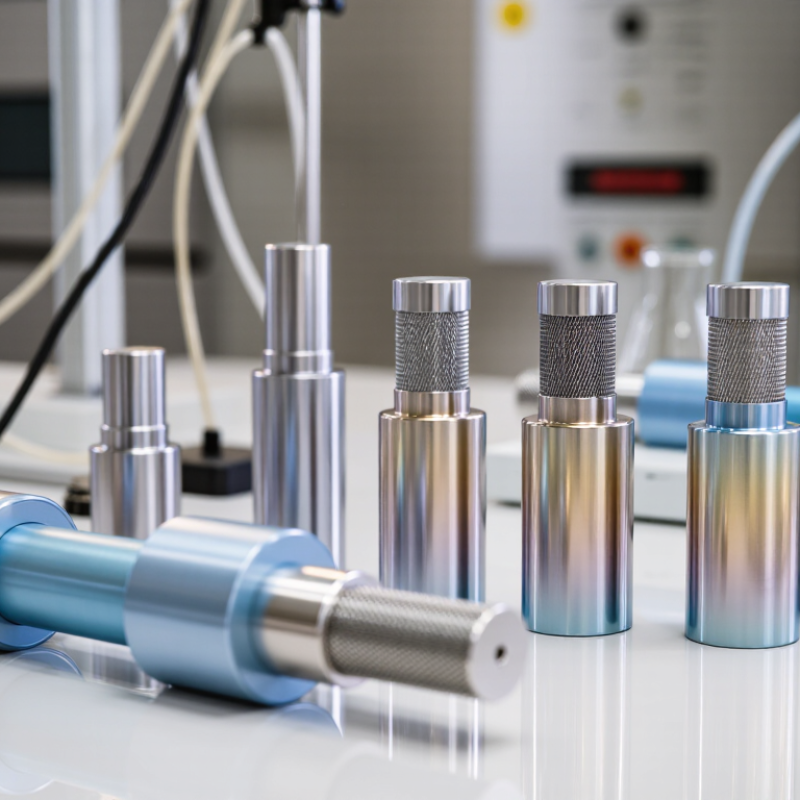
Top Titanium Anode Electrodes Manufacturers

Titanium Anode Electrodes: Definition, Structure, and Core Functions

Titanium anode electrodes are conductive components used in controlled electrochemical reactions. Their foundation is a lightweight titanium substrate, chosen for strength and corrosion resistance. A thin catalytic coating covers the surface and guides the intended anode reaction. The coating may support oxygen or chlorine evolution, depending on the electrolyte, voltage, and process design. This distinction matters.

The electrode’s structure controls its working life and electrical efficiency. Titanium provides mechanical support, while the coating lowers reaction resistance and helps distribute current across the active area. In practical systems, uniform current distribution can reduce hot spots, uneven deposition, and premature coating loss. Experienced engineers also inspect electrolyte temperature, concentration, and flow rate. These factors can change performance more than expected. A clean surface is not always a healthy surface; microscopic coating damage may appear before visible discoloration.

Tips: Confirm the substrate grade, coating purpose, operating current density, and electrolyte conditions before selecting an electrode. Ask for test data that reflects your actual process, not only laboratory results. Measure voltage during operation and record changes over time. Small trends often reveal coating wear early. Replacement planning should consider shutdown time, installation fit, and surface handling. Field performance can still differ from specifications. That is worth questioning.

Top Titanium Anode Electrodes Manufacturers - Titanium Anode Electrodes: Definition, Structure, and Core Functions

Titanium anode electrodes are dimensionally stable electrodes consisting of a titanium substrate and an electrocatalytic coating, commonly based on mixed metal oxides. The titanium substrate provides mechanical strength and corrosion resistance, while the coating promotes the required electrochemical reaction.

The chart compares the minimum specified tensile strength of selected titanium grades commonly considered for corrosion-resistant electrode substrates. Commercially pure titanium Grades 1–4 provide increasing mechanical strength, while Grade 5 is a stronger titanium alloy. In practical anode design, substrate selection also depends on coating compatibility, electrolyte chemistry, temperature, dimensional stability, and the required anodic reaction.

Reference basis: minimum tensile-strength values specified for commercially pure titanium and Ti-6Al-4V alloy grades in ASTM titanium product standards. Values are shown in megapascals (MPa).

Key Applications of Titanium Anode Electrodes Across Industries

Top Titanium Anode Electrodes Manufacturers

Titanium anode electrodes support demanding electrochemical processes across several industries. Their coated titanium surfaces provide stable current distribution and resist corrosion in harsh electrolytes. In chlor-alkali production, they help generate essential chemicals with controlled electrical efficiency. Water treatment systems use them to reduce organic pollutants, bacteria, and unpleasant odors. Electroplating lines also depend on consistent anode performance for smoother metal deposition and fewer surface defects.

Offshore equipment and storage tanks may use impressed-current cathodic protection systems. Here, titanium anodes help limit corrosion on submerged steel structures. Their service life depends on coating quality, electrolyte conditions, current density, and maintenance. A common mistake is choosing an electrode only by price. Actual performance can change sharply when salinity, temperature, or voltage differs from laboratory data. Manufacturers should provide coating details, testing records, current limits, and application-specific guidance. No design is perfect.

Tips: Match the anode coating to the electrolyte and operating current. Check dimensions, connection methods, and expected service hours before ordering. Ask for sample test results under conditions similar to your plant. Inspect wiring and contacts regularly, because poor connections can create local overheating. Small details matter.

Top Titanium Anode Electrodes Manufacturers - Key Applications of Titanium Anode Electrodes Across Industries
Industry Primary Electrochemical Application Typical Titanium Anode Configuration Common Electrolyte or Operating Medium Typical Operating Conditions Key Performance Requirements Main Selection Considerations
Chlor-Alkali Processing Production of chlorine and sodium hydroxide through brine electrolysis. Dimensionally stable titanium anode with a ruthenium oxide and titanium oxide-based mixed-metal-oxide coating. Purified sodium chloride brine; membrane-cell or diaphragm-cell process. Typically near ambient to approximately 90°C, depending on cell design; chloride-rich alkaline or near-neutral conditions at the anode. Low chlorine overvoltage, high current efficiency, strong dimensional stability, and resistance to chloride corrosion. Coating chemistry, current density, brine purity, electrode geometry, and compatibility with the cell membrane or diaphragm.
Electroplating Electroplating of copper, nickel, zinc, chromium, and other metals onto manufactured components. Platinized titanium or mixed-metal-oxide-coated titanium, selected according to the plating bath. Acidic sulfate, chloride, sulfamate, alkaline, or specialized plating solutions. Commonly approximately 20–70°C; current density varies widely with the deposited metal and bath formulation. Uniform current distribution, low contamination of the plating bath, stable dimensions, and long service life. Bath chemistry, required current density, electrode shape, coating catalytic activity, and ease of cleaning or recoating.
Electrowinning Recovery of copper, nickel, cobalt, zinc, and other metals from leach solutions. Lead-free titanium anode with a corrosion-resistant mixed-metal-oxide coating, often used with permanent cathode systems. Acidic sulfate or chloride leach liquors containing dissolved metal ions. Often approximately 35–60°C, with strongly acidic solutions frequently operating around pH 1–3. Resistance to sulfuric acid and oxidizing conditions, low maintenance, stable voltage, and reduced contamination risk. Acid concentration, manganese or chloride content, anode-to-cathode spacing, current density, and oxygen evolution behavior.
Industrial Wastewater Treatment Electrooxidation, electrocoagulation support, cyanide destruction, color removal, and degradation of persistent organic compounds. Mixed-metal-oxide-coated titanium, platinum-coated titanium, or titanium-based anodes paired with suitable cathodes. Municipal or industrial wastewater containing chloride, sulfate, nitrate, metals, dyes, or organic pollutants. Usually ambient temperature; current density and treatment time depend on conductivity, pollutant concentration, and reactor design. Generation of hydroxyl radicals or active chlorine where appropriate, stable performance, and resistance to fouling. Chloride concentration, organic loading, wastewater conductivity, electrode spacing, energy consumption, and by-product control.
Water Disinfection On-site generation of active chlorine for disinfection of drinking water, process water, swimming pools, and cooling systems. Chlorine-evolution titanium anode with a dimensionally stable mixed-metal-oxide coating. Dilute sodium chloride solution or saline water. Generally ambient temperature and low-to-moderate current density, depending on the required disinfectant output. Consistent hypochlorite generation, low electrical resistance, long coating life, and predictable chlorine yield. Salt concentration, flow rate, pH, chlorine demand, electrode spacing, and prevention of excessive chlorate formation.
Electrochemical Ozone Generation Production of ozone for advanced oxidation, water treatment, and process sanitation. Specialized titanium-based anode with a catalytic coating designed for oxygen evolution and ozone formation. High-purity water or dilute aqueous electrolyte, depending on the ozone-cell design. Typically operated with controlled water temperature and high current density in a dedicated flow-through cell. High current efficiency, controlled gas evolution, low contamination, and stable operation under oxidizing conditions. Coating composition, water purity, cell cooling, gas-liquid separation, current density, and power efficiency.
Cathodic Protection Protection of pipelines, storage tanks, marine structures, heat exchangers, and reinforced concrete from corrosion. Impressed-current titanium anode, often tubular, ribbon-shaped, mesh, or rod-shaped, with a durable mixed-metal-oxide coating. Seawater, brackish water, freshwater, soil, or conductive backfill. Low-voltage direct current systems; the required output depends on exposed surface area, electrolyte resistivity, and environmental conditions. Low consumption rate, stable current output, resistance to passivation, and reliable operation over extended periods. Electrolyte resistivity, anode geometry, required design life, current distribution, cable connection, and installation depth.
Electrochemical Metal Recovery Selective recovery of valuable metals from plating rinse water, mining streams, and industrial process liquors. Dimensionally stable titanium anode used with a metal-collecting cathode or rotating electrode system. Metal-bearing acidic, neutral, or alkaline aqueous solutions. Operating temperature and current density are selected according to metal concentration, conductivity, and deposition kinetics. Stable oxygen evolution, low release of electrode materials, reliable current distribution, and resistance to aggressive ions. Target-metal concentration, competing reactions, solution pH, chloride level, mass transfer, and cathode design.
Printed Circuit Board Manufacturing Copper plating, through-hole metallization, and electrolytic buildup of conductive layers. Platinized titanium or mixed-metal-oxide-coated titanium anodes in fixed, insoluble-anode plating systems. Acid copper sulfate baths containing sulfuric acid and chloride additives. Commonly approximately 20–35°C, with tightly controlled current density and solution circulation. Uniform copper deposition, dimensional stability, low bath contamination, and consistent current distribution. Panel geometry, throwing power, bath agitation, chloride concentration, anode-to-panel spacing, and filtration.
Ship and Offshore Systems Seawater electrolysis for marine biofouling control and impressed-current corrosion protection. Seawater-resistant titanium anode with a chlorine-evolution or oxygen-evolution coating. Natural seawater or brackish water with variable salinity and temperature. Performance depends on salinity, water velocity, temperature, and required protective or disinfectant current. Resistance to seawater corrosion, low maintenance, stable output, and compatibility with remote monitoring systems. Marine fouling, salinity changes, hydrodynamic conditions, coating durability, mounting method, and electrical insulation.
Note: Operating conditions are representative engineering ranges. Final titanium substrate, coating formulation, dimensions, current density, and service life must be verified against the specific electrolyte and cell design.

How to Evaluate Leading Titanium Anode Electrode Manufacturers

Top Titanium Anode Electrodes Manufacturers

How to Evaluate Leading Titanium Anode Electrode Manufacturers

Evaluating a titanium anode electrode manufacturer requires more than comparing prices. Inspect the titanium grade, substrate preparation, coating composition, and dimensional tolerance. Ask how the manufacturer controls coating thickness across complex electrode surfaces. Uneven coverage can create local overheating, poor current distribution, and shorter service life. Request process records, not only polished product photographs.

Technical evidence matters. Review test data for current density, voltage stability, coating adhesion, and expected operating conditions. The data should match your electrolyte, temperature, electrode spacing, and production cycle. A manufacturer with strong engineering support can help adjust these variables before installation. That support is valuable.

Check traceability carefully. Reliable suppliers should identify raw material batches, coating dates, inspection results, and repair procedures. Independent testing may confirm chemical composition and coating integrity. Ask for relevant quality certifications, but do not treat certificates as the whole evaluation. A certificate cannot replace practical performance data.

Visit the production site when possible. Observe cleaning stations, coating areas, curing ovens, and inspection equipment. Workers should understand contamination risks and handling controls. Ask how rejected electrodes are documented. Weak answers matter.

No supplier is perfect. A manufacturer may offer excellent coatings but limited customization. Another may communicate well yet provide thin technical records. Test a small batch under real process conditions before approving a large order. Keep the trial criteria measurable, and record unexpected changes rather than explaining them away.

Top Manufacturers and Their Product Development Strengths

Top Titanium Anode Electrodes Manufacturers

Top titanium anode electrode manufacturers compete through product development, not only production volume. Their strongest teams combine electrochemistry, surface engineering, and practical field experience. They select titanium grades according to electrolyte conditions, operating temperature, and mechanical stress.

Surface coating remains a major development focus. Many manufacturers test mixed metal oxide coatings for chlorine generation, metal recovery, and wastewater treatment. They adjust coating thickness, crystal structure, and loading to improve current efficiency. Small changes matter. A poorly matched coating can increase energy use or shorten electrode life.

Reliable suppliers usually provide dimensional drawings, substrate traceability, and performance data from controlled tests. Some also use accelerated aging chambers and pilot cells before releasing a new electrode design. These steps help engineers compare service life under repeated current cycles.

However, laboratory results may not reflect fouling, unstable flow, or contaminated electrolytes in real facilities. That gap deserves more attention. No development program is perfect.

Manufacturers with strong technical support can review current density, polarity, electrolyte composition, and maintenance records before recommending an electrode. They may also offer custom mesh shapes, rod sizes, or coating systems for unusual reactor designs. Clear documentation builds trust. Vague claims do not. The most dependable product development teams keep testing, admit performance limits, and revise designs when field evidence challenges earlier assumptions.

Quality Standards, Customization, and After-Sales Support Criteria

Top Titanium Anode Electrodes Manufacturers

Choosing a titanium anode electrode manufacturer requires more than comparing prices. Quality begins with traceable titanium grades, stable coating composition, and controlled dimensional accuracy. Ask for inspection records, coating thickness data, and test results from representative batches. A reliable supplier should explain its testing methods clearly. Vague certificates are warning signs. They often hide process gaps.

Customization matters when the electrode must fit a particular electrolytic cell. Confirm the required shape, substrate thickness, coating type, operating current, temperature, and electrolyte conditions. Experienced engineers should review drawings before production, not simply accept them. Small changes can affect current distribution and service life. I have found that early technical discussions prevent costly rework, although specifications are sometimes incomplete on both sides. That deserves honest review.

Tips: Request a sample or pilot batch before placing a large order. Define acceptance criteria in writing, including surface condition, dimensions, electrical performance, packaging, and delivery time. After-sales support should include installation guidance, operating advice, replacement procedures, and a practical response channel. Ask how failures are investigated and documented. Fast replies are useful. Clear ownership is better. A dependable manufacturer keeps technical records and communicates limitations instead of promising unlimited performance.

FAQS

What is a titanium anode electrode?

It is a conductive component for controlled electrochemical reactions. A lightweight titanium substrate provides strength and corrosion resistance. A thin catalytic coating guides the intended anode reaction.

What does the surface coating do?

The coating lowers reaction resistance and spreads current across the active area. Its purpose depends on the electrolyte, voltage, and process design. The match must be exact.

Which industries use titanium anode electrodes?

Common uses include water treatment, electroplating, chemical production, and corrosion protection. They can reduce pollutants, support metal deposition, or protect submerged steel structures. Applications differ greatly.

How should an electrode coating be selected?

Match the coating with the electrolyte and operating current density. Also check temperature, concentration, flow rate, and expected service hours. A cheap option may become expensive later.

Why is current distribution important?

Uniform current distribution can reduce hot spots and uneven deposition. It may also slow premature coating loss. Poor wiring can create local overheating.

What information should buyers request?

Request the substrate grade, coating purpose, dimensions, connection method, and current limits. Ask for testing under conditions similar to the actual plant. Laboratory data alone may mislead.

How can operators identify early coating wear?

Measure operating voltage and record changes over time. Inspect wiring, contacts, electrolyte conditions, and visible surface changes. Microscopic damage may appear before discoloration.

Do laboratory results guarantee field performance?

No. Fouling, unstable flow, contaminated electrolytes, and temperature changes can alter results. Field performance may differ from specifications. That deserves honest review.

Conclusion

Titanium Anode Electrodes are advanced electrochemical components made from a titanium substrate coated with a catalytic metal oxide layer. Their structure combines mechanical strength, corrosion resistance, and stable electrical performance, enabling efficient oxidation or reduction reactions with relatively low energy loss. These electrodes are widely used in water treatment, metal finishing, electrochemical manufacturing, chlor-alkali processes, and other industrial applications where durability and precise current control are essential.

When evaluating leading Titanium Anode Electrodes manufacturers, buyers should consider coating technology, substrate quality, current efficiency, service life, production consistency, and technical expertise. Strong manufacturers typically provide solutions tailored to operating conditions such as electrolyte composition, temperature, current density, and electrode shape. Compliance with recognized quality management and testing standards is also important, as are reliable inspection procedures, customization capabilities, clear performance documentation, and responsive after-sales support. A comprehensive evaluation helps users select electrodes that deliver stable operation, reduced maintenance, and better long-term value.

Lila

Lila

Lila is a dedicated marketing professional with a deep understanding of her company's innovative products. With years of experience in the industry, she excels in creating engaging content that highlights the unique benefits and features of the offerings. As a key contributor to the company’s blog,......