Titanium Industry
Blog & Technical Insights
Discover technical guides, industry trends, and material innovation insights from Almerca Titanium Industry Co., Ltd.
Material Engineering &
Application Standards
Comprehensive updates on ASTM, ASME, and ISO standards for global titanium procurement.
What Are Grade 5 Titanium Fasteners Used For?
Table of Contents
- Grade 5 Titanium Fasteners: Ti-6Al-4V Composition and ASTM F468 Data
- Mechanical Value: 895 MPa Tensile Strength and 828 MPa Yield Strength
- Weight-Critical Systems: 4.43 g/cm³ Density in Aerospace and Racing
- Marine and Chemical Equipment: Corrosion Resistance and Galvanic Control
- Industrial Selection: Temperature Limits, Torque, and Fastener Compatibility
- FAQS
- Conclusion
- Related Posts
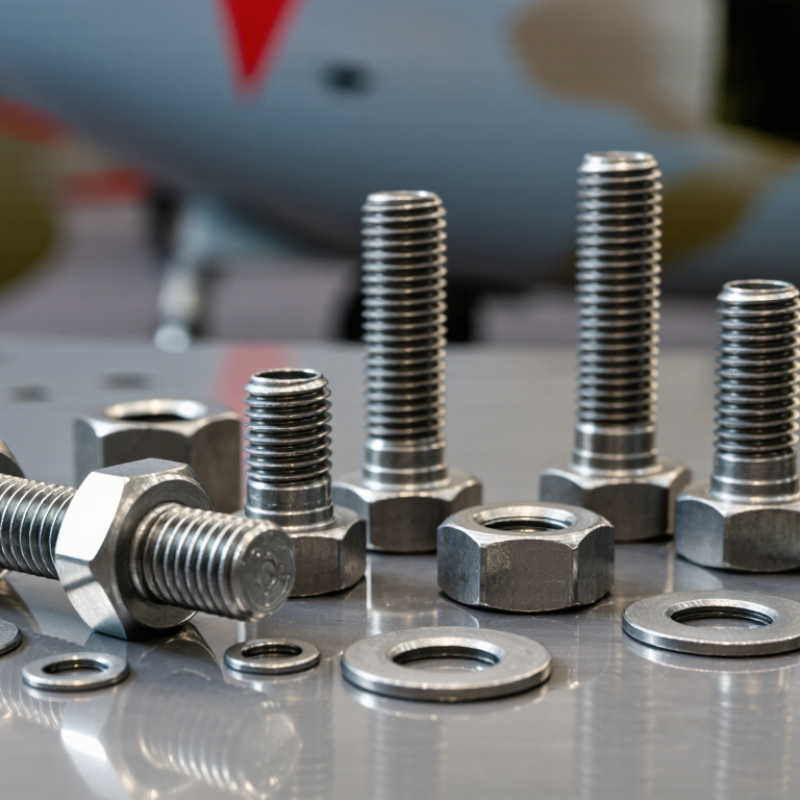
Grade 5 Titanium Fasteners are used where strength, low weight, and corrosion resistance must work together. They commonly secure aircraft structures, marine equipment, racing components, medical devices, and high-performance industrial assemblies.
The material is usually Ti-6Al-4V, known for its strong strength-to-weight ratio. According to the International Titanium Association, aerospace remains the largest application sector for titanium products. Boeing’s 2024 Commercial Market Outlook forecasts demand for 43,975 new commercial airplanes through 2043. That long-term expansion supports continued interest in lightweight, durable fastening systems.
Every gram matters.
In aircraft, Grade 5 Titanium Fasteners can join panels, brackets, engine-adjacent components, and nonmagnetic systems. Their resistance to seawater also makes them useful for yachts, offshore equipment, and diving hardware. In medical engineering, compatible titanium fasteners may support orthopedic instruments and implants, but exact material and surface requirements must follow applicable medical standards.
Their performance is not automatic. Titanium fasteners can gall during installation, especially when threads are dry or poorly matched. Controlled torque, suitable lubrication, correct thread design, and professional inspection are essential. ASTM and SAE specifications should be checked before selecting a product for safety-critical work.
Cost remains a practical limitation. Stainless steel or alloy-steel fasteners may provide better value in ordinary indoor assemblies. This is where product decisions become less obvious. Titanium is impressive, but it is not always the smartest choice.
This guide examines where Grade 5 Titanium Fasteners deliver measurable advantages, which industries depend on them, and what engineers should verify before installation. Manufacturer certificates, traceability records, and test data matter. Without them, a polished appearance proves very little.
Grade 5 Titanium Fasteners: Ti-6Al-4V Composition and ASTM F468 Data
What Are Grade 5 Titanium Fasteners Used For?
Grade 5 titanium fasteners are commonly used where low weight, high strength, and corrosion resistance matter. Their main alloy is Ti-6Al-4V, containing aluminum and vanadium with titanium as the balance. This composition supports demanding aerospace, marine, chemical processing, medical equipment, and performance-engineering applications. A fastener may remain exposed to salt spray, moisture, or changing temperatures without developing ordinary steel rust.
ASTM F468 provides important reference data for titanium bolts, screws, studs, and similar products. For Grade 5, commonly cited minimum properties include about 130 ksi tensile strength, 120 ksi yield strength, and 10% elongation. Chemistry limits also control elements such as iron, oxygen, nitrogen, carbon, and hydrogen.
These details matter during purchasing. A material certificate should identify the alloy, heat treatment, dimensions, and test results. Do not rely on the word “titanium” alone.
In practical assembly work, Grade 5 fasteners can reduce structural weight while maintaining reliable clamping force. They also help in environments where corrosion could damage surrounding components. However, titanium is not automatically the best choice. Galling can occur during tightening, especially with dry threads. Proper lubrication, controlled torque, and compatible washers are often necessary. Galvanic contact with dissimilar metals also deserves attention. ASTM data confirms material performance, but it does not replace design checks, installation records, or inspection. That distinction is easy to overlook.
Mechanical Value: 895 MPa Tensile Strength and 828 MPa Yield Strength
What Are Grade 5 Titanium Fasteners Used For?
Grade 5 titanium fasteners are selected when strength, low weight, and corrosion resistance must work together. Their specified tensile strength reaches 895 MPa, while yield strength reaches 828 MPa. These figures show how much load the fastener can withstand before failure or permanent deformation.
The alloy is common in aircraft structures, marine equipment, racing components, and chemical processing systems. A titanium bolt can weigh much less than a comparable steel bolt. It also resists saltwater and many corrosive environments. That matters around deck fittings, exposed frames, and fluid-handling equipment. A detail often missed: titanium threads may gall during installation. Clean threads, controlled torque, and suitable assembly lubricant are essential.
Designers should not treat 895 MPa as unlimited working strength. Temperature, repeated loading, thread quality, and installation errors can reduce real performance. Field inspections often find loose joints caused by inaccurate torque, not weak material. Grade 5 titanium also has lower stiffness than steel, so joint movement deserves careful evaluation. Engineers should check certified material reports, fastener dimensions, preload requirements, and mating metals before approval. Isolation washers may help prevent galvanic corrosion when titanium contacts certain alloys. The strength numbers are impressive, but connection design still decides reliability.
Weight-Critical Systems: 4.43 g/cm³ Density in Aerospace and Racing
What Are Grade 5 Titanium Fasteners Used For?
Weight-Critical Systems: 4.43 g/cm³ Density in Aerospace and Racing
Grade 5 titanium fasteners are used where strength matters, but every gram also counts. Their density is about 4.43 g/cm³, nearly half that of many steel fasteners. This difference becomes meaningful across aircraft panels, suspension assemblies, and racing structures. A single bolt saves little. Hundreds can reduce system weight noticeably.
In aerospace applications, engineers use these fasteners for access panels, brackets, engine-area components, and airframe connections. Titanium also resists corrosion and maintains useful strength across demanding temperature ranges. However, it is not a universal replacement for steel. Joint loads, fatigue life, electrical conductivity, and temperature exposure must be checked by qualified engineers.
Racing teams often install Grade 5 titanium bolts in brake calipers, wheel carriers, subframes, and cockpit hardware. The material feels light in hand. That practical difference is easy to notice during assembly. Yet titanium threads can gall when installed dry or over-tightened. Proper lubrication, clean threads, controlled torque, and compatible washers are essential. Engineers should verify preload rather than trust torque alone, because friction changes the result.
Material certificates, dimensional checks, and inspection records support reliable use. Some designs may need surface treatments or different fastener materials. Weight reduction can also encourage unnecessary changes. That assumption can fail. A lighter fastener is valuable only when the complete joint remains safe, stable, and maintainable.
Marine and Chemical Equipment: Corrosion Resistance and Galvanic Control
Grade 5 Titanium Fasteners for Marine and Chemical Equipment
Grade 5 titanium fasteners are used where saltwater, chlorides, and aggressive process fluids attack ordinary metals. This alloy contains aluminum and vanadium, with high strength and a naturally protective oxide film. In seawater, titanium commonly shows corrosion rates below 0.0025 mm per year, according to data summarized in ASM technical references. That performance supports seawater pumps, heat exchangers, desalination units, offshore sensor housings, and chemical piping connections.
Corrosion resistance is only half the design problem. Titanium is electrically noble, so direct contact with aluminum, carbon steel, or zinc can accelerate galvanic corrosion in the less noble metal. Engineers often use insulating washers, sleeves, joint coatings, and controlled drainage. Electrical continuity should be checked, not assumed. The AMPP/NACE IMPACT study estimated global corrosion costs at about 3.4% of worldwide gross domestic product, showing why small fastener details deserve serious attention.
ASTM B348 also specifies Grade 5 titanium bar and fastener material requirements, including chemistry and mechanical properties. Grade 5 can reach roughly 895 MPa minimum tensile strength in common specifications. Strong, but not careless-proof. Over-tightening, damaged threads, trapped seawater, or mixed-metal contact can still cause failures. A field inspection may reveal the uncomfortable truth: the fastener survived, while the cheaper surrounding component did not.
Industrial Selection: Temperature Limits, Torque, and Fastener Compatibility
Grade 5 titanium fasteners, usually Ti-6Al-4V, serve aerospace, marine, medical, and high-performance equipment. They combine low density, strong corrosion resistance, and useful fatigue performance. ASM material data lists a density near 4.43 g/cm³ and room-temperature tensile strength around 895 MPa for annealed material. These values vary with heat treatment and product size.
Temperature changes the decision. Aerospace property data, including MMPDS-17 allowables, show strength declining as Ti-6Al-4V approaches 300°C. Many engineers therefore treat roughly 315°C as a practical continuous-use ceiling, not a universal rating. Short exposure may differ. Oxidation, preload loss, and nearby materials matter more than a single catalog number. The overlooked detail is thermal expansion. Titanium expands differently from steel, which can alter clamp load during cycling.
Torque requires discipline. ASTM F467 and ASTM F468 define important fastener requirements, but they do not provide one torque value for every joint. Friction controls the result. Dry titanium threads can gall quickly, especially during repeated installation. Use compatible lubrication, controlled tightening, and preferably measured tension. A basic torque-preload estimate is T = KdF, yet the nut factor can change substantially with coating and lubricant. Start with a verified procedure, then check preload experimentally. Torque charts alone are not enough. Sometimes, the “standard” assembly method is the weak point. Titanium should also be isolated from incompatible metals when moisture could create galvanic corrosion.
FAQS
They suit aircraft structures, marine equipment, chemical systems, and lightweight performance assemblies. Corrosion resistance matters.
Typical tensile strength reaches 895 MPa, with yield strength around 828 MPa. These values are not unlimited working loads.
They resist saltwater, chlorides, and many aggressive fluids. Seawater corrosion may remain below 0.0025 millimeters per year.
Direct contact with aluminum, steel, or zinc may cause galvanic corrosion. Use insulating washers, sleeves, or protective coatings.
Dry threads can gall during tightening or repeated installation. Clean threads and suitable lubricant help.
Not always. Friction, coating, lubricant, and thread condition change preload. Measured tension is safer when joint reliability matters.
Strength decreases as temperatures approach 300°C. Around 315°C may be a practical continuous-use ceiling, but conditions vary.
Yes. Titanium is less stiff than steel, so joints may move more under load. Thermal cycling can also change clamp force.
Check material reports, dimensions, preload requirements, mating metals, and thread condition. Field problems often come from inaccurate torque.
No. They are light and corrosion-resistant, but surrounding parts may fail first. Strong material cannot repair poor joint design.
Conclusion
Grade 5 Titanium Fasteners are made from Ti-6Al-4V, an alloy recognized for its strong performance and reliable mechanical properties. Under ASTM F468 data, they can provide approximately 895 MPa tensile strength and 828 MPa yield strength, making them suitable for demanding applications where structural integrity is essential. With a density of about 4.43 g/cm³, they offer significant weight savings compared with many steel fasteners, which is valuable in aerospace structures, racing systems, and other weight-sensitive equipment.
These fasteners also provide excellent resistance to corrosion in marine and chemical environments. However, proper galvanic control is important when titanium is installed alongside dissimilar metals. Industrial selection should consider operating temperature limits, recommended torque values, thread condition, lubrication, and compatibility with mating components. When correctly specified and installed, Grade 5 Titanium Fasteners combine high strength, low weight, durability, and corrosion resistance for specialized mechanical systems.

Blog Tags: