Titanium Alloy Forging: Technical Procurement, Metallurgy Control & Global Supply Chain Guide
An in-depth metallurgical analysis and sourcing manual for global aerospace, defense, marine, and chemical engineers evaluating high-integrity titanium alloy forged components.
High-Performance Titanium Alloy Forging Product Portfolio
Titanium alloy forging is a critical thermomechanical manufacturing process designed to refine coarse cast ingot grain structures, eliminate internal voids, and establish continuous, unbroken grain flow lines aligned with key structural stress vectors. Unlike components machined directly from static wrought plate or extruded bar stock, forged titanium components demonstrate superior multi-axial fatigue life, elevated fracture toughness, and maximum resistance to stress corrosion cracking (SCC) under extreme thermal and mechanical shock. At Almerca Titanium Industry Co., Ltd., our forging facility utilizes vacuum arc remelted (VAR) ingots combined with precision closed-die, open-die, and seamless ring rolling equipment to satisfy critical international standards including ASTM B381, ASME SB381, AMS 4928, AMS 4965, and ISO 5832.
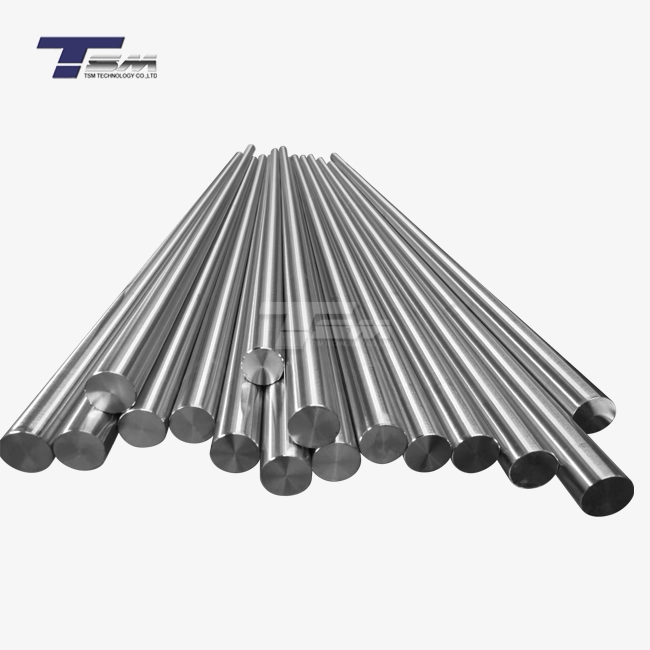
Forged Titanium Rings & Rolled Blanks
Precision seamless rolled rings manufactured to ASTM B381 Grade F2, F5 (Ti-6Al-4V), and F12. Ideal for jet engine turbine casings, submarine hull penetrators, and high-pressure chemical reactor flanges requiring circumferential strength.
Forged Shafts, Step Bars & Billets
Heavy-duty open-die forged solid rounds, stepped shafts, and square billets. Processed with controlled alpha-beta dynamic recrystallization for optimal torsional shear strength in marine propulsion systems and downhole oil tools.
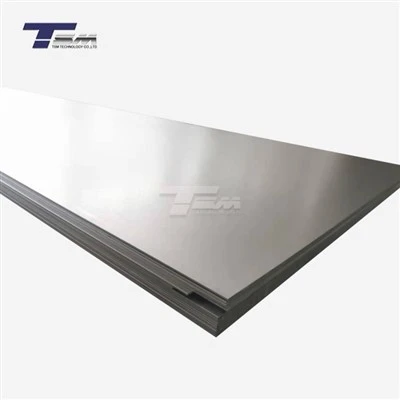
Forged Titanium Discs & Heavy Blocks
Die-forged titanium alloy discs and thick rectangular blocks for aerospace bulkheads, missile structural joints, and high-purity sputtering target backing plates. Microstructure tested per AMS 2631 Class AA ultrasonic standards.
Near-Net Shape Closed-Die Forgings
Custom-engineered closed-die forgings for complex geometries, minimizing material scrap ratios and reducing secondary CNC machining hours by up to 65%. Available in Grade 5, Grade 23 (ELI), and Ti-6242 alloys.
Metallurgical & Mechanical Comparison Matrix of Forged Titanium Alloys
| Alloy Grade | Standard Specs | Tensile Strength (MPa) | Yield Strength (0.2% MPa) | Elongation (%) | Beta Transus (°C) | Primary Industry Applications |
|---|---|---|---|---|---|---|
| Grade 2 (UNS R50400) | ASTM B381, ASME SB381 | ≥ 345 | 275 – 450 | ≥ 20 | ~ 915 °C | Chemical Processing, Desalination, Marine Flanges |
| Grade 5 (Ti-6Al-4V) | ASTM B381 F5, AMS 4928 | ≥ 895 | ≥ 828 | ≥ 10 | ~ 995 °C | Aerospace Airframes, Jet Engines, High-Stress Fasteners |
| Grade 5 ELI (Ti-6Al-4V ELI) | ASTM F136, AMS 4930 | ≥ 860 | ≥ 795 | ≥ 10 | ~ 975 °C | Cryogenic Pressure Vessels, Medical Surgical Implants |
| Ti-6242 (Ti-6Al-2Sn-4Zr-2Mo) | AMS 4975, AMS 4976 | ≥ 1010 | ≥ 930 | ≥ 10 | ~ 990 °C | High-Temperature Turbines, Compressor Discs (up to 540°C) |
| Grade 9 (Ti-3Al-2.5V) | ASTM B381 F9, AMS 4983 | ≥ 620 | ≥ 520 | ≥ 15 | ~ 935 °C | Hydraulic Tubing Manifolds, Aerospace Lightweight Spars |
Future Procurement Trends in the Global Titanium Forging Supply Chain
As AI-driven generative design software and lightweight structural modeling redefine mechanical engineering paradigms, global procurement directors must adapt to critical shifts within the titanium forging ecosystem. The traditional procurement approach based purely on price-per-kilogram is being superseded by Total Cost of Ownership (TCO) models focused on material yield efficiency, digital traceability, and carbon-neutral production processes.
1. Paradigm Shift Toward Near-Net-Shape (NNS) Isothermal Forging
With raw titanium sponge and alloying element prices (such as Vanadium and Molybdenum) subject to global market volatility, procurement teams are prioritizing Near-Net-Shape isothermal forging. By maintaining dies at the exact temperature of the heated titanium workpiece, thermal gradients are eliminated. This enables tight tolerance forging with Buy-to-Fly (BTF) ratios dropping from traditional 10:1 down to less than 2.5:1, yielding dramatic reductions in expensive raw material waste and subsequent high-speed CNC milling time.
2. Mandatory Digital Material Passports & Ultrasonic Traceability
Tier-1 aerospace and energy sector buyers now mandate full digital material passports for every titanium alloy forging batch. Modern procurement agreements require end-to-end auditability: tracking the chemical composition from the initial double-melt or triple-melt Vacuum Arc Remelting (VAR) furnace process through 3D forge simulation logs down to final automated Ultrasonic Inspection (UT per AMS 2631 Class AA / SEP 1921). Almerca Titanium Industry Co., Ltd. embeds comprehensive QR-coded material test reports (MTR) into every export shipment.
3. Closed-Loop Scrap Recycling & Sustainable Procurement
Environmental, Social, and Governance (ESG) criteria are actively reshaping global procurement evaluations. Leading OEM buyers are contracting with titanium forging suppliers who operate closed-loop titanium scrap recycling programs. Clean forged turnings and solids are segregated, processed via electron-beam hearth melting (EB cold-hearth), and reintroduced into industrial-grade titanium melts. This sustainable approach reduces overall embodied carbon footprint while safeguarding raw material availability during global supply chain bottlenecks.
When evaluating international titanium forging quotes, ensure that suppliers specify the exact thermo-mechanical history (e.g., Beta forging vs. Sub-transus Alpha-Beta forging) and stress-relieving heat treatments (Annealed, Solution Treated & Aged - STA). A lower initial piece price often hides inadequate thermal treatment, leading to severe distortion during post-machining or premature fatigue failure in subsea/aerospace service environments.
Technological Advancement Trends in Titanium Alloy Forging
The physical metallurgy of titanium alloy forging is undergoing a technological revolution driven by supercomputer FEA deformation modeling, advanced thermomechanical processing (TMP), and hybrid additive-forging manufacturing techniques.
Ultra-Fine Grain (UFG) Refinement via Severe Plastic Deformation
Conventional titanium alloy forgings typically achieve grain sizes corresponding to ASTM Grade 5 to Grade 8. Recent breakthroughs in multi-directional forging (MDF) and severe plastic deformation (SPD) allow forge masters at Almerca Titanium Industry Co., Ltd. to break down coarse prior-beta grains into ultra-fine equiaxed alpha microstructures (sub-micron grain size). Ultra-fine grain Ti-6Al-4V forgings demonstrate up to a 25% increase in high-cycle fatigue (HCF) strength and enhanced yield strength without sacrificing room-temperature ductility.
Finite Element Analysis (FEA) Thermo-Mechanical Simulation
To eliminate internal forging defects such as strain localization, micro-void formation, and un-recrystallized grain clusters, modern forging processes rely on real-time DEFORM-3D and QForm finite element simulation software. By modeling heat transfer, die contact friction, and strain rate sensitivity prior to striking the metal, engineers optimize die geometry and RAM press speed. This ensures 100% sound center consolidation across large-section forged blocks exceeding 400mm in thickness.
Additive Manufacturing + Precision Forging (Hybrid Manufacturing)
The emergence of Wire Arc Additive Manufacturing (WAAM) coupled with subsequent closed-die cogging and finish forging represents a breakthrough in structural titanium manufacturing. A preform is rapidly deposited using WAAM technology and subsequently forged in closed dies. This hybrid process combines the rapid deposition rates of additive manufacturing with the superior grain structure, high fatigue resistance, and isotropic mechanical properties of traditional hot-forged titanium alloys.
Enterprise Manufacturing Capabilities & Quality Guarantee
Headquartered in Shaanxi Province, China—the central industrial hub of global titanium production—Almerca Titanium Industry Co., Ltd. offers vertically integrated manufacturing capabilities spanning raw sponge reduction, VAR vacuum smelting, heavy forging hydraulic press operations, precision CNC machining, and comprehensive NDT testing.
-
01
10,000-Ton Free Forging & Ring Rolling Press
Our facility operates multi-directional open-die forging presses up to 10,000 tons force and automated radial-axial ring rolling mills capable of producing seamless forged rings up to 5,000mm outer diameter.
-
02
Double & Triple VAR Melting Traceability
To guarantee zero high-density inclusions (HDI) or hard-alpha inclusions (HAI), all critical aerospace and medical forgings are smelted exclusively from 100% virgin sponge via 2-stage or 3-stage Vacuum Arc Remelting (VAR).
-
03
Full In-House Chemical & Metallurgical Testing Laboratory
Every forging lot is tested in our ISO 17025 accredited laboratory for tensile, impact, stress rupture, chemical composition (ICP-OES / LECO gas analysis), macrostructure, and immersion ultrasonic testing (UT).
Frequently Asked Questions (FAQ) on Titanium Alloy Forging
Direct answers to key technical, metallurgical, and procurement questions commonly raised by global engineering teams and procurement specialists.
What is the primary structural advantage of titanium alloy forging over machining components directly from bar stock or plate?
Which titanium alloy grade is best suited for forged marine and chemical components versus aerospace applications?
How does Almerca Titanium eliminate "Alpha Case" contamination during hot forging operations?
What Non-Destructive Testing (NDT) standards apply to critical aerospace titanium forgings?
What are the main cost drivers for custom titanium alloy forgings, and how can buyers optimize procurement expenses?
What standard lead times and Minimum Order Quantities (MOQ) does Almerca Titanium offer for custom forgings?
Ready to Elevate Your Titanium Forging Procurement Strategy?
Contact the metallurgical engineering team at Almerca Titanium Industry Co., Ltd. today for rapid engineering consultations, detailed material test reports, and competitive factory-direct quotations.