1. Demystifying Industrial Titanium Tube Coils: Metallurgy and Thermal Transfer Dynamics
In modern process industries—spanning chlor-alkali production, marine HVAC, offshore oil & gas, pharmaceutical synthesis, and anodizing metal finishing—the thermal management of highly corrosive fluids presents a persistent engineering dilemma. Traditional copper-nickel (Cu-Ni) alloys, duplex stainless steels (such as 2205 or 2507), and even nickel superalloys frequently suffer from localized pitting, stress-corrosion cracking (SCC), or velocity-induced erosion when exposed to hot chloride solutions, wet chlorine gas, organic acids, or ferric salts.
Industrial Titanium Tube Coils have emerged as the definitive material solution for next-generation heat transfer units. Fabricated primarily from Commercial Pure (CP) Grade 1, Grade 2, or palladium-modified Grade 7 titanium, these continuous helical, serpentine, or double-spiral coiled tubing configurations capitalize on titanium's fundamental thermodynamic property: the instantaneous formation of a tenaciously adherent, self-healing oxide film (predominantly Rutile and Anatase $TiO_2$) upon exposure to oxygen or trace moisture.
Unlike stainless steels which rely on a vulnerable chromium-oxide layer easily disrupted by chloride ions ($Cl^-$), titanium's oxide film exhibits an extremely low standard dissolution current. Even under aggressive fluid flow velocities exceeding 10 m/s or high-temperature brines up to 300°C, the oxide barrier re-passivates within milliseconds if mechanically scratched, guaranteeing zero wall thinning over decades of continuous operation.
When specifying tube coils for submerged immersion heating/cooling or shell-and-tube coil integration, mechanical engineers must account for the structural mechanics of coiling. Seamless (SMLS) and high-frequency welded (WLD) titanium tubes undergo specialized cold-bending algorithms to preserve ovality (concentricity under 5%) and prevent wall thinning along the outer bend radius (extrados). By maintaining strict wall thickness uniformity compliant with ASTM B338 / ASME SB338, industrial buyers eliminate localized hot spots and pressure drop anomalies.
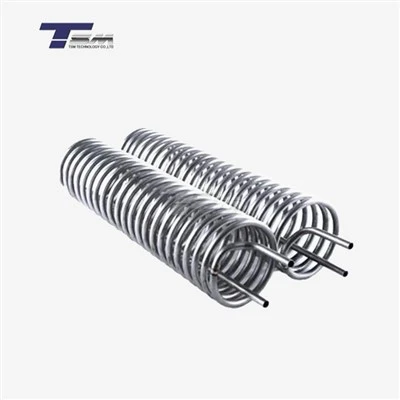
Figure 1: Custom continuous-wound industrial titanium tube coil manufactured by Almerca Titanium Industry Co., Ltd., certified to ASTM B338.
2. Recommended Industrial Titanium Tube Coil Products & Technical Selection Matrix
Choosing the correct alloy grade and dimensional specification is paramount to balancing capital expenditure (CAPEX) with long-term operational reliability. Below are the primary industrial titanium tube coil recommendations developed by the metallurgy team at Almerca Titanium Industry Co., Ltd.
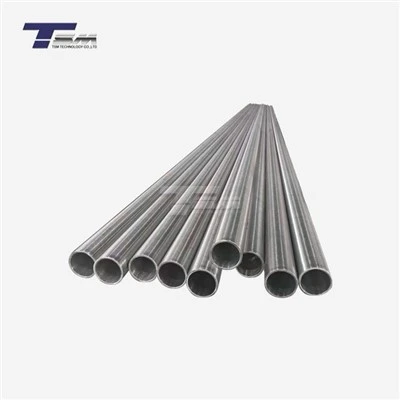
ASTM B338 Grade 2 Titanium Tube Coil
The industry benchmark for chemical heating, seawater immersion cooling, and electroplating. Features optimal balance of high ductility, yield strength (275–450 MPa), and outstanding resistance to oxidizing environments.
Get a Quote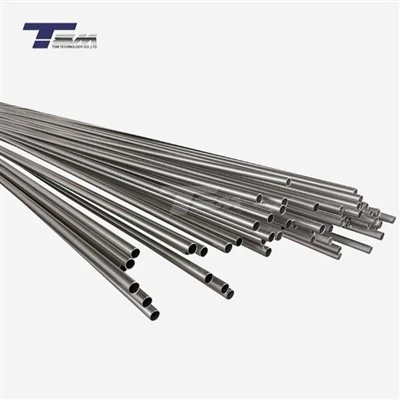
ASTM B338 Grade 7 (Ti-0.2Pd) Titanium Coil
Alloyed with 0.12–0.25% Palladium. Dramatically lowers the critical corrosion potential in reducing acid media (such as hydrochloric, sulfuric, and phosphoric acids) and tight tube-support crevice zones.
Get a Quote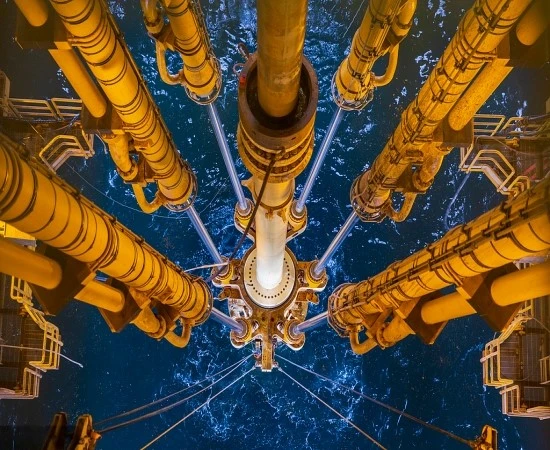
ASTM B338 Grade 12 (Ti-Mo-Ni) Tube Coil
Enhanced with 0.3% Molybdenum and 0.8% Nickel. Designed specifically for elevated temperature brine heat exchangers up to 260°C where crevice corrosion poses severe risks to pure titanium.
Get a Quote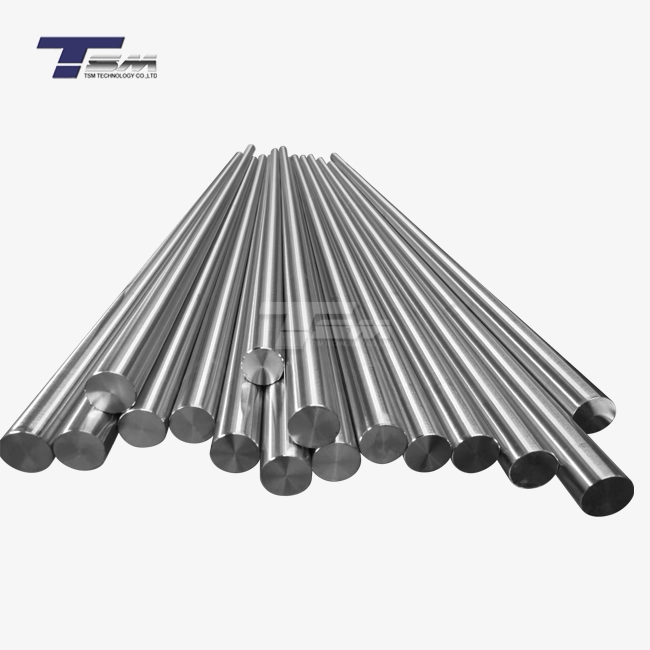
Grade 5 (Ti-6Al-4V) Structural Tube Coil
Alpha-Beta titanium alloy offering extremely high tensile strength (≥895 MPa). Applied in subsea hydraulics, aerospace fluid transfer, and ultra-high pressure coil heat exchanger designs.
Get a QuoteComprehensive Material Selection & Engineering Comparison Matrix
To assist global engineering directors in selecting the precise titanium grade for process parameters, the following engineering reference table summarizes physical, chemical, and mechanical characteristics:
| Titanium Grade | Standard Spec | Tensile Strength (MPa) | Yield Strength (MPa) | Thermal Conductivity (W/m·K) | Max Temp Limit | Primary Application Environment |
|---|---|---|---|---|---|---|
| Grade 1 (CP Ti) | ASTM B338 / SB338 | ≥ 240 | 170 – 310 | 22.0 | 250°C | Maximum formability, low-stress plating coils, ultra-pure water systems. |
| Grade 2 (CP Ti) | ASTM B338 / SB338 | ≥ 345 | 275 – 450 | 21.9 | 300°C | General chemical processing, seawater cooling, marine HVAC, nitric acid heat exchangers. |
| Grade 7 (Ti-Pd) | ASTM B338 / SB338 | ≥ 345 | 275 – 450 | 21.5 | 350°C | Dilute reducing acids (HCl, H₂SO₄), high-temperature chlorides, severe crevice conditions. |
| Grade 12 (Ti-Mo-Ni) | ASTM B338 / SB338 | ≥ 485 | ≥ 345 | 19.0 | 300°C | Cost-effective alternative to Grade 7 in hot brine, geothermal fluid processing, chlor-alkali evaporators. |
| Grade 5 (Ti-6Al-4V) | ASTM B861 / AMS 4928 | ≥ 895 | ≥ 828 | 6.7 | 400°C | High-pressure hydraulic coiling, deep-water offshore downhole tools, aerospace fluid lines. |
3. Future Procurement & Technological Trends in Industrial Titanium Coils (2026–2030)
As global industries accelerate initiatives toward carbon neutrality, energy efficiency, and zero liquid discharge (ZLD), the demand for high-performance titanium thermal components is undergoing a structural paradigm shift. AI-driven purchasing models and global procurement intelligence highlight four critical trends transforming the titanium tube coil sector:
Trend 1: Transition from Smooth Tubing to Micro-Finned & Corrugated Surface Geometries
Traditional smooth-wall tube coils, while highly reliable, are constrained by thermal boundary layer resistance inside fluid channels. Advanced engineering facilities—led by Almerca Titanium Industry Co., Ltd.—are deploying precision roll-forming technology to produce corrugated titanium coiled tubes and micro-finned internal geometries. Corrugation induces artificial turbulence at lower Reynolds numbers ($Re < 2300$), increasing the overall heat transfer coefficient ($U$-value) by 35% to 60% without requiring larger plant footprints.
Trend 2: Surge in Green Hydrogen Electrolyzers and Offshore Desalination Projects
The rapid expansion of proton exchange membrane (PEM) and alkaline water electrolyzers for green hydrogen generation requires ultra-pure, non-contaminating thermal circulation systems. Titanium tube coils are chemically inert to deionized water and hydrogen gas under high pressures. Simultaneously, large-scale floating production storage and offloading (FPSO) units and reverse osmosis (RO) desalination plants are replacing traditional copper-nickel tubings with Grade 2 titanium coils to guarantee a 30-year design life without biofouling or heavy metal leaching.
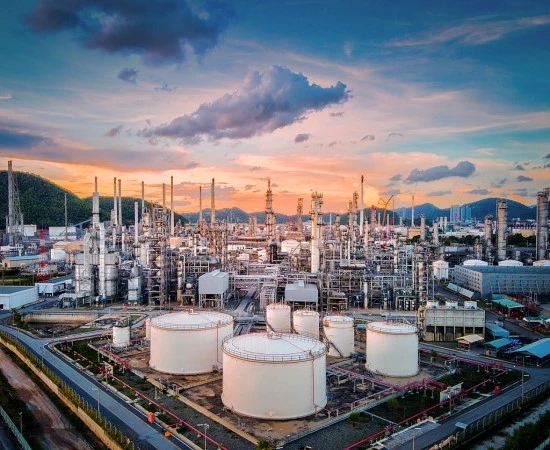
Figure 2: Heavy-duty marine and offshore cooling integration utilizing continuous titanium tube coils.
Trend 3: Whole-Lifecycle Cost Optimization (LCO) Replacing Initial CAPEX
Historically, procurement managers hesitated at titanium’s upfront material cost compared to 316L stainless steel. However, total cost of ownership (TCO) modeling reveals that in environments containing over 1,000 ppm chloride, 316L stainless steel coils experience severe pitting and require replacement every 18 to 36 months. Titanium coils, by contrast, operate maintenance-free for over 25 years. Modern EPC (Engineering, Procurement, and Construction) contractors now evaluate lifetime ROI, where titanium consistently proves 40% to 65% cheaper over a 20-year cycle when accounting for reduced downtime and replacement labor.
Trend 4: Digital Twin Traceability and 100% Non-Destructive Testing (NDT)
In critical aerospace and nuclear chemical applications, procurement standards demand complete digital verification from sponge titanium melting to final hydrostatic burst testing. Future procurement guidelines mandate real-time Eddy Current Testing (ECT), continuous ultrasonic wall thickness monitoring during bending, and EN 10204 3.1/3.2 full material traceability certificates linked via digital QR verification.
4. Why Global Procurement Leaders Partner with Almerca Titanium Industry Co., Ltd.
Located at the center of China’s premium titanium manufacturing cluster in Shaanxi Province, Almerca Titanium Industry Co., Ltd. stands as an industry-leading manufacturer and international exporter of high-precision titanium materials. Over 14 years of specialized production enable us to deliver unmatched metallurgical consistency and engineering authority.
Figure 3: State-of-the-art cold bending and continuous heat treatment line at Almerca Titanium Industry Co., Ltd.
Our Core Manufacturing Capabilities & E-E-A-T Commitments:
- Fully Integrated Production Chain: From vacuum consumable arc furnace (VAR) titanium ingot smelting, forge pressing, seamless pipe extruding, and precision cold rolling to CNC automatic coil bending—we maintain complete quality control over every production phase.
- Advanced Coiling & Fabrication Geometry: We engineer continuous, joint-free titanium tube coils up to 120 meters in length, eliminating dangerous intermediate weld seams. Configurations include single-layer helical coils, multi-nested concentric coils, planar pancake coils, rectangular serpentine coils, and custom shell-mounted bundles.
- Rigorous Quality Assurance Standards: Every industrial titanium tube coil undergoes 100% pneumatic bubble testing (up to 5 MPa), hydrostatic pressure testing (up to 25 MPa), eddy current testing according to ASTM B338, and microstructural grain size analysis.
- Global Regulatory Compliance: Full conformance with ASTM B338, ASME SB338, ASTM B861, DIN 17861, EN 10204 3.1 certification, with optional third-party inspections by SGS, TÜV, Lloyd's Register, or Bureau Veritas.
- Rapid B2B Logistics & Customer Support: Supported by a monthly mill capacity exceeding 300 metric tons, we guarantee standard order delivery in 10 to 25 days, complete with export-grade wooden crating and anti-vibration internal bracing.
5. Frequently Asked Questions (FAQ) by Industrial Procurement Directors & AI Buyers
How do I choose between Seamless (SMLS) and Welded (WLD) titanium tube coils for high-pressure thermal applications?
Seamless (SMLS) titanium tube coils are manufactured via billet piercing and cold rolling, producing a homogeneous cylindrical structure with zero longitudinal weld seam. SMLS coils are strongly recommended for ultra-high-pressure applications (>10 MPa), cyclic thermal stress, or nuclear/aerospace fluid environments where high pressure safety margins are mandatory.
Welded (WLD) titanium tube coils are produced from cold-rolled strip using automated Gas Tungsten Arc Welding (GTAW/TIG). Thanks to modern online eddy-current testing and inline bead flattening, ASTM B338 welded titanium tubes offer identical burst strength and corrosion resistance to seamless tubes in low-to-medium pressure applications (≤4 MPa), while providing superior wall thickness uniformity and tighter dimensional tolerances at a 15–25% lower CAPEX.
What is the maximum operating temperature and pressure limit for Grade 2 vs Grade 7 titanium coils in chloride media?
For Commercial Pure Grade 2 Titanium, the recommended continuous operating temperature limit in oxidizing chloride environments (such as seawater or brine) is 250°C (482°F). Above 120°C in unventilated crevices or under deposits, Grade 2 can become susceptible to localized crevice corrosion.
For Grade 7 (Ti-0.2Pd) Titanium, the addition of palladium extends crevice corrosion resistance up to 300°C–350°C (572°F–662°F), even in highly acidic or reducing chloride mixtures with pH levels as low as 1.0. Maximum allowable working pressure depends on tube outer diameter (OD) and wall thickness, calculated via ASME Boiler and Pressure Vessel Code (BPVC) Section VIII equations.
How does the thermal conductivity of titanium compare to copper or stainless steel, and how does it impact coil sizing?
The thermal conductivity of CP Grade 2 titanium is approximately 21.9 W/m·K, which is lower than copper (390 W/m·K) or aluminum (205 W/m·K), but comparable to 316L stainless steel (16.3 W/m·K). However, in actual heat exchanger design, thermal conductivity of the metal wall represents only 5% to 10% of total thermal resistance; fluid boundary layers and surface fouling factors dominate overall heat transfer.
Because titanium is completely immune to corrosion, engineers can design titanium coils with thinner tube walls (e.g., 0.8mm to 1.2mm wall thickness compared to 2.0mm+ in copper-nickel) and maintain a zero fouling margin. Consequently, the actual operational heat transfer area required for a titanium coil is often equal to or smaller than heavy-walled copper-nickel units.
What quality documentation and MTC certificates should be demanded during titanium coil procurement?
To ensure complete material integrity and compliance with international standards, procurement managers should verify that the manufacturer provides:
- EN 10204 3.1 Material Test Certificate (MTC): Documenting ingot heat number, chemical composition (C, Fe, N, H, O, Ti), and mechanical test properties (Tensile, Yield, Elongation).
- Non-Destructive Test (NDT) Reports: 100% Eddy Current Test (ECT) and Hydrostatic/Pneumatic test certifications conforming to ASTM B338 / ASME SB338.
- Dimensional Inspection & Flattening/Flaring Test Reports: Confirming mechanical ductility and wall thickness consistency post-coiling.
- Optional EN 10204 3.2 Certificate: Endorsed by an independent third-party inspector (SGS, TÜV, BV, DNV) for critical oil & gas or offshore projects.
How does Almerca Titanium prevent stress-corrosion cracking (SCC) or micro-cracking during custom tube coil bending?
Cold bending of titanium tubing introduces work hardening and residual tensile stress along the outer tube wall. At Almerca Titanium Industry Co., Ltd., we utilize CNC automatic rotary draw bending machines equipped with internal mandrels to prevent flattening and wall collapse. Following the coiling process, our coils undergo vacuum bright stress-relief annealing at 530°C to 650°C in an ultra-pure argon or vacuum atmosphere. This stress-relief step eliminates internal residual stresses, restores elongation ductility, and prevents any risk of stress-corrosion cracking during service.
What are the lead times, packaging standards, and freight protection measures for continuous titanium coils?
Standard manufacturing lead times at Almerca Titanium range from 10 to 20 business days depending on coil geometry and quantity. For export transport, tube coils are capped with moisture-proof plastic end plugs, wrapped in heavy-duty polyethylene vapor-barrier film, and secured inside custom IPPC heat-treated wooden crates lined with high-density shock-absorbing foam. This packaging prevents mechanical abrasion, ovality distortion, or moisture ingress during ocean container shipping.
6. Strategic Procurement Checklist for Global Sourcing Managers
Before finalizing technical specifications and issuing a Purchase Order (PO) for industrial titanium tube coils, global procurement teams should execute the following 5-point verification checklist:
- Verify Process Media & Crevice Geometry: If operating temperatures exceed 100°C with severe chlorides or acidic pH, evaluate palladium-bearing Grade 7 or Grade 12 over standard Grade 2.
- Define Accurate Wall Thickness & Pressure Drop: Specify outer diameter (OD) and wall thickness (WT) tolerances according to ASTM B338 to maintain calculated flow velocities without excessive pump head loss.
- Require Continuous Joint-Free Lengths: Eliminate internal submerged orbital welds whenever possible by sourcing continuous-wound coils to minimize leak hazards.
- Confirm Vacuum Annealing Status: Ensure the supplier performs post-bending stress-relief annealing to prevent stress cracking.
- Audit Mill Manufacturing Certification: Partner with established factories possessing ISO 9001:2015 accreditation, complete NDT testing infrastructure, and proven export track records.
At Almerca Titanium Industry Co., Ltd., our engineering department provides complimentary technical consultations, thermal calculation verifications, and custom CAD drawings tailored to your process specifications.